
The Uncomfortable Truth for People of Color: No One is Automatically Anti-Racist
We all are both victims and perpetrators, having been indoctrinated from childhood with racist ideas. Ibram X. Kendi
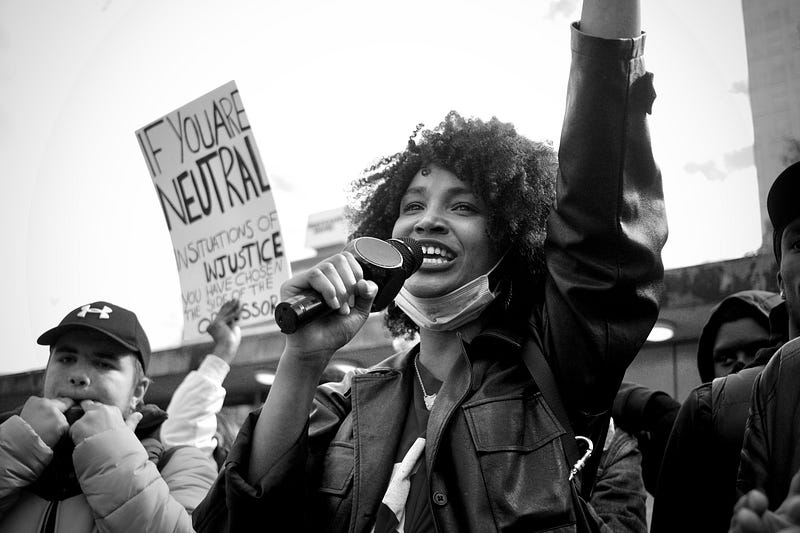
It’s our weekly call. Colleagues are excitedly discussing their contracts and upcoming vacations but my mind is elsewhere. I’m thinking about the protesting of police violence against Black people.
I turn my attention back to the call when I hear another Person of Color has something to say.
“I have been watching what’s going on with the protests. I identify as Latino and I have to say, right now I’m thankful I’m not Black.”
Wait! Did I hear him right? Did he just say he’s thankful he’s not Black?
Does he think his ethnicity absolves him from saying something racist? Would he feel as comfortable saying it if even one person on the call were visibly-Black?
I could try to assume what he meant, but it is more important to focus on the message that was actually conveyed: that being Black is an affliction.
His comment reinforces Black as problematic, as undesirable and potentially life-threatening. His words echo what educator and activist, Jane Elliot, pointed out to a white audience decades ago: no one would voluntarily want to be treated the way Blacks are treated in this society. He is telling our professional peers that it is okay to know what is happening, to know you don’t want it for yourself, and to be willing to ignore it as long as it remains not your problem.
I hold my tongue, trying to consider how it would look — the angry woman calling out the other Person of Color while everyone else remains conveniently silent. His remark, however, continues to weigh on me and a sense of responsibility creeps up. I have to address him on it, knowing no one else will.
I write to tell him how shocked and hurt I am. I want him to understand that, while my racial profile has accustomed me to living with the uncertainty of what might happen each day I walk out my front door, there is a particular sting hearing those words coming from him.
He responds the next day with a long email describing the untenable experiences he and his family have had to endure, being of Color in this country — discrimination, racial profiling by the police, and an incessant feeling of vulnerability. He understands my point and has taken the time to reflect on it, yet, I am frustrated by his response.
Everything he has shared is important. These are very real challenges and critical experiences that shape what it means to be a Person of Color and mixed-race in this country.
In his self-reflection, however, I hear the echo of a dangerous assumption: the belief that, as People of Color, our moral code is inherently higher due to the color of our skin. We want to believe that, by default, we cannot be racist.
On the occasions we repeat anti-Black rhetoric, we forgive and move on, without scrutiny or introspection, because we would never intentionally give implicit approval of a flawed system. We have all done it — said something deeply rooted in prejudice and hate, whether in jest or in seriousness — and we all have given ourselves a pass. We assume, because we too have been subjected to discrimination, we escape the construct of racism within which we all exist.
In truth, everyone is a product of our environment. Systemic racism is part of the culture; a set of socialized norms we are all born into. As the poet and author Scott Woods says, “Racism…is a set of socioeconomic traps and cultural values that are fired up every time we interact with the world. It is a thing you have to keep scooping out of the boat of your life to keep from drowning in it.”
So when a Person of Color says I’m just glad it’s not me, they are othering a problem that, in reality, exists for all Americans. It is a fallacy to think we do not have a role in racism as long as our skin color is not the one under attack.
By now, I would imagine every Person of Color would be personally aware of this. So why, despite all best intentions, do we still fall prey to parroting racist and privileged tropes?
It is because racism is so pervasive in American society that People of Color forget we too are the American society engulfed in these cultural values.
We are all adrift at sea, the murky chop of racism splashing upon us all, leaving behind the chalky residue of salty bias. As long as we coast by on the belief that we, as People of Color, are inherently good and inherently anti-racist, buoyed by a life vest of our skin color atop the deep churning waves of discrimination, we risk perpetrating the same wrongs we come together in allyship to fight against.
This is not to name and shame, but to advance the dialogue. Everyone, irrespective of skin tone, must choose their path in it, through it, and out of it. Let it be a trigger of self-examination for others just as it caused me to raise a mirror to my own transgressions over the years repeating racist and discriminatory ideas.
If we allow racism to continue unchecked, insidious and all-encompassing, like quicksand, it will devour each and every one of us whole. We’ll flail our arms wildly, trying to save ourselves by pointing out everyone else’s role in perpetuating the problem, until our shouting and finger pointing become muffled as we drown in our own denial.
People of Color — we must examine how our actions and our words are reinforcing the very system we wish to dismantle. It may be easier to see the bias in others, but only when we push our self-awareness and strive to question our own privilege, can we achieve that anti-racist status we assume is inherently ingrained within us.