
As a Sommelier, This Is My Exact Process for Choosing Wine in a Bottle Store, Step-by-Step
Reduce the odds of buying a bad bottle ever again
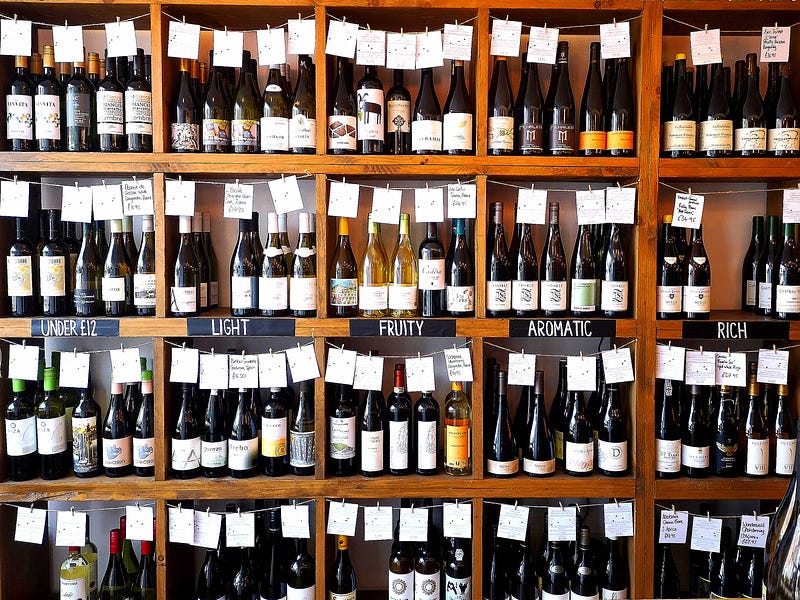
Picture, if you will, that you’re standing beside a British Sommelier (that’s me) and we’re about to go into a wine store to buy some wine.
The catch is, I can’t rely on the old Somm trick of just buying wine I know and have drunk before because this particular shop stocks wines I don’t recognize. Not a single one.
Perhaps you can relate.
How would I go about buying a bottle? What do I look for on the label? What words make me say damn, I can’t wait to drink this?
This is how I would do it. Steal these ideas and you’ve just shortened the odds of never buying a crappy bottle of wine ever again.
Get this one thing right and you’ve won half the battle
Choose the right bottle store.
So we’re standing outside a bottle shop. But it’s not just any bottle shop — I’ve done my research. I know they’re independently owned and that they care about the wines on their shelves. I get a feel for their ethos from their social media. They’ve had a good write-up online.
I’ve already reduced the chances of buying a crappy bottle.
Rule numero uno is to choose your wine store wisely. My advice? Find your local independent bottle shop.
Not got anything like that close to you? Get online instead.
Find the right place and you’ve instantly upped your chances of buying a decent bottle of wine.
To ask for help or not to ask for help — that is always the question
So we’ve walked into our fantasy wine store and someone has come over to help us out. Do we take their guidance? After all, it seems like the easiest thing to do.
This is a tricky one. If you get the owner, buyer, or a seasoned worker, they’ll likely know the wines inside out. If however, you get a poorly-trained assistant (it happens more often than I like to see), you may not get a stellar recommendation.
My advice is to ask for help if you want it but don’t ever feel pressured into taking them. Feel free to browse too, no one ever minds.
If you want to choose your own bottle (as we’ll be doing in this particular fantasy), you could ask some more generic questions like how the store is organized, because sometimes it’s not that obvious. Is it by style? By country? Colour? Price? Production method e.g. organic vs. conventional?
This will help you with the next part of our odyssey…
Don’t go in blind — know your parameters
You may like the idea of browsing a store and choosing a bottle that looks interesting, but wine marketers know and happily take advantage of this. They’ll do tricks like what we call “critter wine” — wine with cute animals on the label, there just because we all know critter wines sell (believe me).
You’ve gotta get ahead of them. And you do this by defining your parameters. The big three are:
- What sort of style do you want?
- How much do you want to pay?
- What’s the wine for?
These are the three questions I asked every customer who asked for assistance in my wine store and bar. It helps to reduce the store down from the whole place to just a few shelves.
For instance, you and me, we’ve decided that we want to buy a bottle of wine for our date later. I know I want a light red or rich white. But this is a first date so I’m not prepared to spend more than $25 (sorry, the better stuff only gets cracked after the third date).
Or perhaps we’re mates. It’s 75 degrees out there and we’ve got a takeout pizza on the way. We want to eat it in the park with a bottle of fresh, light white but don’t want to spend more than $15.
Maybe we’re about to head to your parents. They’re cooking a roast dinner and love a full-bodied red wine. You love them, but not that much, so you’ve got a $20 budget.
I define my parameters before visiting any wine store I visit. For my part, you’ll normally find me in the Burgundy / Beaujolais / Piedmont / Loire Valley / dry Riesling sections, but that’s me.
Know roughly what you want, eliminate the rest and you’re on your way to finding exactly what you want.
Look for the little leaf label
If you’re truly going in blind, here’s a trick. Look for the leaf label. It looks like this:

This is the EU organic label. In the US, you might find this one:
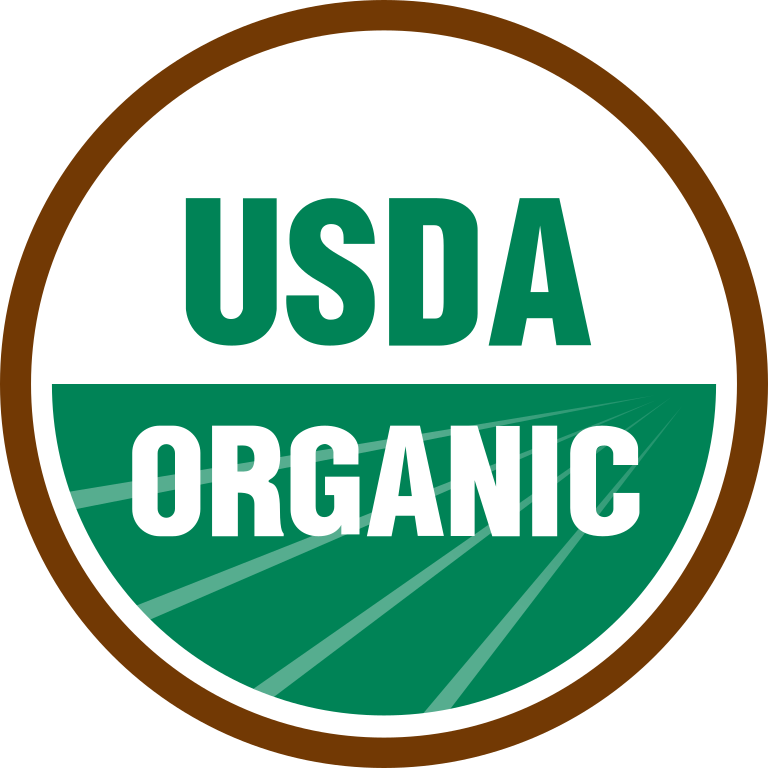
Although I’m a big fan of organic, biodynamic and natural wines, I’m not dogmatic about them.
BUT if I am in a wine store and have no clue, I’ll go with the organic wine because organic wines HAVE TO adhere to better winemaking practices.
Organic wines:
- Are not sprayed with synthetic chemicals
- Are subject to a lower maximum yield (lower yields generally mean more concentrated wines)
- Are subject to a lower ceiling for added sulphites.
This is a complicated issue because there are plenty of organic or naturally- made wines that are not certified. There are also many wines that are not made organically but are still incredible bottles.
But if you buy organic, at least you are reducing your odds of buying a poorly made, heavily manipulated wine. You know the winemaker cares at least enough to jump through the hoops to gain organic certification.
It’s not a hard and fast rule but it’s one I use a lot when I’m faced with a wall of wine and not a clue.
These are the magic words to look for on wine labels
So we’ve found a few bottles we like the look of. We turn the bottles around and check the back.
If we’re super lucky, the back label contains a few words that are like ASMR to Somms — especially me. Phrases include but are not limited to:
- Old vines (generally speaking, old vines = lower yields = more concentration)
- Hand harvested
- Minimal intervention
- Low yield
- Fermented or aged in old oak / concrete / amphora (aka anything but stainless steel)
Additional phrases that I personally love:
- Wild yeast / spontaneous fermentation
- No (or limited) fining / filtration
- Minimal use of SO2 / added sulphites
If the label doesn’t say any of this — or it’s not in English — give it a quick Google and see if any of the top hits say anything about the way the wine is made. Generally, if a winemaker is being fastidious about their winemaking (which is what you want regardless of their personal ethos), they’ll shout about it or some enthusiastic wine blogger will have written about it.
Can’t find anything? There’s a chance it could be great, but it’s a tougher bet. Which is exactly what we don’t want.
Find any of these phrases and you buy, buy, buy.
Bottle shape matters
Now we’re getting somewhere, you and me. We’re down to two bottles, with different shaped bottle. One is in a Burgundy bottle, one is in a Bordeaux bottle. They look like this respectively:
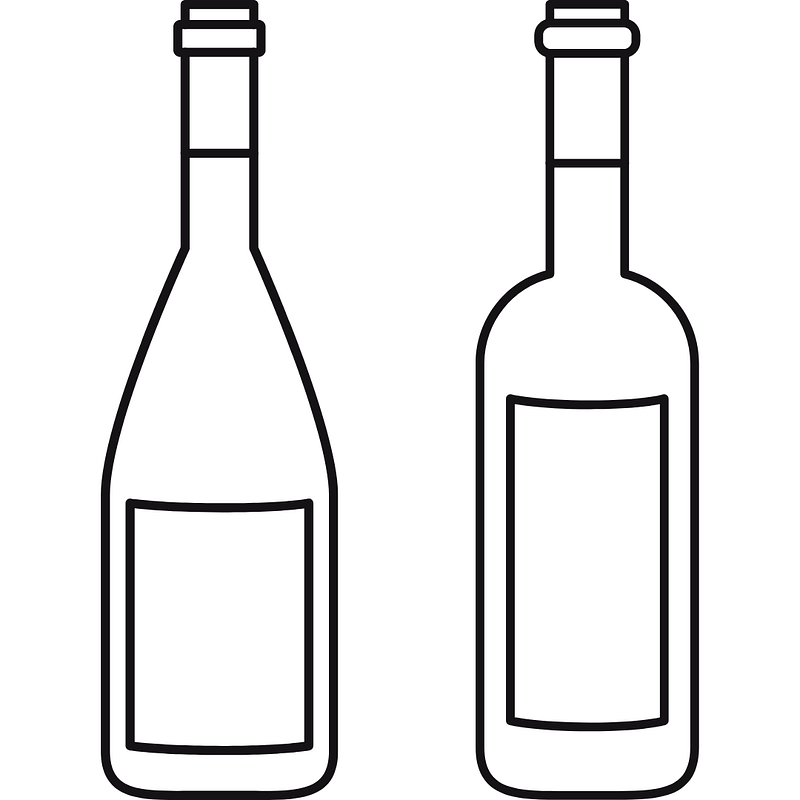
This is not true for every wine (nothing ever is) but generally winemakers choose Burgundy bottles if they have been influenced by Burgundy and Bordeaux if they’ve been influenced by Bordeaux.
When it comes to winemaking, Bordeaux tends to focus on the winemaking process whereas Burgundy tends to focus on the vineyards.
And as regions go, I prefer Burgundy by a country mile. And in my professional opinion, most of the best winemakers in the world are also influenced by Burgundy.
This trickles down into decent quality but more accessibly priced bottles of wine too. A winemaker is making a statement when they choose their bottle shape.
We’re going to choose the Burgundy bottle.
Like I say, it’s not a hard and fast rule. Rioja for instance uses Bordeaux bottles because 100-odd years ago, they used to sell grapes to the region. And Rioja is awesome.
But when I’m in a bind, choosing the Burgundy bottle over the Bordeaux has saved my ass more times than I care to mention.
To read the above might sound laborious. In real life, a quick scan of a wine store's shelves using the above information can take as little as a couple of minutes. Especially if you’ve done your research on the wine store you’re stood in.
All you need to do is:
- Know roughly what you want, what it’s for and how much you want to spend
- Check for the little leaf label
- Find some of those magic phrases on the bottle or online
That’s it.
And what do you know, we’ve come out of our hypothetical wine store with a great bottle of wine for our date / pizza night / dinner with parents.
Go us.
One day, I’ll teach you how to read a restaurant wine list. Another 1500 words for another time.
For today, visit your indie wine store, buy that bottle using the above information, eat some delicious food and have a fucking great evening, after evening, after evening.
Sign up for The Capsule Pantry, a Substack designed to have you eating incredibly well whilst saving money and reducing food waste through highly customizable recipes


