
Articles Claiming to List ‘The Best Books Ever’ Make My Head Explode
I should know by now to avoid them like the plague
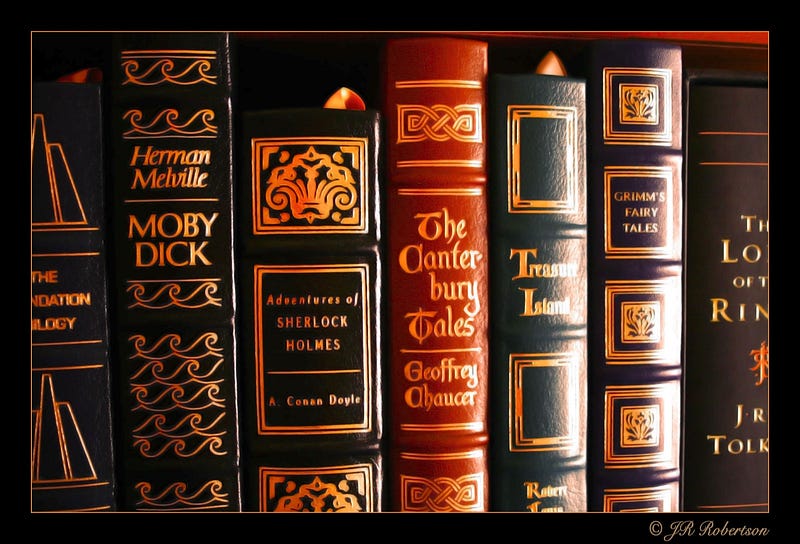

As I have learned from the comments on articles about my favorite albums or films, far too many people seem to believe that the words “favorite” and “best” mean the same thing; they don’t. If I say Meatballs is one of my favorite films, that does not mean that I think it belongs anywhere near a list containing the best films ever made. The same is true with music, unless we’re talking about “Born to Run,” which serendipitously is both my favorite song and The Greatest Song Ever.
It’s the same with books. I have several favorites that do belong on any list of “Best Books Ever,” and others that are simply pulp fiction fun. As good as it is, I would no more put Jasper Fforde’s Tuesday Next series in a list with The Great Gatsby and Don Quixote than I would put The Rise of Skywalker in a list of good Star Wars films; either of those scenarios is pure nonsense. Which brings me to the point of this rant.
For reasons I cannot explain, my Google feed has been bombarding me with lists of the “Best Books of All Time;” even more curious is the fact that they are all from the same obscure website and all by the same author (I will identify neither of them here). These showed up so often I thought for a while that either the author or Google were trolling me, much like my brother-in-law would send me lists of the Top Ten Springsteen songs that contained seven songs from the Born in the USA album, just to watch my head explode.
Though I knew better than to click the links, I did anyway (I’m weak when it comes to books), and what I discovered each time was that either the author does not know the difference between “best” and “favorite” (he used the words interchangeably throughout the articles) or was blatantly using “best” as clickbait. It may not seem like this matters, but it does; legions of impressionable children (and adults) will read these stories and accept the books listed in them as the best ever written simply because “the internet says so” (God help us). But even given that, normally this type of thing would not make me take the time to write a rant. It did, though, because of the shabby treatment of a literary titan: Ernest Hemingway.
If you are a regular reader, you may have rolled your eyes at that last sentence, well aware that Hemingway resides in a Holy Trinity of things I adore that also includes Springsteen and tacos. To you, I say hear me out.
The first article by The Author Who Shall Not Be Named contained the so-called 38 greatest fiction books of all time. I would take issue with the weirdness of choosing 38 titles rather than 25 or 50, but I’m the guy who uses a 35 to 98 scale for Rate-A-Record every week. Rather, my issue is that among those 38 “greatest” books you will find exactly zero by Ernest Hemingway. ZERO. Not The Sun Also Rises (which forever changed the way authors write), not A Farewell to Arms (considered by many critics to be one of the ten best novels ever written), not even The Old Man and the Sea (which only won a stupid Pulitzer Prize and sealed Hemingway’s Nobel Prize as well).
What are some of the titles that kept Papa off the list? Several you would expect and that I have no issue with: The Great Gatsby, Anna Karenina, and David Copperfield. Others were, for me, far more questionable in any “greatest” list: The Underground Railroad by Colson Whitehead, The Secret History by Donna Tartt, and Ender’s Game by Orson Scott Card. One reason I know they are questionable is that if I had not included the author’s name, many of you would not have any idea who wrote them. The other reason is that they are far too recent; as with Simon Dillon’s 10-year rule for films, you cannot call something a classic just a few years after it’s published, let alone the greatest anything. While they were both alive, Wilkie Collins was as popular as Charles Dickens; time changed that.
There was a follow-up article a few days later, this one listing the “100 best books of all time.” Inexplicably, the first 38 of these did not correspond at all to the same author’s “38 Greatest” list from only three days before. Hemingway did make this list, sneaking in at #61 with The Sun Also Rises. Maybe if Hemingway had been just a bit more talented, he could have landed two books in the Top 12 like Dan Brown did with Angels and Demons and The Da Vinci Code (#7 and #11, respectively).
Angels and Demons at #7 and The Sun Also Rises at #61. That is like saying “Glory Days” is Springsteen’s best song and “Born to Run” is somewhere around #79; unless you have suffered a recent head injury it is simply indefensible. So stop calling your list the “best” or “greatest” whatever and call it what it is: a list of your favorites. That is a perfectly acceptable article topic, even if the title will grab fewer views. It also neither misleads all readers nor enrages a few, which is a win in itself.
Thanks for reading. If you enjoyed this story, you can support my writing directly by leaving a tip below or, even better, joining Medium here. You’ll get access to all of my articles (including my weekly rants and numerous Springsteen stories) as well as those of all the other great writers here.