
Art: Esthetic Or Political?
What is the purpose of Art?
I have a good friend, a world-class fine art photographer, who was discussing “Art,” capital “A” Art, with me. I admire his work, beautiful, finely crafted, acclaimed and admired by many in the field. Then he said something that surprised me, probably because I’d never really thought about it. He said “Art” should not be political but should be about beauty and esthetics. I thought about this for some time and wondered how he came to this conclusion, this belief.
Without some artists being moved by political events to create some major works of art, we’d have no “Guernica,” no “protest art,” no art for social justice. Even in music, we’d have no Messian’s “Quartet For The End Of Time,” no Bernstein’s “Kaddish,” and even my grandson, 19 years old today and a jazz pianist, was moved to compose a piece he titled “Prayer For Kyiv” when Russia invaded Ukraine.
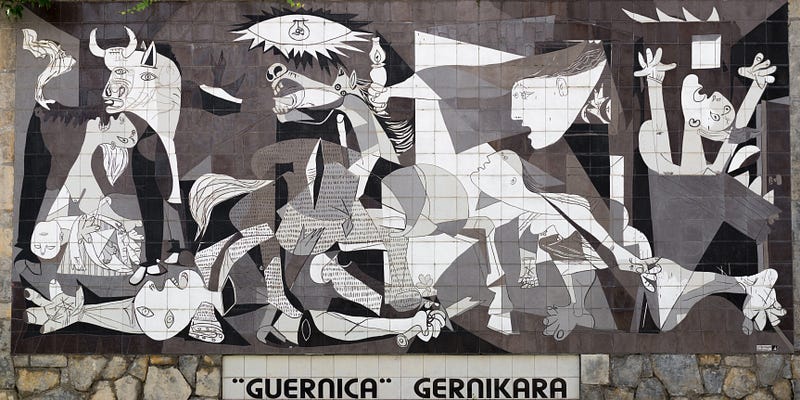
I’ve learned, after a little research, that throughout history, art has been used as a commentary on political, social, environmental and current affairs of the time in which the artist was living.
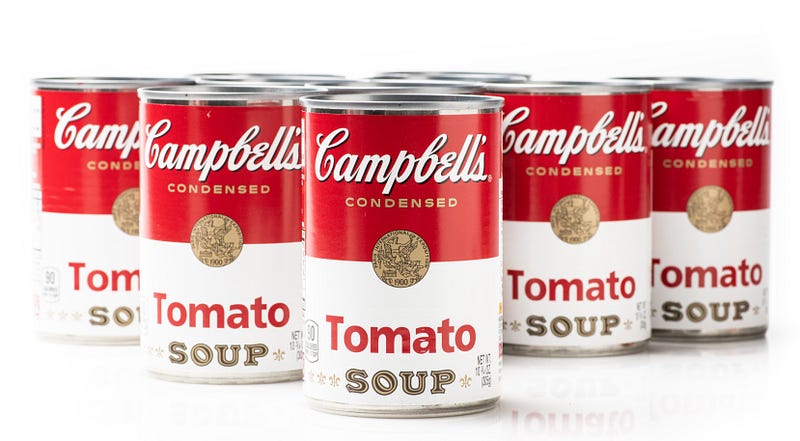
Some have said that there are four kinds of political art: sociopolitical, propaganda, protest and satire. Andy Warhol, with his paintings of Campbell’s Tomato Soup cans was tying art to everyday life, making it accessible to everyone.
Often art has been controversial, like Juan Serrano’ “Piss Christ.” Piss Christ is a 1989 photograph presenting a small plastic crucifix that had been plunged into a small glass tank containing Serrano’s urine. Serrano maintained that he did not mean for the image to be disrespectful but to represent what would actually happen when a body dies and the internal fluids come out. The Catholic Church did not see it this way.
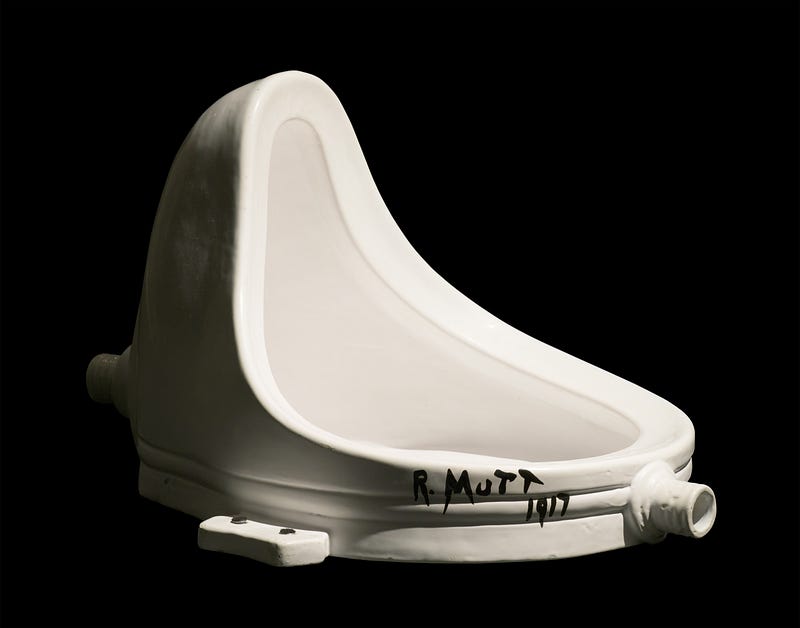
Controversy was nothing new to the art world however. Marcel Duchamp’s presentation of a porcelain urinal in 1917 was considered outrageous, Chris Ofili’s “The Holy Virgin Mary” utilized elephant dung and pornographic images in his 1996 mixed media painting was equally subject to public scorn.
I have been involved in art one way or the other all my life. Mainly music, beginning my piano lessons at the age of 4 and becoming a pianist and teacher; fine art photography, influenced by “West Coast Photography” of Ansel Adams, Brett and Cole Weston, Morley Baer. I was also interested in more modern experimental photography: manipulated Polaroid SX-70 images, hand-painted photographs and mixed media. Most of the work I’ve done has been playful, not with any deep meaning or message, my objective being primarily visual.
However, the past few years have ignited passions in me that have lain dormant but have always been there: the environment, global warming, waste. Social issues have always concerned me, and I did a series of photographs during the AIDS epidemic in the 80s. Photographs of people with AIDS, the doctors who treated them, relatives, the Quilt.
After watching David Attenborough’s “A Life On Our Planet,” my feeling was that we should all drop everything we’re doing right now and attend to saving the planet. Fortunately, there are many people and concerns that are doing just that: The Nature Conservancy — a global nonprofit organization my daughter worked for for 18 years before forming her own consulting business as an environmental lobbyist; The Sierra Club; Greenpeace, Ocean Conservancy, Natural Resources Defense Council.
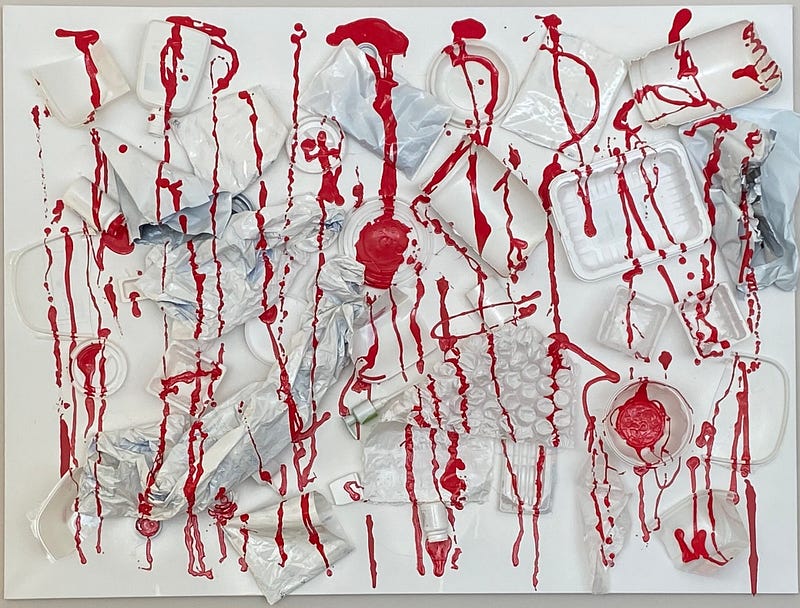
And as far as art is concerned, I was motivated to create a piece using every piece of plastic I had used in one week (see image under title), planning to do a series of similar canvases over a period of 5 weeks and hopefully being able to demonstrate, visually, the decrease in my use of plastic while creating something that is, if not visually pleasing, at least not visually abhorrent.
So for me, Art, capital “A”, is many things. But primarily it is a creative response to the world the artist lives in, whether playful, lighthearted, serious or political.


