
Art as a Vaccine: How the Plague Inspired Shakespeare’s Tragedies
Shakespeare turned to art in quarantine and you should too
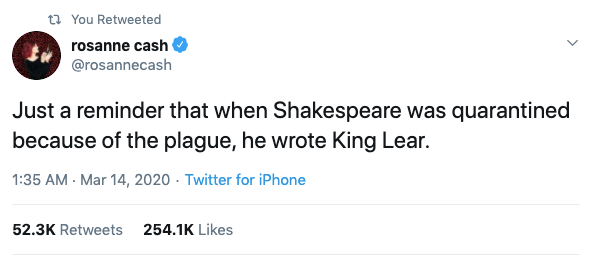
While coronavirus has forced the global population into quarantine, most of us have passed the days learning TikTok dances, binging Netflix, and spending countless hours scrolling through our social media feeds. A tweet that has been circulating since the pandemic exploded puts the pressure on to make use of our now open hours:
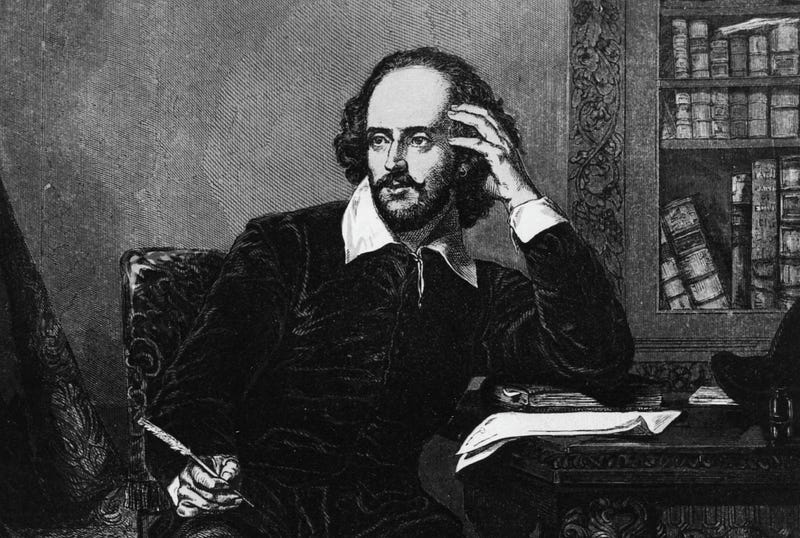
Scholars believe Shakespeare did write King Lear during his time spent in quarantine; in fact, Shakespeare’s work was defined by the plague. Shortly after his baptism in 1564, the church register read, “Hic incepit pestis” — Here begins the plague. Ravaging Europe over the 16th and 17th centuries, the bubonic plague forced the population of Stratford-upon-Avon indoors. Mortality rates reached an all-time high, casting a shadow of fear over the small town.
Not only did the plague creep across the streets of Stratford-upon-Avon, it crept its way into Shakespeare’s work; Romeo and Juliet, King Lear, and Macbeth are saturated with references to the pestilence. You most likely didn’t appreciate these plays after reading them for the first time, let alone appreciate their frequent allusions to real-life circumstances. The beauty of Shakespeare’s plays is, with each read, you uncover something you previously overlooked.
Romeo and Juliet: The Plague’s Role in Plot
You probably read Romeo and Juliet in high school and remember the gist of the plot: the two protagonists come from rival families, they fall in love, and then they die. You probably don’t remember — or maybe didn’t know — that the plague was the puppetmaster of these major events. Friar John can’t deliver Friar Laurence’s letter to Romeo because he’s stuck in quarantine. Romeo and Juliet are not just star-crossed because of their immense affections for each other, but because they are plague-stricken. The plague is the driver of Romeo and Juliet’s plot, responsible for twisting a love story into a tragedy.
Shakespeare doesn’t belabour the plague as the play’s puppetmaster because, in his time, it was obvious. Everybody that watched the play would have understood it as the plot driver. In the 17th century, the plague was omnipresent: it seeped its way into all facets of life, especially artistic expression. Shakespeare’s clever assimilation of the plague into Romeo and Juliet is unprecedented. In his later works, we see its tragic effects further develop.
King Lear: The Plague as a Curse
Although oblique, the influence of the plague on King Lear is present. We see it seeping its way into King Lear’s dialogue — specifically dialogue meant to inflict pain. Lear curses his daughter Regan and his son-in-law Cornwall with “Vengeance, plague, death, confusion,” and reduces his daughter Goneril to a “plague-sore or embossed carbuncle / In [his] corrupted blood.” “Plague-sore” is a reference to the inflamed lymph glands symptomatic of the plague, which were widely feared and a suffering you wouldn’t expect to be wished upon a daughter. Perhaps King Lear is an allegorization of the plague, as the disease preyed upon the youth of Europe.
Not only do these references continue to echo in curses throughout the play (Kent curses Oswald with “A plague upon [his] epileptic visage”), the characters outright recognize the plague as a lethal force. Lear describes the plague as pendulous in the air, referencing the belief that airborne transmission could disseminate the disease. Similar to Romeo and Juliet, the plague is ubiquitous in King Lear; it pervades the play’s atmosphere and dialogue.
Macbeth: Illuminating the Terror Associated with the Plague
Born out of Shakespeare’s time in quarantine, Macbeth contains a speech that embodies the terror that accompanied the plague, and infested the European population just the same: “The dead man’s knell / Is there scarce asked for who, and good men’s lives / Expire before the flowers in their caps / Dying or ere they sicken.”
In translation: Men drop dead before the flowers in their caps have the chance to wilt.
This phrase so clearly references the spike in mortality Europe saw as the bubonic plague swept across its continent. People feared it would come knocking on their door and wouldn’t leave without taking their loved ones, or themselves, with it. As the plague spread, so did fear. Sound familiar?
Through his work, Shakespeare has given us some of the most powerful lessons on human nature. We can understand love as an overpowering force through Romeo and Juliet, the importance of compassion through King Lear, and the power of guilt through Macbeth. But Shakespeare’s work itself is a lesson on how to create — the plots and dialogue of his plays show us how to take our unfortunate circumstances and turn them into art.
When pandemics bring the earth to a still, we are left in darkness and uncertainty. But it is in these times of tragedy that we turn to art. Art is a vaccine, capable of bringing us comfort and peace in times of disruption. Although it may seem paradoxical, new life can be born from tragedy if we pass the days indulging in our passions.
References