Areas: Algerian President Tebboune Goes To China For Official Visit & Nigerian President Bola Tinubu Is Hopeful On Country’s Energy Exports
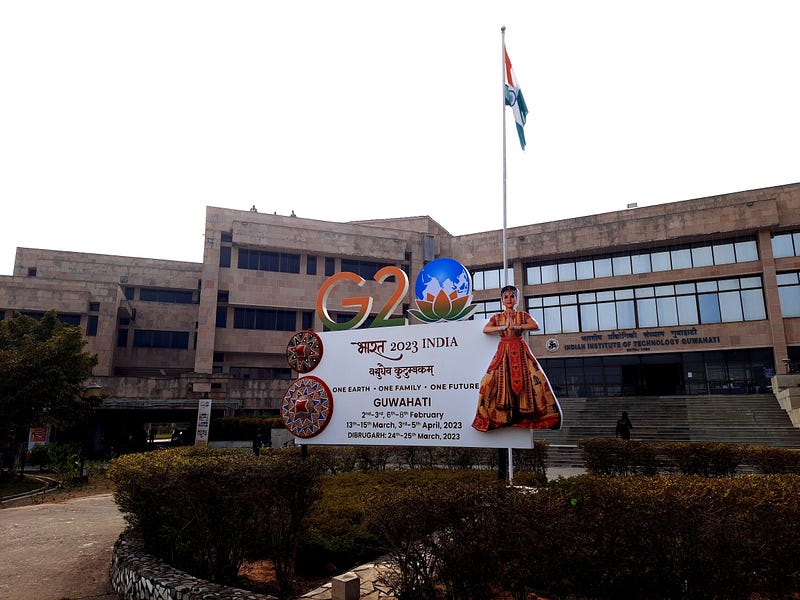
The Group of 20 leaders, known as G20, met over the weekend in India to discuss issues affecting the global economy and more. One of the highlights of this year’s meeting appears to be the G20 Energy Transitions Working Group Meeting.
Although the G20 ended without a consensus (big surprise, right?) it is clear that this meeting is setting the tone going forward about one global market aspect of the near- and long-term future: energy.
That’s why I am writing about the current affairs of both Algeria and Nigeria in Areas & Producers this time. Algeria is a North African country along with Morocco, Libya, Tunisia, Egypt and Sudan, while Nigeria is considered part of West Africa’s Sub-Saharan region.
They are both OPEC members with significant production and reserves of oil and gas. Though my purpose for Areas is to cover the political and economic considerations of countries, it’s impossible to ignore the dynamics of energy markets in the case of Algeria and Nigeria on the countries’ strategies. That’s why it is essential to know about the global commodities and why countries have a deep interest in emerging markets.
Algerian President Tebboune Goes To China For Official Visit With Chairman Xi Jinping
The President of Algeria Abdelmadjid Tebboune met with Chinese Communist Party (CCP) Chairman and President Xi Jinping on 18 July 2023 on a high-level leaders visit to the Great Hall of the People in Beijing. A few days into the heads of state visit Tebboune even traveled to China’s booming hi-tech city of Shenzhen to cap off the China trip.
For a little more context Algeria-China relations, the North African country has been keen on joining BRICS — Brazil, Russia, India, China South Africa — in a move that would give the inter-governmental organization significant exposure to global oil and gas markets. Tebboune’s visit to PRC did not result in any highlights, other than the fact that it carried geopolitical significance: the Algerian leader had just visited Russian President Vladimir Putin for another head of state meeting in June.\
Here’s what this means for other geopolitical trends in the Middle East and North Africa and the global commodities markets.
An event that was followed closely by the international media, the heads-of-state meeting between China’s Chairman Xi Jinping and Saudi Arabia’s Crown Prince Mohammed bin Salman (MBS) was held at the First Chinese-Arab summit on 6 December 2022 in Riyadh, Saudi Arabia.
What this means for oil production on international markets has yet to be clarified, but it could mean that OPEC seeks to keep prices stable on energy markets as China recovers from its Covid-19 pandemic lockdowns, hurting the country’s GDP growth and industrial production in unprecendented ways since China’s rise in the global economy.
The First Arab-Chinese Summit signals a change in the thinking on Saudi Arabia’s control over oil production, and how they wish to court China as a major oil importers. Increasing military and defense ties would be a big step, though I don’t think that’s the overall concern here.
A bigger concern is how and to what extent China is going to roll out its Belt and Road Initiative (BRI), where the Middle East and North Africa (MENA) is poised to play a pivotal role in linking up supply chains and transport routes throughout the European, African and Asian continents.
This is relevant to global oil supplies in a number of ways. Let me just say that the countries with increased leverage over oil markets are more likely to use this advantage to achieve political ends. A successful roll out of the BRI in MENA would be benefical to OPEC oil supplies and exports. China would need ALOT MORE oil, and the supply chains would improve the prospects of getting more oil moved around North Africa, set to become one of the world’s next industrial and energy hubs.
The geopolitical trends are quite significant to oil and coal production on international markets. According to sources speaking to CNN, the upcoming meeting between President Xi and Crown Prince MBS is a “milestone” for China’s engagement with MENA countries.
Indeed, I already pointed out the critical aspects of China’s BRI in MENA, but this meeting also symbolizes how fast the times are changing in respect to geopolitical trends and global commodities. For in-depth look a this story, read about the latest OPEC+ oil cuts in Areas & Producers:
Nigerian Leader Bola Tinubu Is Hopeful On Country’s Energy Exports As A Way To Lead In Africa
Nigeria has always been one of Africa’s biggest oil and gas producers in OPEC. Over the last decade, however, Nigeria has been dealing with extreme domestic political instability, acts of terrorism toward oil pipelines and even at the center of a global corruption case against Swiss-based global commodities producer Glencore.
Multinational corporations (MNCs) don’t appear to be giving up on the country’s energy exports either. Oilfield Africa Review reported that recently elected leader of Nigeria, Bola Tinubu, has been working to get the country’s energy export regime back on track. This is evident in two recent developments: signing of agreements for the Nigeria-Morocco gas pipeline and the Shell Petroleum Development Company (SPDC)’s visit to Nigeria in July to meet with Tinubu about future hydrocarbon exploration in the country.
Here’s what this means for other geopolitical trends in the West Africa and Sub-Saharan Africa region and the global commodities markets.
On 30 May 2023 it was announced that Bola Tinubu was elected to be Nigeria’s next leader. Nigeria is the largest democractic nation in Africa, yet it is bogged down with severe economic and security issues domestically.
One of the moments capturing headlines of his re-election is when he told a crowd of people in the capital Abuja, “Fuel subsidy is gone”. BBC
Of course, the outcome of the election results are being disputed within Nigeria. I say “of course” because this seems to be the prevailing trend across the world.
Tinubu is nevertheless coming to power in Nigera, at the center of a looming energy and food security crises on the African continent. But one of the key issues specific to Nigeria are the pervasive accounts of domestic criminal activity, notably with the rise of kidnapping and ransom throughout Nigerian community. CNN has linked these developments to ongoing political problems: insurgencies, banditry, and communal conflicts.
Senegal has experienced similiar problems in their domestic politics.
At least 15 people were killed during protests in Dakar, Senegal. AP News
Violent clashes between protesters and Senegalese military forces began on 1 June 2023 in Dakar after the court sentenced an influential political leader, Ousmane Sonko, to two years in prison ahead of the next elections in Senegal.
Sonko was accused of “corrupting youth” for his alleged sexual misconduct. But he is also part of the current goverment’s opposition party called Patriots of Senegal for Ethics, Work and Fraternity (PASTEF).
PASTEF leaders have called the court’s sentencing against Sonko a political plot meant to stifle the results of the next election.
For global commodities, by looking at some Liquified Natural Gas (LNG) projects in Namibia, Nigeria and Mozambique. These projects revolve around European-African energy security dilemmas, but also indicate the deeply-embedded domestic corruption and conflicts in those countries.
For example, Mozambique and Nigeria have been closely followed by multi-national corporations (MNCs), investors and human rights leaders alike about the ongoing domestic conflicts and corruption.
Spotlight on Corruption argued that the United Kingdom must enforce the arbitral award of $11.1 billion against Nigeria’s Process & Industrial Developments (P&ID), because the people most affected by the alleged bribery scheme are the 40% of Nigerians living below the poverty line.
Jean-Christophe Rufin, an expert in humanitarian affairs and human rights, was appointed by TotalEnergies on the independent mission at Cabo Delgado Province where the company has invested $20 billion. Due to the conflict between government and rebel groups, most operations in the industrial zone have been halted since 2021.
For more content on geopolitical trends and global commodities, follow the publication Areas & Producers.
Have a specific topic or case about international affairs in mind? Private message me on here Monroe 4PEACE and we can talk about covering it in the publication Areas & Producers.