
Are You Terrified to Leave Him?
A survivor’s guide to leaving your abuser safely

For this article's purposes, I refer to he/she because I’m writing from personal experience. It is by no means intended to exclude other gender violence. I’m not a doctor or a psychologist; my guidance is based on first-hand experience, so please refer to the professional hotline if you or your family need immediate assistance.
Have you decided it’s time to break free from your abuser?
I know you think about it all the time when you’re upset or nursing a new bruise, but are you confident you’re ready?
I also understand the paralyzing fear in your gut when you consider the consequences of stirring things up.
You’ve taken more crap from another human being than you thought possible. Yet you tolerate the name-calling, the persistent sick feeling in your stomach, another slap or a shove down the stairs because you’re terrified to leave.
I get it.
Where will I go?
What about the kids and the dog?
We’d need to sell the house first!
I haven’t really told anyone what’s going on because I’m so ashamed.
I don’t have enough money, and he’ll find me wherever I am anyway, then punish me (and /or the kids) for trying to leave.
First, let me assure you, you’re not alone with any of that reasoning.
It took me two solid years (of the toxic ten) to gather the courage I required to make the first move. It’s the scariest thing I’ve ever done, but I did it, and I’m here to guide you with that knowledge.

The reality is, your forever partner, the one who swept you off your feet, has slowly crushed your hopes, your dreams and your spirit.
That’s the worst part — right?
The bruises fade, you have some good days, but the sparkle’s gone from your eyes, and you feel dead inside. You see your entire life through the only lens your abuser allows you to look through.
Happy is just a word now.
Your zest for life, your ambitions, your motivation, your joy and even your self-care have all taken a back seat to surviving.
Unless someone’s been there, standing right in your size seven Sketcher’s, they’ll never truly understand the depth of your despair.
Death seems like a better alternative in those dark moments, doesn’t it?
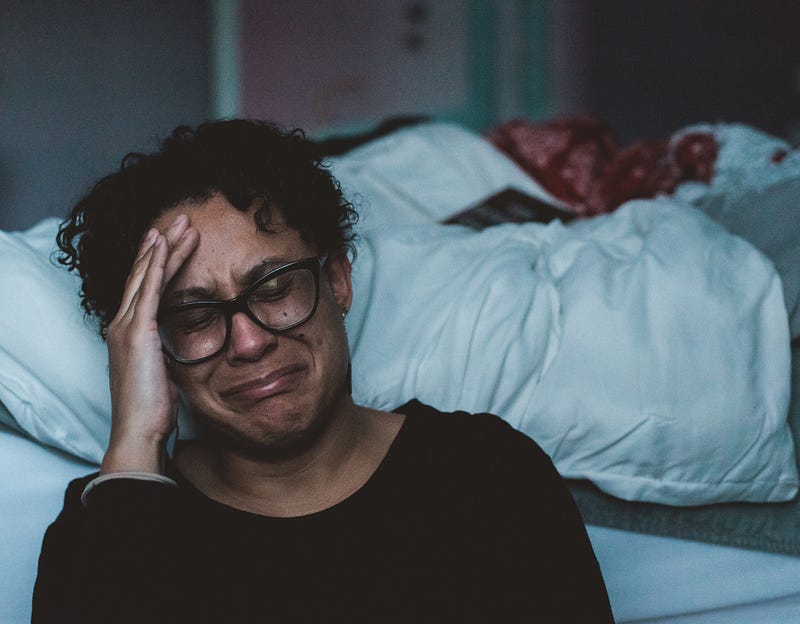
Only you know your circumstances, but if you’re ready to stand your ground and make a move towards a better life, then it’s time to leave.
And if your situation is already volatile, this is a necessary, but frightening next step.
That’s why you need an escape plan, but it’s imperative you plan on good days when you’re less emotional and thinking clearly.
I know you already feel like you’re drowning, and there’s no way out, but there is. Your tunnel vision is merely a side-effect of the abuse.
You can do this.
I’ll help you with the basics below, but each situation is different, and there are experts available 24/7 that are trained to help silently in the background.
My shame was so deep it prevented me from reaching out to professionals for help. I regret that now, so I encourage you to follow through on that plan.
It’s the next best step.
However, I also recognize and understand at my core that you’re looking for an alternative to notifying the authorities.
When I finally understood that my situation wasn’t getting better and never would, I pulled a brief plan together in a moment of clarity. Unfortunately, my tolerance for his behaviour was near zero before I made that important decision.
All it took was one bad night, and my fight or flight response put me in a seriously bad situation that could have been avoided.
Don’t put yourself in that same position — plan carefully and stick to it.
Leaving my abuser caused him to become highly volatile, and it can be a dangerous time for you too. But don’t let that become a reason to stay; the alternative is always worse.
“Worthy now. Not if. Not when. We are worthy of love and belonging now. Right this minute. As is.” — Brené Brown
Please stop trying to understand how you got here, why he does it, why you’re blamed for everything that's wrong and how couples counselling might improve your relationship.
He’s not changing, you can’t fix him, and he’ll continue to do irreparable damage if you stay.
Being straightforward with things you don’t want to hear is my way of cutting through your fog. I’ve been right where you are today — I know the depth of your self-doubt.
I also know you’re stronger than you think — way stronger!
You may also believe that your relationship is different from what other abused women go through. And you’re holding on to the hope that he’ll change because he’s nice sometimes.
Please look at this power and control wheel below — how much of it can you relate to in your relationship?
Take a good long look at this…
If it’s hard to read on your device, click the copyright link below the picture and read it on the site itself.
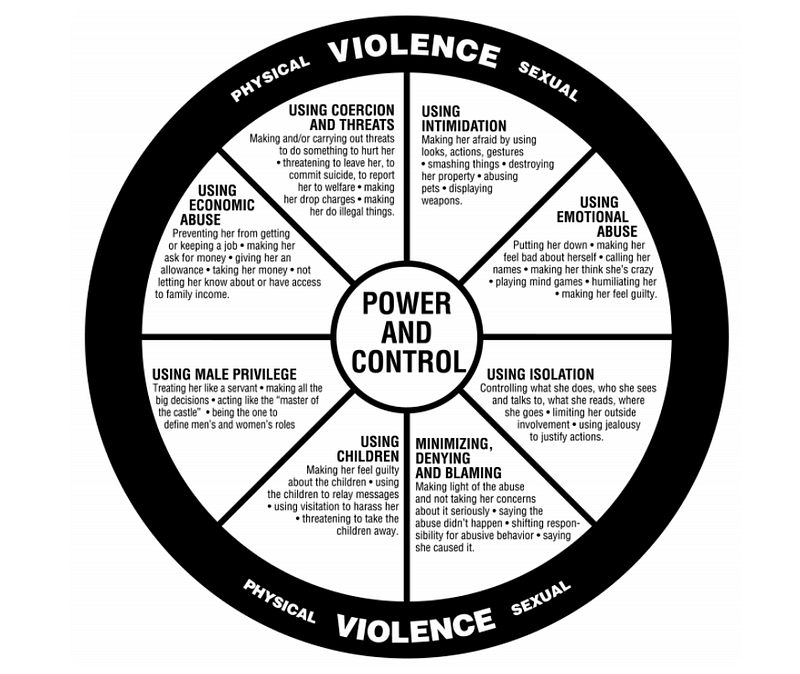
How much of that can you relate to?
I know you assume that what’s happening is your fault, but you’re so unhappy and scared all the time, you fantasize about another life.
It’s time to make that fantasy a reality; break the cycle; it’s your only choice for a better future.
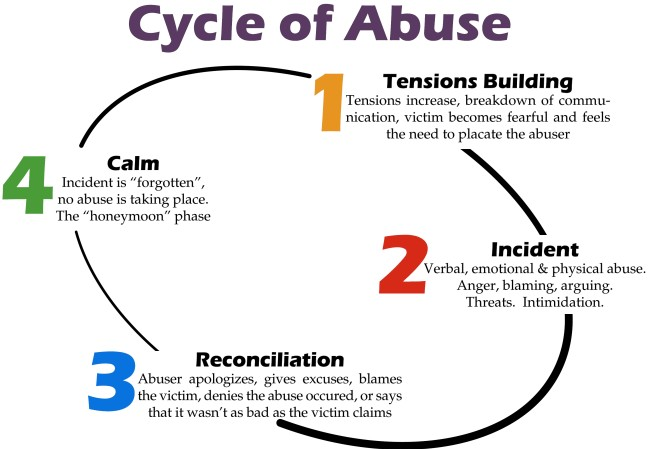
Check out these staggering statistics around domestic violence.
If you still aren’t sure you need to leave but want to understand more about destructive relationships, this is good information.
Here’s an article I wrote, 12 Signs of Abuse You Should Never Ignore, that will also be helpful.
If you are reading this because you know someone in an abusive situation and want to help…here’s some help for you.
If you’re ready to know more about how to start planning your ultimate escape, there’s more below.

National Domestic Violence Hotline — Safety Plan
I highly recommend contacting the hotline above when you’re alone and have time to finish your conversation.
If you know you’re not ready to call the hotline, but you’re curious about what to plan for, this list will be helpful.
Creating Your Safety Plan
- If you’re researching on the internet, make sure to cover your tracks (here’s some help with that) or use a computer your abuser doesn't have access to; a library or maybe at work.
- If your abuser has access to your cell phone records, be sure to use another phone to plan or buy yourself a cheap burner phone.
- Don’t discuss, threaten, or throw ultimatums about your desire to leave when interacting with your abuser.
- Choose a family member (or friend) you can trust explicitly and explain your plan to leave and that you need help. Share only what you're comfortable with, don’t let this step overwhelm you.
- Open a new bank account in your name only— choose a bank neither of you currently use. Consider getting yourself a new credit card as well.
- You can also get yourself a post office box — so that any private correspondence (like from your new bank) doesn’t land in your abuser's hands.
- Start setting money aside that your abuser can’t track. Examples: overtime at work, borrowed funds, tips, savings you might already have tucked away, etc.
- Start making arrangements for a safe place to live — a woman’s shelter is always an option (especially if you have kids), but if you know you won’t do that, start looking for a place. Your best options are with people you know and trust, but that’s also the first place he’ll look. The more distance you can put between yourself and your abuser is what you need.
- Gather important belongings like; clothing, kids toys, blankets, glasses, keys and important paperwork. Stock up on medications and necessary toiletries for yourself and everyone who’ll go with you.
- Do these steps above slowly and deliberately and cover your tracks. It’s also a good idea to move things you’re collecting off-site if possible.
- Arrange for transportation — or make sure your car is serviced, has good tires and is full of gas.
- Make sure your driver's licence and passport are current for any necessary travel.
- If you have kids — Don’t mention anything about your plans until necessary. This will depend on their ages and the extent of their involvement.
- Find a pet sitter if you have to — nobody too close to home.
The Wrap Up
As a reasonable and kind person, I thought my best approach was to ask my abuser for a trial separation. Not because I had any intention of reconciling, but because I assumed he’d be less angry and cause fewer problems than if I asked for a divorce.
It was a mistake, and I paid dearly for it…for years.
Your abuser is neither kind nor reasonable, so don’t assume he’ll respond well to your reasoning. That’s not how they operate when they feel loss of control.
I highly recommend being discreet and acting normal to keep from tipping him off as you carefully plan your escape.
I refer to it as an escape because that’s what you need to do. If possible, plan a few days away from him or wait for him to be away from home. It’s a great time to load the car and make your move if time permits.
Just be gone one day and never go back.
Yes, it will be hard, painful even. But when you’re second-guessing yourself, don’t focus on the good times or how upset he’ll be.
Take a trip down memory lane to the last time he cut you with his words. Or when he left bruises or did something cringe-worthy to your kids (or your pet). Use your fear as fuel to move forward.
My greatest hope is that you use my story to find the strength within yourself to find your light once again. Decide to change your life, feel empowered to dream your dreams and walk confidently towards them.
“The final stage of healing is using what happened to you to help other people. That is healing in itself.” — Gloria Steinem
Remember, you’re the strong one — you’re the survivor. You’re worthy of much more, and a happy, bright future is right around the corner.
I promise.
The National Domestic Violence Hotline:
Advocates are available 24–7 at 1–800–799-SAFE (7233) in more than 200 languages. All calls are free and confidential.
https://www.thehotline.org/help
I’m Liz, the self-empowered, red wine & coffee lovin’, personal growth fanatic behind this article. I’ve stopped shrinking into places I’ve outgrown, and I’m a fan of straight talk and practical solutions. That’s why I’m here to Empower, Educate and Entertain.


