
Are You Ready to Free Yourself from Destructive Emotions?
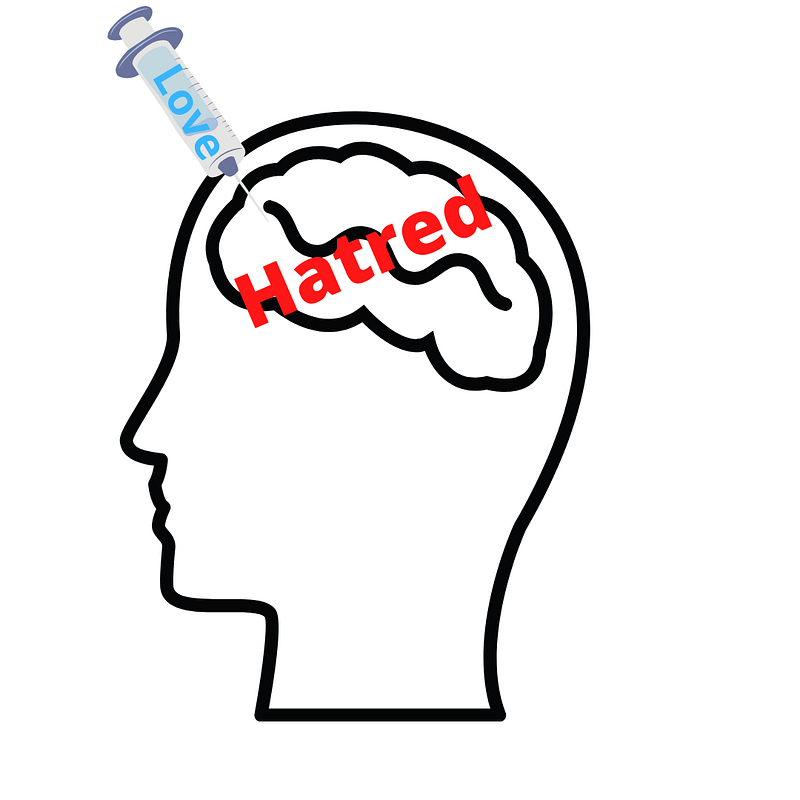
All of us have destructive emotions — and we know it. What we may not know is how to work with them effectively. After reading this, you will know. But be careful, with this knowledge comes a responsibility. Are you ready to free yourself from destructive emotions?
In Buddhism, there are 5 destructive emotions — called afflictive mental factors — learning to work with this can free us from their power. Despite that fact that these are Buddhist teachings, we can all use them — whether secular or religious.
First, what is a destructive emotion?
Buddhist view of “destructive emotions”
What is destructive?
In the Buddhist sense, practices are meant to bring one closer to enlightenment. With that in mind, destructive emotions are emotions that“[prevent] the mind from ascertaining reality as it is.”
What is an emotion?
“Emotion” isn’t a term used in Buddhism. Mental factors is more accurate here. Even in the west, the concept of “emotions” in relatively recent and has dramatically evolved in the past few centuries. Mental factors is a better term here, and has had a consistent meaning in Buddhism for millennia.
Mental factors then, are factors that color the mind in a way that makes it difficult or impossible to see reality as it is.
Imagine being very angry at a friend for hitting you. The friend may explain it was an accident, but if your anger is too strong, you may not even hear what he says!
A thoughtful reflection would show that individual emotions, say anger, may be destructive at times and not at other times. Sometimes we are lost in anger and cause physical harm to others. This is destructive in the western sense.
At the same time this anger disturbs the equanimity of the mind, making it harder to see reality as it is. This is destructive in the Buddhist sense.
Though, we can be angry and still have a clear vision. We could utilize our anger as an energy to create positive action. This would no longer be destructive.
5 Afflictive Mental Factors (Destructive Emotions) and Their Antidotes
Hatred
Hatred is the wish to harm another and/or destroy their happiness. If we hate something, we really do not want it to be happy. We can hate other people and creatures.
Is it possible to hate oneself? One interpretation says no. Going to the extreme case of suicide, the act of suicide can be seen as freeing oneself from suffering, an act of love.
The antidote to hatred is love. Through practicing love, we can begin to overcome hatred. Love is best practiced in life, but can also be practiced in meditation — here I offer one practice.
Desire/Attachment
Attachment is described as a clinging to a way of perceiving things, or as seeing things in a way they are not. For example, seeing things as permanent even though they change.
A common example, as Connie Habash writes in “Awakening Self,” attachment is the “I gotta have it” mind. I gotta have that cake, I gotta have that car, I gotta maintain my position of power, I gotta have more wealth.
Another common attachment is to the view that things are permanent. If we are in a difficult situation of life, we can believe that things will never change, leaving us stuck in that situation. There are an infinite number of mental objects to attach to, giving our mind plenty of attachment points.
The antidote for attachment? Two are given. One is objectivity. This means seeing an object for what it is. No object is a true source of happiness. When we see an object for what it is, we will realize we don’t need to attach to it.
Another antidote is to contemplate the negative aspects of the object. Seeing that eating too much ice cream makes us sick can make us less attached to ice cream. We can meditate on this fact, even giving rise to the sickness of eating too much, until we internalize the message that attaching to ice cream is an affliction.
Ignorance
This afflictive mental factor, like attachment, isn’t an emotion. Though having ignorance can give rise to emotions under certain circumstances.
Within the below referenced book, ignorance is described as the inability to know what actions to take, and what to avoid, in order to achieve happiness and reduce suffering.
For example, we may binge watch TV because we want to reduce suffering, but this often doesn’t really help our suffering, and can actually increase it by creating attachment to the particular TV show.
At it’s root, ignorance is often described as a belief that there is a self separate from everything else, leading to a dualistic view. This ignorance leads to attachment to something that can be identified as the self.
The antidote is wisdom, or a refined understand of what needs to be accomplished and what doesn’t.
It’s clear to me that a lot of the “work” being done today isn’t done in a way to relieve suffering, but rather further induces craving and attachment.
Instead of seeking profits, power, fame, status, etc, consider what really needs to be done, and also what needs to be avoided, for you to reduce suffering and achieve happiness. Even just considering in this way can help develop wisdom.
Jealousy
Jealousy is described as the inability to rejoice in others happiness. When I hear this, I see my past self from many years ago.
For myself, I am jealous of others happiness when I don’t feel happiness myself. Through practice it’s possible to see other’s happiness as part of my own. If someone is happy, they can share that happiness with me and others, so why not rejoice!
The antidote to jealousy is that: rejoice in other’s happiness. If you have a barrier like I did, remember that happiness is not conserved…one persons happiness can spread infinitely outward, so there is no need to compete. Instead, simply rejoice!
Pride
Pride is the feeling of being superior to others and not recognizing their good qualities. This is different from feeling “proud” of yourself for doing good work. It may also be translated as conceit or arrogance.
Confidence is sometimes conflated with pride, though it is different. It is possible to be aware of ones skills and strengths, using them with confidence, without being prideful. Indeed, it is necessary to know ones strengths to know how to best act in this life. Pride would arise when comparing oneself to another and finding oneself better, despite actually not being better.
The antidote to pride — appreciation and humility. Appreciate others achievements, this can be easily done if you recognize how their achievements benefit you.
Humility opens your eyes to your own defects. By realizing that you are not perfect, nor are you better than another, pride can be released. You are simply another person, one among 7 billion with your own strengths and weaknesses.
Whether we look from a religious lens or from a secular lens, it is worth removing these “destructive emotions”, or “afflictive mental factors”. Now that we know the antidotes, we should act.
The specific implementation of antidotes can vary. For love as the antidote to hatred, we can cultivate love through loving actions, loving words, loving thoughts, or even by watching others express love. There isn’t one way to do it. The important point is to keep love at the front.
Knowing that there are antidotes to our destructive emotions is empowering; it gives us control over our own happiness.
Learning to apply the antidotes regularly isn’t always easy, but with time becomes easier and easier.
I hope you take the time now. Choose one of the destructive emotions. Start applying the antidote today.
This article is based “Destructive Emotions How Can We Overcome Them?” a narration by Daniel Goleman of conversations with the Dalai Lama.
This article was written as part of Prajna Life Coaching — offering life coaching based on mindfulness teachings. Visit https://prajnalifecoaching.com/life-coaching/ to learn more.