
Are You Ready for the Post-Pandemic Wave of Hedonism?
The next roaring twenties could be ahead of us. Here’s why.
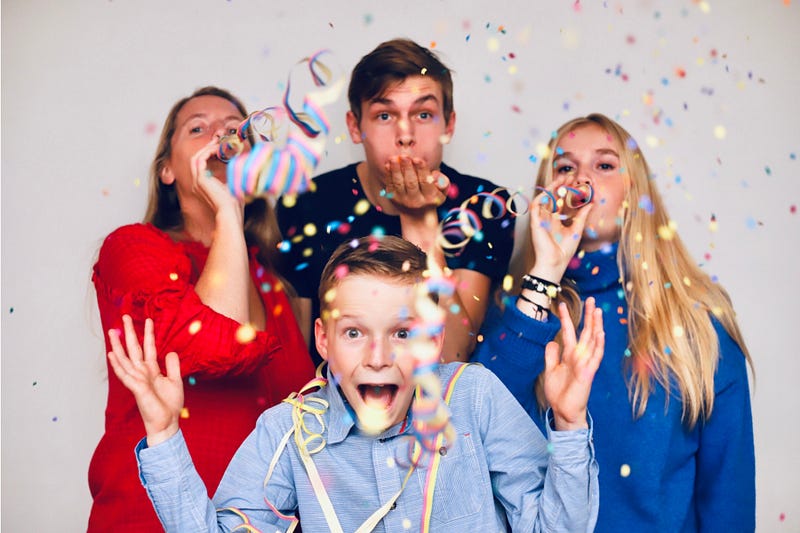
Many people hope that the experience of the pandemic will lead humanity to more sustainability and minimalism. Historically, however, there is little reason for this hope.
Whenever a period of crisis came to an end, people did not react thoughtfully but euphorically. The experienced lack of joy of life and freedom was overcompensated, and everybody wanted to forget the dark times as soon as possible.
In history, there are numerous examples of this psychological mechanism.
The roaring twenties
After the end of the terrible First World War, the global economy recovered surprisingly quickly. This was partly since industrialization was finally able to really pick up speed. Electrification progressed rapidly, and new entertainment media such as radio and film experienced an unexpected upswing.
In the twenties, the end of a global crisis met the explosion of new, exciting technologies, and two euphoric circumstances reinforced each other.
Suddenly everything seemed possible for people. Prosperity and happiness for all suddenly seemed possible, and people made plenty of use of it.
The attitude towards life in the twenties was characterized by debauchery, testing limits, and the elimination of conventions. It is no coincidence that jazz had its breakthrough in the twenties.
The end of the big party finally came with the Great Depression.
Germany after the Second World War — the economic miracle
How does a nation deal with being responsible for the death of over 70 million people? How does a country cope with having to face the murder of six million Jews?
On the one hand, Germany gave itself one of the most modern and democratic constitutions in the world to prevent similar catastrophes in the future. That was the political reaction.
But the ordinary people dealt differently with the end of the reign of terror. They erased the past from their memory, looked ahead, and stunned themselves with consumption.
The fifties were the decade in which suddenly every family had a roast on the table on Sundays when cars were suddenly everywhere, and people defined themselves by what they could afford. People became fat and ponderous and believed that it would go on forever. The belief in constant economic growth practically became a religion during this time, the aftermath of which we still feel today.
The pill is here — the sexual revolution in the seventies
The children of the post-war generation began to ask questions at some point. Could consumption really be everything? Was spirituality not more important than the strict conservatism that had spread in the fifties? Why should one satisfy one’s needs only with more and more food and possessions instead of love and sex?
The invention of the contraceptive pill in the late 1960s met with a growing protest movement against the Vietnam War in the USA and the rest of the Western world. The sexual revolution was the direct result of this encounter and, in turn, fired the cohesion of the protest movement.
But the pill did not remain alone for long. The realization that a substance could lead to such mighty social upheavals certainly paved the way for the increased use of synthetic drugs. The users mostly emphasized the consciousness-expanding aspect, but it can be assumed that hedonism was the driving force.
The narrow-minded worldview of the parents’ generation had long weighed heavily on the souls of the youth. Now, at last, they had the means to break out of this cage and try their hand.
What was jazz in the fifties was rock music in the seventies. It was the cultural expression of a generation that wanted to throw off the past burden and set off for new shores. But the tools of liberation soon turned against their users. The hippie movement choked on drugs, and in the end, the world-changing impulse of the flower children came to a standstill.
With the Nato double-track decision, the hope for peace seemed to be lost for good. The flower children disappeared into oblivion, and the depressive eighties began.
End of the cold war — the nineties
When I wrote above about the depressive eighties, many will undoubtedly contradict me. People who grew up in the eighties usually like to remember that time. I, too, associate many nostalgic memories with that time.
But we like to forget that we lived in the eighties with the constant certainty that the cold war could turn into a nuclear war at any time. The music of that time reflects this feeling very well. DarkWave, Gothic, and Punk were not really life-affirming.
But when suddenly, the iron curtain fell, and the Eastern Bloc dissolved, it seemed as if humanity had finally reached the state of eternal peace. The threatening confrontation between East and West was suddenly no longer existent. What should we still worry about now?
The appearance of the nineties: In no other decade had there been such an apolitical youth before. The more a country was affected by the restrictions of the Cold War, the stronger the counter-reaction.
Especially in Germany, which was divided by a wall for 28 years and would have been a battlefield in the event of a war, the youth literally flipped out.
Nobody wanted to think about war, poverty, hunger, or environmental protection anymore. A new form of electronic music emerged in the underground clubs of Berlin and other metropolises. The rhythm was monotonous, fast, and hypnotic. Massive raves were celebrated, and a boundless individualism spread.
The nineties were pure hedonism. People celebrated as if there was no tomorrow to worry about.
But this mentality also spread in the economy. Under the influence of neoliberal economic policy, the international financial economy cast off all its shackles and perverted capitalism beyond recognition.
Even if we consider the 1990s as a decade, this frenzy only really ended with the world economic crisis of 2008, even though the attacks of 2001 had already ruined the party for good well before that.
Since then, the world has been in constant disarray. It was not clear where the journey would take us. More state or less? More regulation of the markets or less? How should we deal with the threats from non-state warring parties, in other words, with international terrorism?
As always, in times of insecurity, people compensated for their fears by distraction. Tourism was booming, and the entertainment districts of the big cities were always well attended. However, it rarely became excessive in all these years, as the world continued to develop at a breathtaking pace. People were always busy keeping up with the speed and not being left behind. Entertainment was one way to deal with this pressure, not to eliminate it.
And then came Corona
The pandemic in which we find ourselves is the first real global disaster in modern history. It directly affects every person in the world, and no country is spared.
Our freedom to do what we want is massively restricted. We had to throw many habits overboard that we had grown fond of within a concise time.
Public life came to a complete standstill almost everywhere. Fun is suddenly something that is no longer available everywhere and immediately. We can no longer go to restaurants, bars, clubs, or gyms, and even travel has become almost impossible.
What will it do to us if all this is suddenly possible again? If a large part of the world population will be vaccinated in the foreseeable future and the restrictions can be lifted again, this cannot remain without consequences.
History teaches us that people are likely to overcompensate for the freedom they have been missing for so long. The hope that reflection and insight into our lifestyle’s vulnerability will prevail is expected to be short-lived.
Why should this generation react differently to the end of a catastrophe than the generations before it? That will not happen.
Will tourism decline? Will we party less in the future? Will we be more careful with our planet?
I fear that the opposite will happen immediately after the end of the pandemic. We will see extremes of hedonism that we can hardly imagine at the moment.
But this phase will probably be as short as it will be severe. People will freak out for a while and overdo it, but eventually, this wave of hedonism will subside. Let’s hope that a new crisis will not be necessary first.
So we should be prepared for it to happen.
If we accept that people will react to the end of the crisis with a new hedonism wave, we can get through this phase calmly.
René Junge a published author writing on ILLUMINATION.
Receive weekly updates, and don’t miss any of my articles.
subscribe here http://bit.ly/ReneJunge
Read also:


