
Are You Missing Purpose? Find it. Now.
[Author’s note: This post is a chapter of my forthcoming book RESET: Building Purpose in the Age of Digital Distraction]
Chapter Seven: Mission Mentality
What is powerful enough to inspire me to avoid distractions?
“The purpose of life is a life of purpose.”
Robert Byrne, American Author
January 14th, 2010 changed my life forever.
I was in San Francisco at the Marines Memorial Club & Hotel. The building is a focal point for all military-related events and communities in the Bay Area. That day we were listening to a senior military commander give a talk titled “The Way Ahead In Afghanistan”. This particular general — Richard Mills — would be leaving the U.S. soon to take command of all the Marines in the volatile Helmand and Kandahar provinces.
I sat at a round table, the remains of a meal scattered across my plate. With me at the table were seven other guys, all of whom had served in the Marine Corps or Navy. Surrounding us were hundreds of others veterans from the major wars of recent American history: Iraq (both times), Afghanistan, Vietnam, Korea, and World War II.
In 2010 the surge in Afghanistan was well underway. Everyone knew that the next couple years would make a huge difference in the outcome of the war, and also the stability of the entire region.

As I sat listening to this general lay out his plan, I casually scanned the room. I was drawn to the faces of the older men. They were perched on the edge of their seats, eating up every word. As crazy as it sounds, these guys all wanted to deploy to Afghanistan! Most of them would have had to leave behind cushy jobs in banking, real estate, consulting, or technology.
These people didn’t care about money, though. Not at that moment. Everything else about their lives receded into the background as they listened eagerly to details about the upcoming campaign that could decide the future of a nation and a people.
All I remember thinking at the time was “I don’t want to be like that when I’m their age, wishing I had raised my hand to take on this challenge.” Something had shifted inside as I listened to that general. Once again, I had that old, familiar feeling. I had a purpose. I was on fire.
Like the men around me, I had some fight left in me. But unlike them, I could actually do something about it.
And so I did, dropping out of Stanford to rejoin the Marines. I finished the quarter at Stanford in March and checked back into Camp Pendleton in Southern California by the first week of April. By the middle of August, I was saying goodbye to my family and heading over to Afghanistan.

Many of my civilian friends didn’t understand. My behavior was borderline insane. Drop out of a great school to go to war? Why? They couldn’t see the value of the mission, or how I fit into it. But that’s okay. I didn’t blame them. They weren’t me and didn’t have my experiences. I could clearly see how much I needed to walk down this path.
School wasn’t cutting it. I couldn’t sit in a classroom. Not when there was a chance I could make a real difference instead.
Hungry For Purpose
The Ancient Greeks used the word telos. The best translation is “end-purpose” or “end-goal”. I really love this concept. The telos of a thing. What is its purpose? Why does it exist? As we saw last chapter, this is a key element that entrepreneurs coax out of themselves, even if they need a little help sometimes.
The telos unlocks their enthusiasm and drive by providing a true north. The telos becomes their mission. Their purpose. Their reason for taking every breath.
Most people do not think about the world like this. We get dragged away from the most important considerations by a constant barrage of pointless junk. The natural friction of life — bills, traffic, paperwork — forces us to spend our precious time worrying about the details.
We stare down at our feet — or our phone — as we shuffle through life.

We often forget why we are doing something in the first place. Whatever our original objective, we let the smaller intermediate tasks get in the way. Missing the forest for the trees, as the saying goes. We rob ourselves of the ability to see how the dots connect. This is such widespread behavior that it even has an official clinical name: goal displacement.
Our tendency to get distracted with details is precisely why we need missions! A mission lifts up your gaze, forcing you to look up so you can stare confidently at the horizon. The mission reminds us why we do what we do. This is a rare trait in a world where everyone seems perfectly content to plod along mindlessly.
A mission motivates us to the point where we will let nothing stand in the way of making it a reality. Doubts are unavoidable, but they can be overcome when we can see the clear connection between our current actions and our ultimate goal. Every obstacle will be overcome.

A mission reorganizes the way you think. A compelling mission reframes the resources around you. Everything becomes a tool to help you build your dream. Everything, even money, is evaluated based on how it can move you closer to the telos.
A mission also inspires the people around you. There is a glorious power and freedom to the feeling that we are doing what we are meant to do. And that is exactly what happens to a team when it collectively adopts a mission. People are freed to do their best work in service of a compelling cause.
Marc Benioff, the billionaire founder of Salesforce, learned this the hard way. He struggled for years as an early executive at Oracle. The company wasn’t able to plan effectively because the business environment changed so quickly. Without a plan, communication broke down.
Marc’s response was developing the now-famous V2MOM tool. It starts by clarifying the vision of the company. Everything else hinges on that vision. That goal. That mission.
Paradox Of Choice
Unfortunately, compelling missions seem to be few and far between. If you’re like me, you’ve been interested in lots of different ideas, people, jobs, companies,and places. There are so many options out there! How can anyone ever truly know what they want out of life? It’s so hard to choose.
I could never just pick one and stick with it for the rest of my life. That’s completely unrealistic.

Don’t fall into this trap. No one has complete confidence in a choice when making it. We can’t set such a high bar before making a choice. None of us have unshakeable confidence in our personal and professional goals.
That’s true even for the folks who tell you that they always knew they wanted to be a doctor, engineer, a social worker, or whatever. They don’t always feel that way, but the telos is stronger than their inevitable doubts.
Clearly knowing our mission means that we have memorized the story we tell ourselves every day about why we get out of bed every morning. No matter how we feel, we still get up.
Focus, Focus, Focus
Focusing on a mission is a skill. A lucky few — such as the entrepreneurs in the last chapter — are born with enough of this mission mindset that it naturally modifies their behavior. They are totally obsessed with a particular opportunity and will take incredible risks to take one good shot at it!

Elon Musk is the extreme example of how a mission mentality can affect our behavior. The billionaire entrepreneur built Zip2 and Paypal, netting himself almost $200 million by 2002. And did he put that money in the bank? No, he promptly plowed it into his next three companies: SpaceX, Tesla, and SolarCity. And I mean, all of it. In 2008 he was completely out of cash and both companies almost went bankrupt. That’s how much some entrepreneurs believe in their missions.
The rest of us aren’t like that, of course. And I’m not sure we should aspire to be. The point is that we can achieve many of the benefits of this kind of mindset.
We can train ourselves to identify and pursue compelling missions.
Finding a mission is easier said than done, though. Many people and organizations failed to build and maintain a mission mentality. Often the telos fails to catch hold or quickly dies out. It’s hard to define and then pursue a mission.
One of my professors at Stanford, Rob Reich, understands how difficult it is to choose in a world full of options. On the last day of his classes, he offers the students a simple but provocative challenge: learn to close doors. Don’t become obsessed with keeping your options open.
After years of watching students struggle, Professor Reich now thinks the single important lesson he can impart is that everyone needs to learn to commit. Avoiding choices is itself a choice. Seek out discomfort. Make the hard choices that will ultimately reward you.
Many of us have heard the saying — attributed to the ancient Greek philosopher Socrates — that the unexamined life is not worth living. Professor Reich turns this on its head, reminding students that the unlived life is not worth examining.
I Want YOU
To find practical examples of being how someone has become infused with a mission mentality, we can first turn to the United States military. Of course, the military has its flaws. I could write for hours about the problems faced by our armed forces. But you do have to give credit where it’s due.
The military is the only long-standing human institution that is built around missions. The martial culture requires missions. It feeds on them. Missions are the key ingredient for any military to be consistently successful not just on the battlefield, but also during the long periods of intense training between wars.

What does it mean to be mission-driven? How do you get young men and women to suffer through months or years of hardship and danger for almost no pay? The answer lies in the way the organization creates meaning through common purpose.
Start With Why
Everything in the military is about an objective. There is always a light at the end of the tunnel. Some goal, some purpose. Some Why?
The military’s emphasis on Why? is part of the explanation for its lasting ability to forge teams. That is the only way to bring a diverse group of human beings together with no shared heritage and get them to function as a cohesive unit. A compelling Why? changes the nature of any group. A bunch of individuals from every race, education level, and socioeconomic status become members of a group that would die for each other.
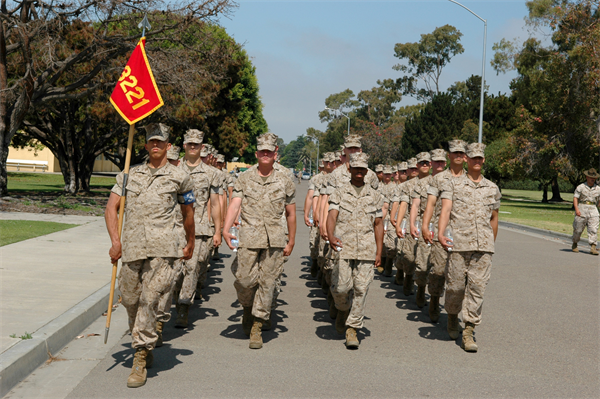
The military designs its training and organizational structure around the need for team-based development. At 20, I was in charge of a fire team, which is four guys. By 22, I was in charge of a squad with a dozen guys. They were all about my age, maybe a year or two younger. It’s crazy to think about that now. I had to deal with every aspect of their lives: physical, mental, moral, financial . . . you name it.
The military excels at combining high levels of responsibility with an overarching sense of mission. I felt connected to something that was both valuable and much larger than me. So did everyone else. The result? Rapid personal and collective development. Lots of mistakes, and lots of learning.

That kind of environment forces you to develop very fast. Much faster than you ever would have believed possible.
Whether or not you agree with the American military and its worldwide role, you should be able to admire the results. There are some elements of this proven methodology from which we can draw. We can use this mission mentality to avoid distractions, push ourselves to new heights, accomplish amazing things, and become more fulfilled.
There is nothing in this world that feels like being a part of something greater than yourself. Something that is a force for good in the world. Something that you know has an impact on other people. It’s a beautiful feeling.
Why? is only half the equation, though. Next we turn to the Who? This is the most overlooked element of a lasting mission mentality.
Off The Wall
We respond particularly well to a mission when it places someone at the center. That means you are able to measure success by the impact you have on other people. Solving problems is important. But we often forget that behind every problem is the person who has it.
Improvised explosive devices — IEDs — are a huge problem in many areas of the world. Hundreds of people die each year, and thousands more are maimed. Men, women, and children. A select few people in the U.S. military are trained exclusively to deal with the threat of IEDs. They are called Explosive Ordnance Disposal technicians, or EOD techs. You may have seen the movie The Hurt Locker, where the main character was an EOD technician.
There is an organization tasked with helping all the EODs technicians. These men and women work all year round, finding life-saving technologies and techniques. That is their mission: to protect EOD technicians. And they reinforce that mission in a powerful way. Every time an EOD tech is killed, they put up a memorial plaque along the main hallway of their headquarters. This reminds everyone why they are there, and the human cost of their failure.
The organization takes their mission and turned it into a compelling phrase that they constantly repeat to each other: keep them off the wall. In other words, keep our job is to keep these people alive.
That’s the essence of a mission mentality. This group of people working out in Maryland, far away from the dangers of Iraq or Afghanistan, found a simple and powerful way to connect their daily work to a compelling telos.
Show Me The People
You can take advantage of the same dynamic as those researchers and scientists. You can pursue your goals with growing determination after seeing the impact that you can have on others. That’s the Who? of your mission, which combines with your Why! to take you to new heights!
Without changing anything else about your life, you can become more fulfilled almost instantly. How? By simply taking the time to notice the impact you have on your family, friends, and coworkers. You’ll be amazed how much you matter to other people.

An offhand comment you made was exactly what someone else needed to hear. A now-forgotten action made all the difference to person in need of a helping hand. You don’t realize how many times a day you are blessing others!
My wife experienced this at her last job. She used to work for Apple’s enterprise software subsidiary. They help people build custom business applications. But what does that mean in practice?
This bland description took on a whole new meaning at a recent Developers Conference they held in Las Vegas.
My wife met a bunch of her customers and partners face to face. She heard story after story about how people are using this product to keep their businesses alive in a competitive global economy. A single mother even told her how she used FileMaker to make enough money to put her children through college.
Can you imagine how differently she felt about her company’s impact after the conference? She clearly saw both the Why? and the Who? of her job. She went from thinking about the abstract value of building custom applications for businesses to picturing children in their cap and gown at a high school graduation. A proud mother taking pictures in the background.

Her company helped make that moment possible. That’s purpose. That’s Why and Who.
Dollar Signs
Cultivating a mission mentality will require that you reframe the major activities in your life. You must be able to see — and eventually feel — the benefits of focusing on purpose and impact. This will happen primarily in one powerful way: money loses its place as the most important thing in your life.
This is a key piece of the entrepreneur’s toolkit. Hopefully we can exploit it for our own benefit, too.
An entrepreneur learns quickly that they can’t be obsessed with money, especially when he or she is starting out. It’s incredibly hard to sell stuff to people when you are a no-name company that has only existed for a month or two. You are an obviously risky choice. Why would someone pick you over something they’ve used for years?
Because your solution is exactly what they need. Successful entrepreneurs quickly learn to become experts in their customers’ problems. Then they work tirelessly to solve them. Sometimes for free.

Entrepreneurs become obsessed with providing value to people, not with making money.
You and I don’t naturally think like that. We like to picture the money, not the people who will pay us. This constantly frustrates me when I’m talking to the Stanford entrepreneurs that I teach.
In one mindset — let’s make money! — they have a hard time coming up with ideas, but in the other mindset — let’s help people! — they are full of them. One is wasteland, and the other is a blooming garden.
We were so obviously built to focus on others. Money corrupts our mindset and our actions.
We’ve all said something like “I want to be a millionaire!” Statements like this are strange blend of sad and funny. What people mean when they say stuff like that is “I want to spend a million dollars.” And spending money is the opposite of how you become rich!

The mission mentality takes us in a radically different direction than obsessing over money. We need to stop thinking about becoming rich and instead ask questions that require the courage of an idealist:
“What kind of an impact do I want to have on the world?”
“What is a problem to which I can devote my life?”
Those kinds of deep questions feed your soul. They also help you probe deeply, which begins the slow process of excavating your true self. Asking these hard questions is the first step to finding something exciting. Something that is worthy to be called your next mission. Your next telos.
Billions
You want to make a billion dollars? Help a billion people.
When we learn to think and talk with a mission mentality, we inspire ourselves and others. Imagine talking with a friend about changing her career. The natural tendency is to talk about the practical aspects. Which job pays better? What sort of boss would you have at the new job? Would you need to go back to school?
These details are all relevant to some degree, but they miss the most important point. Your friend is trying to figure out what sort of mark she will leave on other people in this world. And yet we fear asking her that question. It is too profound. It seems too naive.
Instead we focus on the surface issues, putting on a show of taking the conversation seriously.
My grandfather learned to fly during World War II. Like a lot of wartime pilots, he joined the ranks of American Airlines to continue his career as a pilot. The early 50s were a tough time for the emerging airline industry, though. My grandfather was laid off. He had to take his wife, son, and daughter — my mom — to live in a converted garage at his parents’ house in the Bay Area.
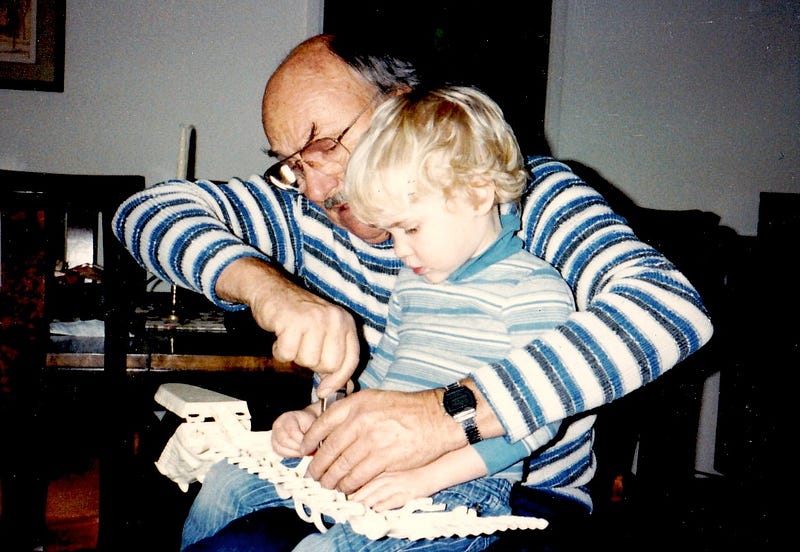
As my grandfather struggled to figure out what to do, his dad knew exactly what question to ask. And it wasn’t about money, or job stability, or other details. Instead he stared at my grandfather, paused, and asked…
“Do you like to fly, son?”
Coalition of the Willing
Thinking in terms of a mission challenges us. We are forced to address the serious question of our life, and the impact we want to have. This makes us uncomfortable. Fortunately, there is a built-in support mechanism. Family, friends, and peers. A mission that inspires you will also inspire others. That commonality is part of the beauty of being human.
As we’ll see in later chapters, teams naturally form around good missions. All kinds of folks will emerge from the random corners of your life to help in unexpected and profound ways. A mission fuels collaboration. Money, by contrast, often stokes unhealthy and stressful competition.
Imagine each mission as a star. People are like the planets that end up in orbit of the star. The more compelling the mission, the greater the gravitational pull. The greater the gravitational pull, the more people end up in orbit.

Have you heard the story of Edward Shackleton? He led a group of men on an epic attempt to make it all the way across Antarctica. How did he receive over 5,000 applications from people to join his expedition? According to popular legend, by posting this advertisement:
Men wanted for hazardous journey. Low wages, bitter cold, long hours of complete darkness. Safe return doubtful. Honour and recognition in event of success.
It’s all about the mission.
These people who answer your call to a new mission will push you to great heights. They will build a new environment around you. It will stimulate and challenge everyone in it, especially you.
That intense, mission-driven, collaborative dynamic is fuel. Burning it will give you the energy to do seemingly impossible things! You will slingshot past your individual capabilities. You will build up yourself and others. And you will get better over time.
A small group of inspired people are the only people who manage to change the world, to paraphrase Margaret Mead. A mission-driven team is the only environment where you’re consistently expected to do incredible things. Things that appear to be well outside your abilities.
Play The Long Game
You will need a mission if you want to be avoid distraction and be fulfilled each day. In fact, you will need a series of missions, each one more demanding than the last. That’s why it’s called the mission mentality. It’s a way of orienting yourself toward the world, not just one specific goal.

You must seek out missions, finding ways to weave your passions and skills into projects that help other people in meaningful ways. This mission mentality is the only way to pursue positive impact without sacrificing your ability to enjoy each day. It’s the only way to relish each set of challenges and opportunities as they come. Why? Because a mission lets you get excited about sacrificing the efficient and easy for the meaningful and hard.
You can be enthusiastic and grateful for the chance to give it your all. A worthy mission demands nothing less!
I treat each mission like it was my purpose in life. I think carefully about the Why? and the Who? of each mission, revisiting these questions and my answers regularly.
As an example, consider Stanford’s Silicon Valley Innovation Academy that I described earlier. My mission is to build the best entrepreneurial education program in the world. We don’t want the entrepreneurs building the next gaming app for a mobile phone.
No Angry Birds version 7.1. Instead we want them tackling tough problems.
You won’t find the phrase “The best entrepreneurial education program in the world” on a legal contract or the program’s website. It’s not on the back of any t-shirt. But that phrase is what I say to anyone who asks me about SVIA. It’s what I say over and over to myself, the other people on my team, and the entrepreneurs. It’s my reality. My mission.
My team challenges ourselves to do the best we can, every day during the summer. The entrepreneurs deserve nothing less. If we do our job, then they can build great companies that help create a prosperous future for the world.
And I don’t have to deploy to a warzone to accomplish this mission. That’s always a plus.
What to remember about “Mission Mentality”
- Focus on the question Why? to dig into your motivation for acting
- Focus on the question Who? to explore the human impact of your actions
- A compelling mission will naturally help you avoid getting distracted
- A compelling mission draws in a team of willing supporters
Take four minutes to consider these questions
- Do I have a good answer to Why? and Who? for my daily activities?
- What causes and organizations do I volunteer with or donate to?
- How does these causes and organizations draw me in?
- How would I feel if I could double or triple the impact I have in these fields?
If you want to spend ten minutes learning more about how we can create opportunities, watch Kare Anderson’s TED talk “Be an opportunity maker”.
If you want to spend fourteen minutes learning more about creating emotional connections to work, watch Leonard Ha’s TEDx talk “Who’s on your poster?”.
If you want to spend nineteen minutes learning more about how people are attracted to missions, watch Daniel Pink’s TED talk “The puzzle of motivation”.


