
Are You Lonely Or Are You Just Alone?
In the midst of a loneliness epidemic, is human interaction the best way to overcome it?
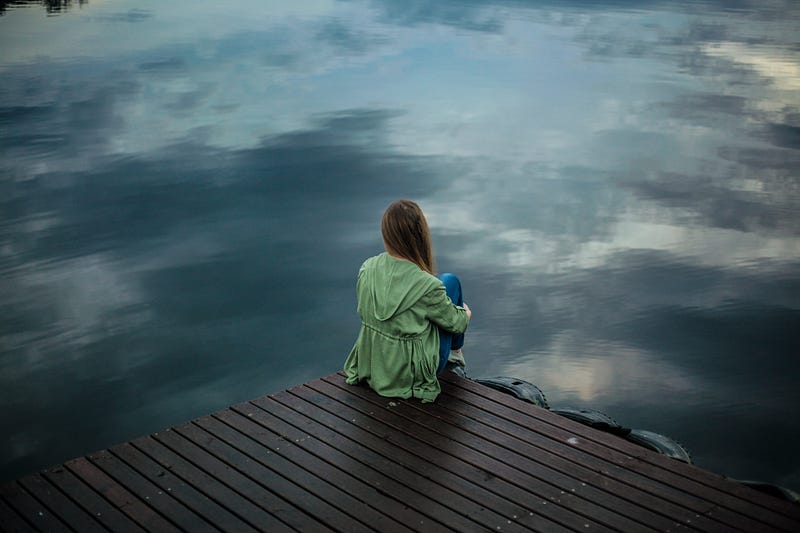
Loneliness begets more loneliness. It’s like some sort of sick joke. The more lonely you feel, the more inclined you are to stew in your solitude.
Those of us living in Westernised societies know how much we champion independence and self-sufficiency and being a trailblazer. It’s everywhere we turn. We glamorise the notion of “going it alone” and being a “self-made” success, hankering after the chance to be a single, shiny beacon in a sea of collective sameness.
Our individualistic tendencies differentiate us from more interdependent Eastern cultures, in that we often affix our identities to our personal successes as opposed to our relationship to the people around us or the achievements we’ve amassed as a group.
In America, you’re more likely to introduce yourself by your profession. In Nigeria, you’re more likely to introduce yourself as “so and so’s mother/spouse/neighbour” etc.
Having spent a significant amount of time online, I’ve observed something that seems to have become endemic, especially in recent years:
A lot of people are really fucking lonely.
You don't have to go far on the internet to stumble upon content on the topic of people being alone or friendless or isolated. There are literally thousands of videos on YouTube discussing the matter.
The irony here is that we are technically more connected than ever. The digital landscape grows more and more bountiful by the second, with the emergence of apps to help us maintain contact with those we know and forge connections with those we don’t.
We can feasibly hold a discussion involving people from Zimbabwe, Indonesia, Massachusetts and Madrid without even having to leave our beds.
Since we’re so well-connected, why are people so lonely?
While individual accolades are certainly admirable and worthy of praise, no amount of maverick #girlbossing is going to replace the life-affirming benefits of actual human connection.
Kicking back on the sofa with friends and sharing a bottle of wine as a lasagna bubbles away in the oven can quite literally save people’s lives.
Traipsing around a museum with your partner and exclaiming: “That’s you!” every time you see a painting of a gargoyle or someone ugly may well be the lifeblood of a relationship.
Having someone smile at you and actually seeing the dimples in their cheeks and the thread veins in their eyelids is what gets some people out of bed in the morning.
It’s no secret that in-person socialisation is conducive to healthy bonding and improved self-esteem. It strengthens the very pillars of our existence as people and it cannot be totally replaced by digitalised networking.
Digital connection imitates in-person connection while crudely reminding us of the real distance between us and the people on the other end of the phone. It bridges our separation and yet highlights it to us simultaneously. There’s something markedly inhuman about seeing someone cry but not being able to reach out and embrace them, or FaceTiming our families at Christmas or Thanksgiving but not smelling our grandma’s cooking because we’re several thousand miles away. Some people even attended virtual funerals for loved ones during the height of the pandemic.
Humans are one of the most social species on Earth, and social connection is essential to nearly every aspect of our health and well-being. So, when we find ourselves in extended periods of involuntary solitude, it’s no wonder that our health and happiness suffer as a result. Research on the damaging effects of isolation is well-documented — this article by the Journal of the American Academy of Psychiatry and the Law states that solitary confinement is as psychologically distressing as physical torture.
Is loneliness a by-product of being alone?
As someone who has experienced both loneliness and being alone, I know first-hand that they’re two very different entities. I’m also reluctant to imply that being alone is a catalyst for loneliness because, in my personal experience, that’s not entirely true.
I’m much more likely to feel lonely in a crowd than when I’m by myself.
Just 2 weeks before the start of the pandemic, I transitioned to an exclusively WFH arrangement with my job. Prior to this, I was working 9–5 in a multinational company with over 100 other in-house employees. To say that I had abundant opportunities for daily social intercourse is an understatement. But I went from that to not only living on my own but quarantining on my own, too.
My parents were worried sick — convinced that they were going to find me, rotting on the sofa in my solitude like an amoeba, surrounded by dead plants, moldy groceries, and enough dust to insulate a townhouse.
Au contraire. If anything, I flourished during quarantine.
Spending all that time alone gave me the time and space I needed to get to know myself more deeply. I became in tune with my inner voice in a way that I never had before, and I could silence the outside noise that functioned only as a distraction from the things that required my undivided focus.
It afforded me the liberty to indulge in personal pursuits and interests without banalities such as a lengthy commute to and from the office or the presence of others intercepting.
I have a highly elaborate, stable, and enriching inner world — a wealth of fulfilling hobbies that are perfect to do in the confines of my own company:
- I can lose myself for hours in a good book
- I can spend days gardening and tending to the fruit and vegetables I grow
- As an avid seamstress, I can whip up an entire outfit in an afternoon, only stopping once I realise it’s completely dark outside and I haven’t eaten in 12 hours.
My mind is constantly full, so it’s almost as if I don’t notice my aloneness.
Since we’re all different, we all possess distinct thresholds for loneliness.
I personally find solitude to be considerably restorative and often seek it out as a means of grounding myself, but I also know that this is definitely not the case for everyone. Multiple studies have shown the adverse effects that lockdown had on people’s mental health.
I feel immense compassion for those who struggle with feeling lonely. They say that loneliness is the gap between the connection you crave and the connection you have, and if you’re constantly reminded of how much you lack the connection you’re seeking, well, that’s a surefire way to feel shitty about your life and about yourself.
Despite how common it is, there’s a deep-seated sense of shame associated with feeling lonely, and it’s totally understandable that nobody wants to feel unlikeable or overlooked, as tacit as that feeling might be.
One of the cruelest factors to consider about loneliness is that it begets more loneliness. It’s like some sort of sick joke. The more lonely you feel, the more you’re inclined to stew in your solitude.
The more accustomed you become to being Billy-No-Mates, the less likely you are to seek out the company of other people. Our worlds become incrementally smaller and we develop less of an inclination to open up to new experiences.
My belief is that loneliness has less to do with the presence or absence of people, and much more to do with feeling rejected, ignored or snubbed by them.
Imagine you’re staying in on a Friday night. You’re more likely to feel lonely knowing that your entire friendship group is out having dinner without you, versus knowing that everyone else is also staying in.
Being alone, however, is a state of being. It can change in an instant and it’s infinitely easier to control.
So, the overarching distinction here is the presence of love and care and meaning in your life. Before you rush out in an attempt to satisfy feelings of loneliness by just being around others, make sure that those others are people who make you feel connected, appreciated, valued, and respected.
Once you foster meaningful connections like that, no matter where you go, loneliness will have a hard time following you.
For more content like this, check out my other Musings here!
Thank you very much for reading! If you have any questions or comments, please feel free to leave them below.
If you enjoyed this read and are feeling generous, please consider buying me a coffee as a token of your appreciation. I will send you positive vibes with every single sip. ☕🌸