
Are You Living with Regret?
If so, how to…
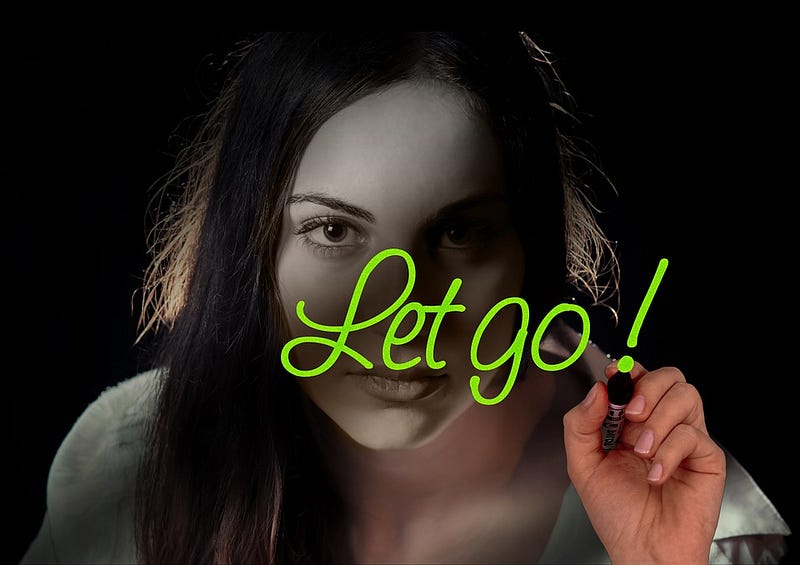
We have all been affected in some way by what has happened in our world. These last 2 years have brought about many changes — and losses. And in these times, many of us are feeling regret — either for something in our past or something in more recent times.
Some would say that they have no regrets. Is that you? To be honest, if you asked me I’d probably would have said “no”… until today.
This is what I love about the journey of self-awareness.
It’s living with mindfulness — you pay attention to what you are thinking, feeling, and doing on the journey to become a better version of yourself.
Are you paying attention to your self-talk?
It’s fascinating to listen to what we say to ourselves and about ourselves. One word I’ve been mindful of after hearing Christy Whitman speak is the word ‘should’. It limits us and brings up guilt and shame. It leaves us stuck in the past.
How many of us are ‘shoulding’ all over ourselves? It’s so easy to blurt out “I should have done____”. “This shouldn’t have gone this way.” “They should have listened to ____.”
Many of us, maybe even all of us are saying some of these phrases. We just might not be hearing it. Until we stop and pay attention and really listen to our words…
…and realize the deeper meaning to what we are saying. It hit me today listening to Wayne Dyer that all my ‘shoulds’ are leading to a path of regrets.
Are you living with some regret too?
How do we let go? Give ourselves, others and the circumstances of life a break? I did some research and found an article from self com.
Let’s get away from that alternative world thinking that makes us feel that if we had done things differently, our lives would now be better.
Here are some top ways to release regret and move forward according to Neal Roese, Ph.D. at Northwestern University:
1. List the lessons you have learned, then read them when you need that reminder — Use any experience of regret as a learning tool. It’s an instrumental part of goal setting because it’s a moment to think about how you can avoid a similar outcome in the future. Take your should haves and list what you’ve learned and how you’ve changed instead. What is the disappointment, anger, or regret you’re feeling right now teaching you? We can’t change the past. What can we learn to do differently in the future?
2. Rethink your “best-case scenario” — Regret focuses on what you could have done differently. The truth is that you don’t know that everything would have been better if you made a different decision. Even if it’s not clear yet, a few aspects of your life may have actually worked out better because of your previous choice. You can also look from the perspective of how things could have gone even worse. What if what’s happened came along so that you learned the lesson before the stakes are even higher?
3. Try something new to distract yourself — Regrets can become ruminations when we feel stuck in our present circumstances. The remedy is to break out of your routine in some way to try new things. And when you believe that there’s more life to live (and mistakes to make) there’s potential to create space between you and regret.
4. Write down your regrets (then fact check them) — Would your life truly be better if_____? Would everything be different if you ______? Say that you did this exercise and you realize things would be totally different and better. How would you as a person be in that ‘world’. As an example, you might feel you’d have more confidence given different circumstances. You can work on gaining more confidence now. Or maybe you’d have a better career/job if things were different. What courses or training could you do that would help you now?
5. Try grief journaling — Regret is in some ways a form of grief. You might be mourning the expectations you had for yourself or for a future that may never materialize. A grief journal might help you to process your emotions. Write down what you are feeling, as well as difficult situations or mistakes you’ve made and how you worked through them. Or how you can work through them. Don’t focus on what you think is true about your regret, instead list questions about the future: What do I need from this moment? I can’t change the past, but what do I want to do with the future?
Don’t let what didn’t happen stop you from what could now happen.
We are all learning to navigate through these times and beyond. Some of us are more challenged than others. All of us are facing the changes of these times. Living in a way we never even imagined. What a difference between now and our lives in 2019.
I look to address the stress and overwhelm we are experiencing and give practical and simple solutions to help. And by sharing, I want you to know that you are not alone — I am walking the path too. Maybe different than yours — but all leading to us living our best life.
If you haven’t already, please take my new QUIZ: What is Your Self-Awareness Type? and uncover more about where you are and where you can go. It’s 2 minutes and it’s FREE.
If you would like to connect even further, please like my Facebook page and subscribe to my YouTube channel for Minutes With Michele.
You can also find me My Website, Twitter, LinkedIn, Instagram.
And I encourage you to read the work of my fabulous writer friends: Trista Ainsworth, Gurpreet Dhariwal, Amy Marley, Aurora Eliam, CMP, Erin King, Karen Madej, Alison Tennent, Neha Sandhir S, Lanu Pitan, Kyomi O’Connor, Terry Mansfield, Tim Maudlin, Bob Jasper, Joe Luca, JeffHerring.com, Indra Raj Pathak, Dr Michael Heng, David Acaster
Always celebrating, Dr Mehmet Yildiz, Founder & Leader of ILLUMINATION
Until next time ~
Sending you light, love — and self-awareness.
Be Well,


