
Are You Letting a Story Marinate or Are You Procrastinating?
How a change in my habits showed me a problem — and a solution
I’ve given advice before about letting stories marinate while you think about them, and insisted this is a vital part of the process. And don’t get me wrong, it is. But above everything else I teach, I put the motto of moderation in everything.
This is the story of how I suddenly decided I needed to improve my art when I hadn’t finished a drawing in a year and a half.
It goes like this:
Once upon a time, I was editing my manuscript. I have gotten pretty far in the process. All I had left to do was a final line edit incorporating the changes from my brilliant critique partners.
I got through chapter nine in my edits.
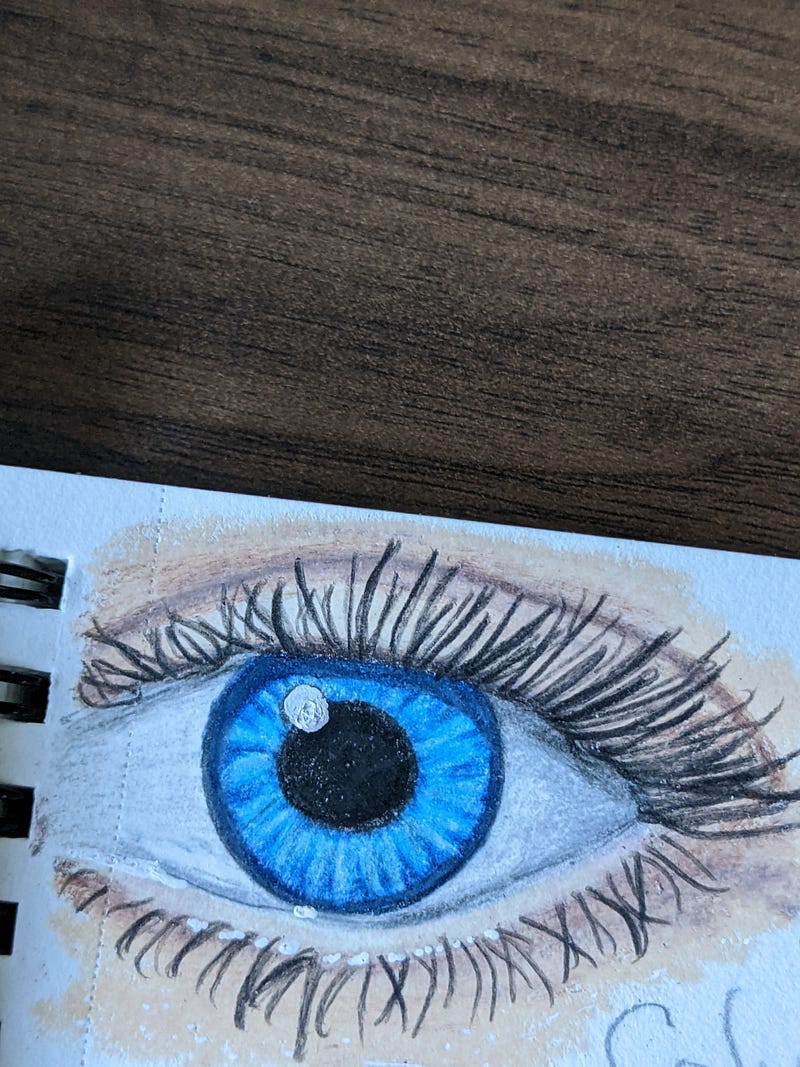
Then I joined Skillshare, took a course on formatting books for publication in InDesign, took a course on portraits in colored pencil, then one on getting hyper-realistic skin with colored pencil, then one on drawing a hyper-realistic eye. The result of the last one one is above.
And look. I enjoy drawing. I do. I’m not half bad at it when I try.
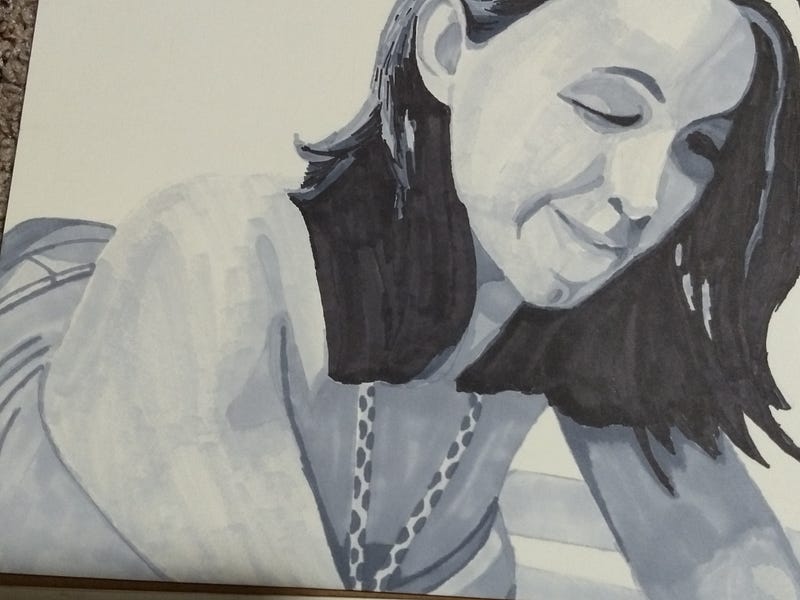
But I usually only try when I need a break from writing. I wasn’t planning a break from writing 70 pages into an edit. But every night as my kids went to bed, I would get the urge to draw something. To buy new colored pencils, to take a course, to learn something.
If you look at that paragraph and you’ve done any studying of Charles Duhigg, you might recognize something: there’s a cue and a routine. That is — it’s a habit.
In The Power of Habit, Duhigg talks about the three parts of a habit: a cue, a routine, and a reward. To understand the reward of my sudden art habit, I should note that I left out a major part of the cue. Let’s reword it.
Every night as my kids went to bed, I would see the binder where my story is printed, and get the urge to draw something.
The cue that would normally lead me to write was pushing me away from writing. Duhigg’s methodology can provide insight into why I was clearly procrastinating, rather than letting my story marinate so I could write better.
Cue
One of my most consistent writing times has been the two hours or so between my kids’ bedtime and my own. It’s quiet, work is over, and I can sprawl out with my binder wherever I choose without much distraction. I’d tuck the kids in, go to the couch or the floor or wherever, and start to edit.
The cue did not change; my binder has been, to my husband’s chagrin, sitting on the couch for a week or two now. But it suddenly stopped pointing to the same routine.
Routine
Instead of seeing my binder, opening it, and getting to work, I would see my binder, grab a sketchbook, and go draw. Now, drawing is a great habit. I don’t think it’s a bad thing I’m doing by any means, and if I’m going to procrastinate, I may as well be improving another hobby I enjoy in the process.
Instead, what I see is that the original routine was not leading to the same reward.
Reward
When I would work on my book before this sudden stalling, I’d get the pleasure of accomplishment, and feeling like I was making progress.
In this light, it makes perfect sense why I subconsciously replaced my routine with drawing tutorials. Writing stopped giving me that sense of accomplishment and progress, and learning something new in art gave me the same reward.
I had, without thinking, followed Duhigg’s methodology for changing a habit to a tee. The problem is that I did not want to change this habit in the first place.
The Counterattack
Under this framework, I figured out why I was suddenly so interested in drawing; it was giving me a reward that writing had stopped giving me when I hit a difficult rewrite. That meant I needed to figure out a way to make this more complicated work give me a sense of accomplishment again. I did this in two ways:
First, I broke down the task that was daunting me into smaller pieces. Instead of “rewrite chapter 10,” my tasks became “decide what needs to be rewritten,” “create a new outline,” “edit the first scene,” “write scene 2,” etc.
Second, I did something that Atomic Habits by James Clear calls habit stacking. I still get to draw. In fact, I think finishing new portraits of my kids would be a great way to spend my time. But. I get to draw after I’ve made half an hour of progress on my book.
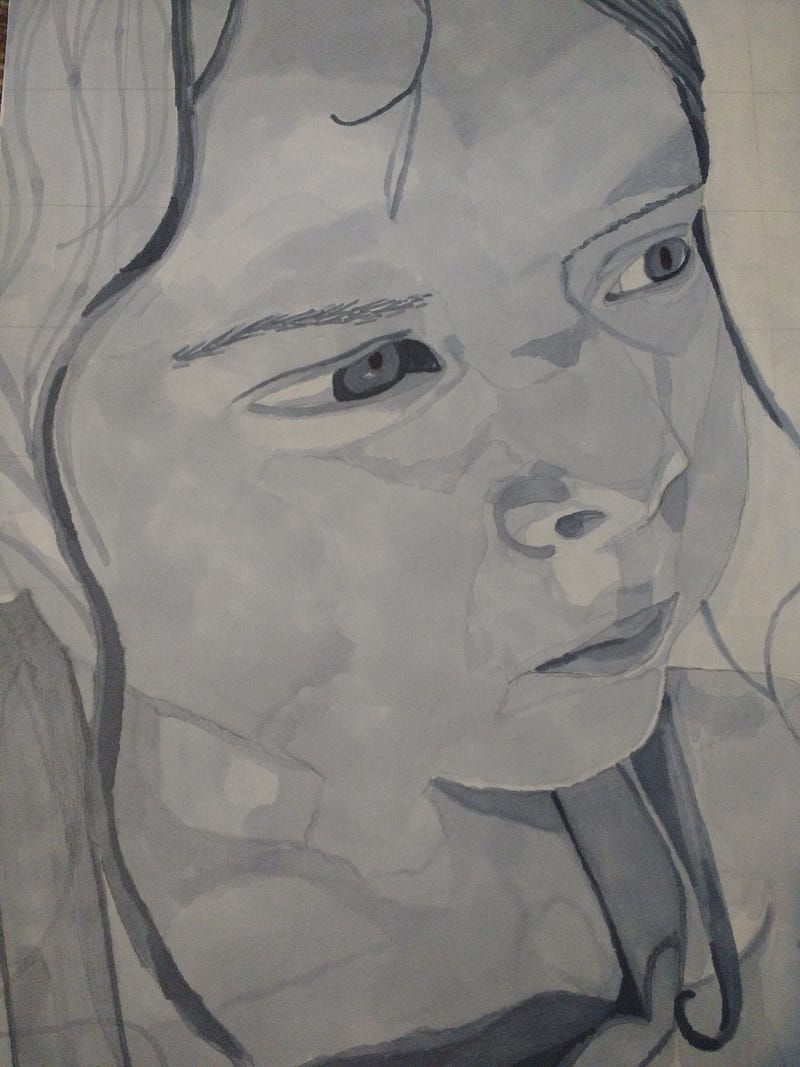
With a new habit system in place, hopefully I’ll find myself through this difficult section of my rewrite soon — and with a drawing or two to show for it as well.
What do you do unintentionally when you get stuck on something? how can you make it intentional instead, letting the new reward work in your fav