
Are You Learning About Your Problems or Solving Them?
When I look back, I dislike that I became a self-help zombie
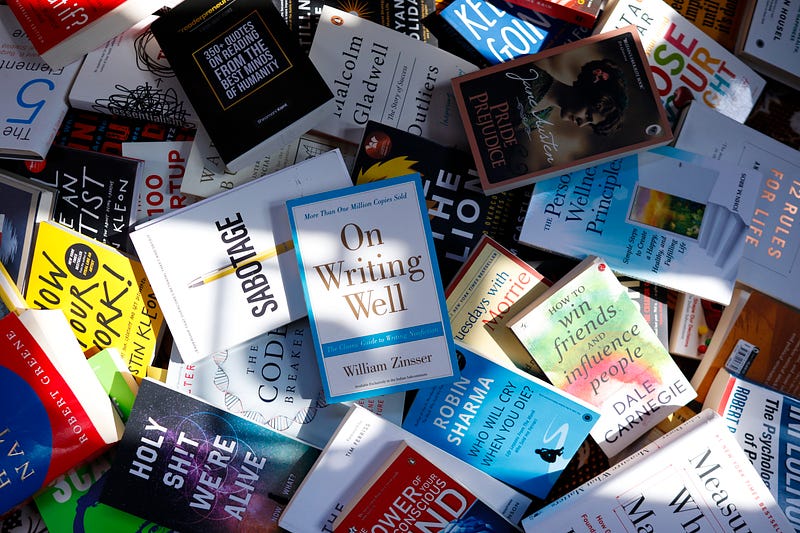
Self-help is addictive.
You do not need to fix or work on yourself.
However, we all have flaws and challenges that we struggle with. These imperfections don’t mean that you’re broken.
Yet, society has acquired a strange habit.
Many of us have turned to the consumption of self-help content as a substitute for directly tackling our problems. In this case, we equate more consumption with greater personal growth.
Which is not true.
From Psychology Today:
In contemporary parlance, the term self-help is associated with actions and interventions that a person can take on their own or with guided literature, as opposed to working with a clinician. Self-help can help you think about your goals with a big picture view. It encourages you to, for example, outline your short-term and long-term goals, and whether they are realistic and achievable. Self-help can also help you be more systematic in the way you approach the changes you want to see.
Addiction to self-help doesn’t help you
My first introduction to self-help began in 2019 when I was introduced to a multi-level marketing company (MLM), Amway.
In short, Amway uses direct sellers (you or me) to sell over-priced home goods directly to customers like friends and family members.
Within the company, its members are pressured into recruiting new people to increase profits for Amway. The fundamental flaw in this strategy is the difficulty with recruiting.
It requires a particular mindset — obedience to the people running this organization.
I was part of one couple’s local group of about 40 to 50 people. We were obligated to read books such as How to Win Friends & Influence People, Rich Dad Poor Dad: What the Rich Teach Their Kids About Money That the Poor and Middle Class Do Not!, and Think and Grow Rich, along with many other books to develop a “business mindset”.
We were also required to listen to “motivational” audio recordings of the rich, successful people higher up in the chain. This training group, or should I say cult, was an odd mixture of self-help, business, and religion.
Yet, I can’t quite recall much of their ideology, except for their emphasis on conformity to the group, and to succeed at all costs, even if it meant deceiving your loved ones.
There was contempt for people who weren’t successful with recruiting and growing their “business”.
Leadership’s typical answer to our lack of business growth:
- Increase the number of pages you read per day, they asserted that rich, successful people can attribute their accomplishments because they read dozens or hundreds of books per year
- Instead of one (30-40 minute) motivational recording, now you should listen to 2 to 3 per day because it was “vital to stay plugged into the system of Amway”
I spent a lot of time reading and listening to this content, but it wasn’t working. I became more confused and unsure of myself because there were so many different perspectives on success within Amway itself.
Analysis paralysis infected me, and I hesitated to take action.
I never felt good enough because the content seemed to preach that you needed to do more just to succeed.
To suffice, the influx of self-improvement training became a cluster fuck of ideologies, opinions, and theories that I became “stuck”.

Breakups are a catalyst for growth, but not if you approach it the wrong way
Eventually, I quit, and I thought the self-help chapter of my life was over.
I was wrong.
In November 2022, I suffered the loss of a long-term relationship. At first, I thought that the solution to helping me cope with my feelings was to love myself more.
I bought a book on Amazon, Love Yourself Like Your Life Depends On It by Kamal Ravikant.
The premise in his book is that you should constantly repeat “I love myself” in your head or out loud.
I naively believed if I felt better about myself, my ex and I could make things work again.
It was stupid of me to believe that repeating some cheesy mantra would help me cope with a breakup. It’s like plugging your ears and screaming “Lalalalala” to make the problem go away.
All you are doing is drowning out the noise with more noise.
While I did process my feelings about the loss of this relationship, I spent a lot of time hoping I could let go by using self-help.
Falling victim to self-improvement information
When we’re faced with adversity, loss, or failure, it’s tempting to jump to our normal coping methods.
However, sometimes we resort to seeking content that offers us a way out of our miserable conditions — and that means cracking open a book, viewing a YouTube video, or a listening to self-improvement podcast.
There’s no doubt that some people are self-help addicts. My Amway experience is evidence of this. Many of my Amway peers were obsessed with listening to the motivational recordings.
I can’t even tell you who they were as people, because they only talked about one thing — Amway and self-help.
It’s all they were doing in their free time. They had this insatiable hunger to improve, but nothing in their lives or their “business” was growing. Most people had been around for years and still were not profiting.
If all of this content was valuable, why weren’t they growing? The problem didn’t lie in how much they learned, but in what they were holding on to.
In fact, like myself, one person I was close with tailored his entire existence by what we called “growing and changing”.
He consumed so much self-help content promoted by Amway that I felt uncomfortable being around him. He became a toxic, unrecognizable person from whom I first knew him.
When I look back, I dislike that I became a self-help zombie myself.
I never critically questioned any of the content, or if I did, I swept it under the rug. It’s easy to accept self-help content at face value because it’s meant to help you improve your life.
Most of it is hot garbage and does not deserve the praise it gets.
When we take self-help/self-improvement as something we must do to feel more complete, at ease, or worthy of love, it becomes unhealthy.

For 3 or 4 months after my breakup, I fell back into the self-help addiction.
I read several books. I obsessively watched videos on spirituality and relationships. It hasn’t all been a waste of time, but that was a form of coping for me.
While it’s better than drug use, alcoholism, or binge eating, there comes a point when you’ve got to put the books down. You can’t read your way out of grief or anxiety.
Therefore, in moments of suffering, we put up walls to happiness.
If there is a barrier to being good enough, then your self-help quest will never end. If it never ends, then you will be susceptible to the next new course or the newest book.
While I don’t think there’s a cabal of self-help gurus out there, the self-help genre has evolved into this mess of needing to point out problems to all of the things going on in our minds and our lives.
You can’t sell a book or promote a podcast if you don’t have something to discuss. In a way, if there is a need for a solution, then any new content needs a problem.
Many people fear meeting strangers.
They fear speaking in public. A person’s conversation skills might not be where they think they should be.
Does a solution to these inadequacies rest in a book?
If our problems reside in books and videos then we wouldn’t need new self-help content to be produced.
The “How to” already exists. More information is not needed.
If the answer to your conversation skills rested in a book, why haven’t you gone out there to develop those skills? What’s stopping you from applying that information?
What I did instead
I used to think that I was not capable of building an extra source of income. This is partly why I failed to grow in Amway, but that whole situation was morally and ethically disingenuous.
It was a good thing that I didn’t succeed.
My partner and I split the rent. We shared the burden of living expenses. When I was suddenly without this benefit, my anxiety went into overdrive for months.
- How could she be this inconsiderate?
- What if I run out of money?
- What if I’m homeless?
I didn’t know what to do. My anxiety was dominating my life, and something had to give. I stopped wasting time trying to cope with the anxiety. Instead, I honored it, but I was solution-focused.
What can I do to develop a secondary source of income?
I discovered that I could start writing (something that I’ve been interested in for a little while, but never thought of as a realistic path).
I wasn’t raised in a household that had a business. My mother only had one income stream, and my grandmother just received social security money.
Multiple income streams seemed alien to me. Something that wasn’t for me. I had to let go of the belief that only certain people are capable or deserving of financial success.
It was time to stop reading all of the self-help garbage. Forcing myself to build new habits or acquire new strategies for life wasn’t going to get me anywhere.
Stripping away the garbage infecting my mind was the solution.
Once I accepted what I was going to do, my anxiety drastically decreased.

Remove faulty beliefs and practice self-acceptance
Any action is often better than no action, especially if you have been stuck in an unhappy situation for a long time. If it is a mistake, at least you learn something, in which case it’s no longer a mistake. If you remain stuck, you learn nothing.― Eckhart Tolle
Letting go of the past and limiting beliefs is essential for personal growth.
There is always a reason why you can’t let go of someone or something. Which can only be found by one person — you.
These are some of the areas that we will often think we are lacking:
- Health: Weight loss, exercise, diet, disease
- Wealth/Career: Finances, education, promotions, spending habits
- Relationships: Dating, love, breakups, family, friends
- Self-care: procrastination, meditation, mindfulness, spirituality
- Mental/emotional health: Anxiety, depression, thought patterns
All you need to do is accept yourself for where you are at in life and who you are as a person.
Identify an area of life that you feel inspired to improve. Don’t target areas that you think you should because you feel compelled to by society.
Challenge your beliefs. Oftentimes our beliefs limit us from taking the appropriate action to how we envision our authentic, ideal life.
It may be necessary to be honest with yourself. Are you trying to improve because you feel pressured by society, or are your circumstances not serving you?
For example, if your friend group is toxic, and it’s affecting your mental health, then it’s necessary to address this problem.
But if you are just trying to improve your social circle because it will make you look better, then you’re wasting your energy on something that is not going to serve you.
Even if it takes days or weeks to ponder, ask yourself what it is you want to improve and why.
Conclusion
If anyone ever tells you they have “worked on themselves”, be skeptical.
You cannot out-think your problems. You cannot find the “right” solution to your circumstances with self-help.
It’s about letting go. This is an effort that requires consistent action.
Don’t become a self-help junkie. It feels really good to learn new things from it, and you’ll become tricked by the emotional high you get. It’ll make you think you’re growing, meanwhile, you’re still living the same way you always have.
If you liked this story and wish to grow personally, consider subscribing to my weekly newsletter.