
Are you in control? #2
Whilst parents always like to think they hold all the power, maybe things aren’t always as they seem.
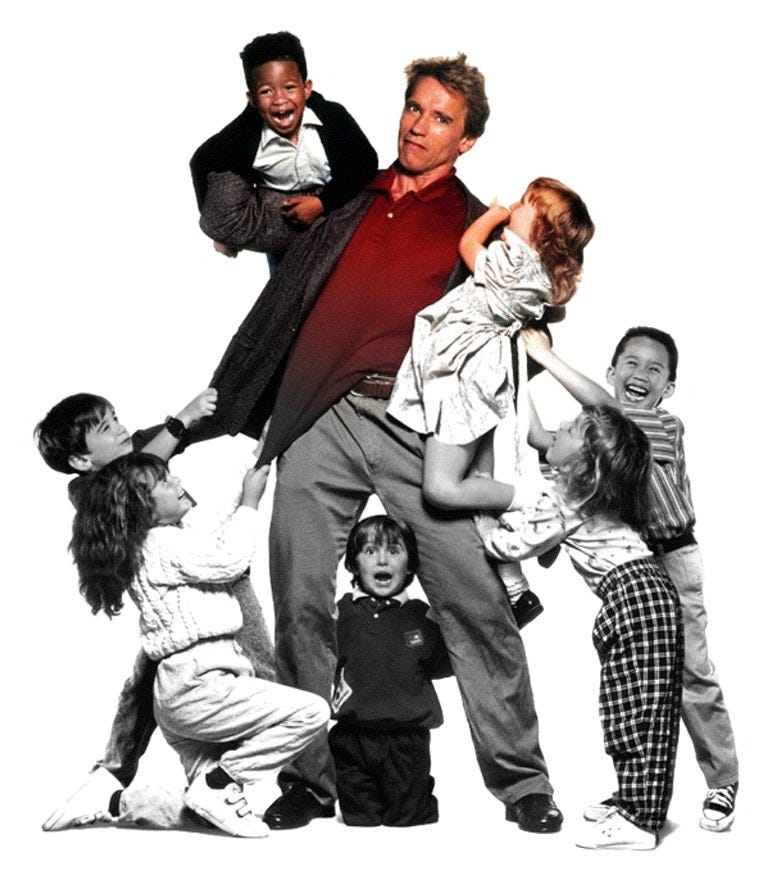
“having two daughters certainly taught me that I was, in no way, in control”
Following on from Who’s in control? #1 here:
Personally I couldn’t think of two children more different than my two oldest daughters. One daughter is thoughtful, deliberate and careful; the other is loud, impulsive and allergic to safety. One daughter is dark, dimpled and broad; the other is fair, lean and wiry. The only time I ever get them confused is when they come into bed at night and I half-consciously reach an arm around them and hope that playing dead results in them going back to sleep. Even then I know they’re different deep down because they even smell different.
The way we parent our first child is completely different to the way we parent our second. Some people might say that we have learnt from the first one, that we have become older and more experienced, but I have come to believe that we parent them differently as they are completely different children and will grow up into completely different young women.
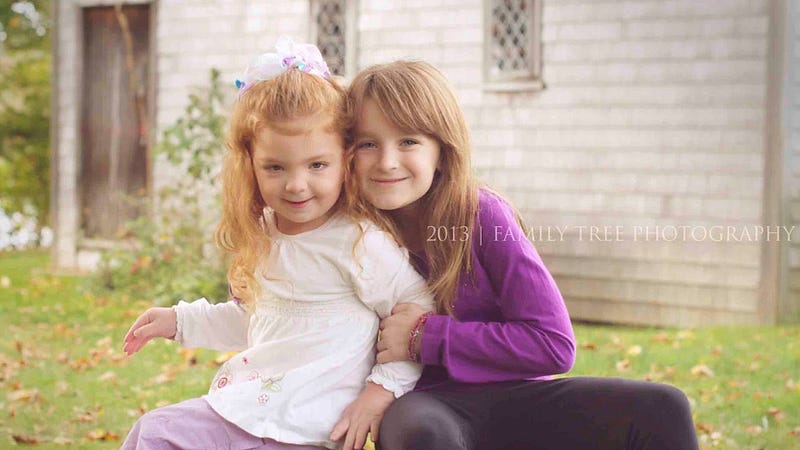
For Joy, our oldest, we use countdowns, for Ella, our middle daughter, she will shout at us if we use countdowns and get into a rage because she can’t handle the pressure.
For Ella we’re best to give her clear instructions and consequences or rewards. For Joy we can work towards goals in the future and she will keep them in her mind and work towards them, for Ella everything further away than the next minute is irrelevant.
For Joy we can appeal to her empathy and ask her to consider how others feel, for Ella she couldn’t give two hoots if you feel bad and this tactic is as useful as trying to teach her about nuclear fusion (I tried).
One likes fact, one likes imagination, one role-plays as a mummy, one as a boy-dog, an aggressive boy dog. One like cuddles, the other wipes our kisses off her face with the back of her hand. Ella’s default emotion is blind rage, Joy’s is calm contemplation. Their differences are so obvious in everything that they do. For example, here’s an everyday conversation that we might have, first played out with our middle daughter and the second played out with our oldest.
The conversation with Ella:
Me: ‘Ella, I’ve bought you a cake from the shop, it’s your favourite’ Ella: (looking at you like you just pulled your pants down and pooped on her favourite toy): ‘I don’t want a cake, I want [insert any toy you promised her within the last year that she had remembered and promised herself without mentioning it to you]’ Me: ‘OK, if you don’t want it then I’ll eat it’ Ella (snatching cake): ‘No! That’s my cake.’ Me: ‘Ok, say thank you then’ Ella: *hides in corner and eats cake like feral scavenger* Ella [Three hours later, out of nowhere]: ‘daddy, thank you for the cake’.
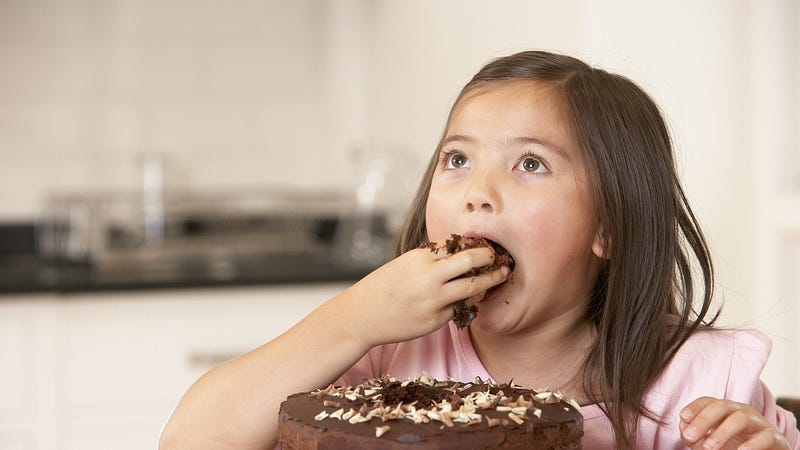
The same conversation with Joy: Me: ‘Joy, I’ve bought you a cake from the shop, it’s your favourite’ Joy (looking at you like you just rode to the sun and rescued a magic sword from a Greek demigod): ‘Thank you daddy’ and eats cake with great relish, usually sharing a piece with you.
One child loves dresses, one is only happy if she is fully naked and covered in a combination of glitter glue, paint and mud. Who invented glitter glue anyway? The reason we don’t know must simply be to protect their identity as every parent I have ever met hates their guts.
We often look at our younger daughter as she plays in the mud, picks her nose and then laughs after farting loudly, and we wonder whose child she is. We have despaired at her as she spends hours complaining about the way her father puts on socks (I can’t put on socks properly, apparently). We have looked at her as she has climbed a ridiculously high tree before jumping from an improbably high height, and we have asked ourselves how she has turned out like this. I have, at times, sat and tried to systematically work out whether she has spent a large proportion of her time with wolves, unbeknownst to us. At others I have just marvelled that, despite all our worries and stresses she seems like a feather carried upon a stream, unconcerned with the life around her and enraptured by the flow of her own personal universe. My personal mantra in times of stress is simply ‘be more Ella’.
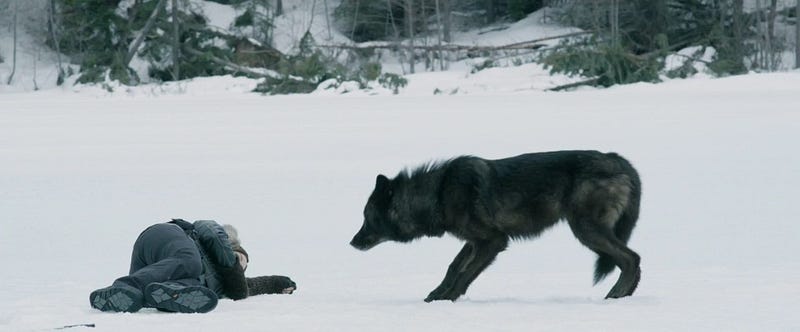
I still have no idea how to parent my younger daughter, but everything I do as a father is different to what I do as a dad for my oldest. I am placed in so many difficult situations and I suspect that I will never know how to deal with them. For example, Ella, when the devil gets into her, sneaks up behind me and bites me, hard, on the bum. It’s usually when I am holding something. It bloody hurts. What is worse is that there is no way to get her off without hurting her in some way and she knows I won’t do this, she’s an utter genius. What parenting handbook tells you how to deal with this?
Then there is the problem of helping her deal with her emotions. Most children have a range of emotions which they use to express their feelings. If we consider these emotions on a scale of 0–10 with 0 being calm and happy and 10 being apocalyptic rage, most young children will experience all numbers on the scale at some point during a week. Ella can go from 0 to 10 at the drop of the hat and stay there for any length of time. While she is writhing around shouting for us to simultaneously leave her alone and pick her up, give her water and go away, and a whole host of mutually exclusive commands, literally nothing you can do will make any difference.
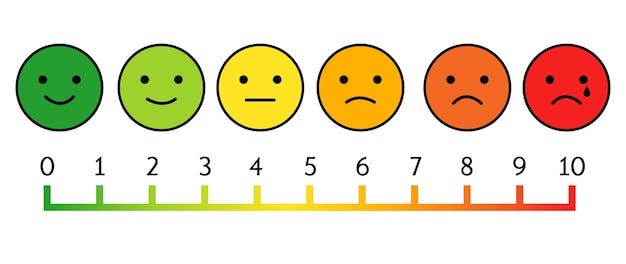
We tried distracting her, she would not be distracted. We tried bribing her, she would take the bribe and then continue unaffected. We tried countdowns, breathing exercises, squashing things, letting her hit cushions or her father. My favourite was a lovely method which is very effective with most children, given to us by a colleague who had taught students with similar issues. You teach your child that situations have a range of seriousness from 0 (nothing wrong) to 5 (absolute disaster, you need to call an ambulance). When Ella got angry we calmly told her what 0–5 meant and asked her to explain what number she was at. When she said 2 (she had lost her toy which was found instantly, but not quite quickly enough to stop her ten minute tirade), we said ‘that’s right, but you’re acting like this is 5’. Lo and behold she calmed down, huzzah!, problems solved. The next time we tried this trick she had upped her game and simply got angrier shouting ‘stop shouting numbers at me you bumhead’. You win again, little girl.
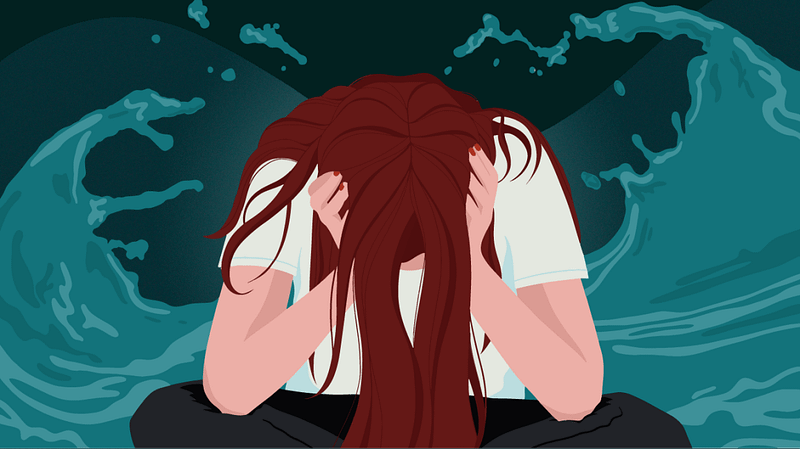
My second daughter was always ahead of us at every bend and we never truly found strategies that worked to help her for long. For a while we worried that people would think that she was spoiled and that we were giving in to her every whim. Then we worried that there was something wrong with her. Then, after even more time we realised that she would, we hope, just grow out of it and eventually learn to manage her emotions.
With my oldest, she had her own tricks and quirks. While she was generally very calm and easy to manage unless tired, hungry or hangry, she had her own mind when it came to certain things. For example, from a very early age, she decided that tidying things up was not for her. She liked sweeping, washing and generally cleaning, but tidying up was not for her. She could pretend to tidy up while you did the work around her but making her do the actual work was like pushing a boulder uphill. However, if you asked Ella to tidy up she’d do it for both of them, very happy to help.
With both of my children their behaviour was completely different and just as you found a method to deal with it they would change and force you to ‘parent’ differently. The only common thing between our children was that dealing with their behaviour always seemed like a cold war race against mutual self-destruction: one person develops a missile, the other develops the defence, one side gets a better missile so the other improves its defence. What I mean is that we were constantly having to evolve new strategies to deal with them, and they would work and peace would resume. However, the little people soon found a way to combat and work around our new defences, rendering any strategy completely useless and they once again had the upper hand.
More about this in ‘why we are never prepared for our children’:
This started when we had our first child. You would try anything to get her to sleep and you’d finally get her to drift off thinking that you’d worked something out. I remember vividly thinking that rubbing her right foot counter-clockwise with just the right pressure was a kind of off-switch. Of course, instead of finding a panacea for getting them to sleep we were simply doing nothing right and it was just pure chance that the baby would sleep while we were trying something or other. It’s like rats that experimenters give random treats while observing their behaviour.The rats are just going about their own business doing what rats do and suddenly a treat appears like manna from heaven.The ones that were itching their head when they are given treats think that it’s the head itching that got them the reward, so they try this again and again like a good-luck omen, blind to the cruel and random nature of life. I felt like those rats.
We are forced into changing the way that we parent to meet the needs of our children and I am now, after much reflection, very comfortable with this. I certainly wasn’t at first because I had the idea that there was a ‘right’ and a ‘wrong’ way to parent and that changing meant that I fundamentally had to be doing things wrong at least half of the time. Over time I have realised that there is no dichotomy of parenting, no right or wrong, simply a lot of people trying to do their best to help their children become good people. If we all parent in the same way with all of our children it would be the same as teaching all children the same at school. Sure, some children would get their needs met and some would do well, yet the vast majority would not. Instead, we have to adapt and so it is not so much that our parenting style affects our children, but it is actually our children that affects our parenting style. After all, if we fed all the animals in the zoo bananas, they’re not all going to survive, the animal dictates how we should feed them.
Thanks for reading! Here’s another article you might like:


