
Are You Doing Things You Don’t Want to Do?
Why?
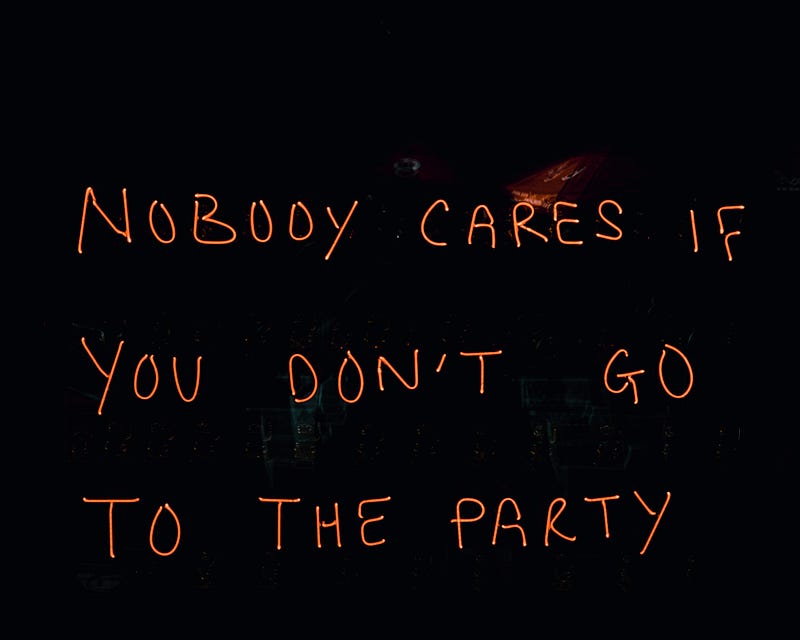
Have you ever done something that you knew wasn’t in your best interest?
I got married when I was 21, knowing it was a mistake. We’d been together less than five months and yet had a big Church wedding. The Ava Maria lasted longer than the marriage.
So why did I do it?
I didn’t know how not to. Even though my father told me that it wasn’t too late to back off on the way to the church, it felt like it.
I thought about the money that my parents had spent, the presents that people had bought, the people waiting in the church and I couldn’t say no.
Even though I wanted to.
I’ve only met one person that admitted they were doing what they didn’t want to do at the altar. It’s a big ask. But so is marrying the wrong person.
Why do you do things you don’t want to?
How often have you done something you haven’t wanted to do but find yourself doing it anyway?
This could be accepting a date from someone you don’t want to spend time with or meeting a friend for a drink when you really want a Netflix and chill evening.
It could be because you’re looking for the feel-good factor? Imagining that doing something you don’t want to do is a selfless act?
Maybe it has to do with a basic human need for instant gratification? When you’re faced with choosing between doing something that will make you feel good in the short term, like meeting a friend because you don’t want to upset your friend, or doing something that will benefit you in the long term, people often choose the former.
This is because your brain is wired to give you a shot of dopamine whenever you do something you think is the right thing, the unselfish thing. And while doing something good for you may eventually lead to dopamine release, it might come with a side order of guilt because you think you’ve let someone down, that you’re being selfish doing something that you want to do. You might worry about what your friend will think?
You can take the hair shirt off. Do what you want to do.
Worrying what other people think
People do a lot of worrying about what other people think. I was worried about what the people I cared about might think if I didn’t go ahead with the wedding. And, to be honest, I was also worried about what people I didn’t care about might think.
I worried about how colleagues at work might snigger up their sleeves and mutter about ‘marrying in haste and repenting at leisure.’ About how my ex-boyfriend might feel smug that things had gone wrong.
Whereas, of course, we never know what anyone else is thinking. I can only do my thinking, and I’m not even sure I do that very well, and I certainly can’t do anyone else’s.
Also, why do you imagine that other people will think badly of you? If you turned down a date with the office dork, they might have a moment’s disappointment, but it’s hardly going to ruin their life.
And if you tell your friend that you want a night at home, your friend will understand because they are a friend.
But are you worrying about what other people might think, or are you more concerned with tarnishing your version of yourself.?
Are you more concerned with what you think about yourself? Are you doing things you don’t want to do because you feel that you ‘should’?
So even if you know that you don’t want to do something, you second guess your wisdom to say yes.
Second-guessing your wisdom
You know the feeling when your gut is telling you one thing, but you don’t listen to your wisdom because your thoughts take over.
You might have heard the analogy that your thoughts are like a brass band, and your wisdom is the triangle playing in the corner. You have to listen hard to hear your wisdom.
What makes you second-guess your own wisdom? Mainly because you doubt that this little voice is wisdom at all. What makes you wise? It’s almost as if you don’t think you know what is good for you, so you ignore what you know and listen to other people’s advice or jump on google for answers.
And you will get answers and advice. Other people’s wisdom about their life — not yours.
You know what is right for you. When clients tell me they don’t know what to do, I sometimes ask them to flip a coin. I tell them they have to go with whatever the coin calls. It’s incredible how often the client will ask me if they can have the best of three attempts.
This shows the client that they know what they want to do even though they might be leaning towards doing what they don’t want to do.
Maybe it’s time to please yourself?
Wanting to please someone
Who knows where a compulsion to put others first in all areas comes from? It could be conditioned thinking, old habits, desperately people-pleasing?
It doesn’t matter where it comes from, but what you do going forward that matters.
I’m not suggesting that you should push your way to the front of every queue or buy yourself a new coat instead of buying your children shoes. I’m suggesting that trying to please everyone will please no one, including yourself.
People pleasers often put the needs of others before their own, which can lead to feelings of resentment and bitterness. In addition, people pleasers often have difficulty saying “no,” resulting in them taking on more than they can handle. Ultimately, people pleasers would be better off focusing on pleasing themselves.
Trying to please everyone is an exercise in futility — and it’s often counterproductive. When you try to please everyone, you spread yourself too thin. You try to be everything to everyone, and as a result, you end up being nothing to anyone.
And doing things you don’t want to do.


