
Are you different naturally or by design?
Why this matters now
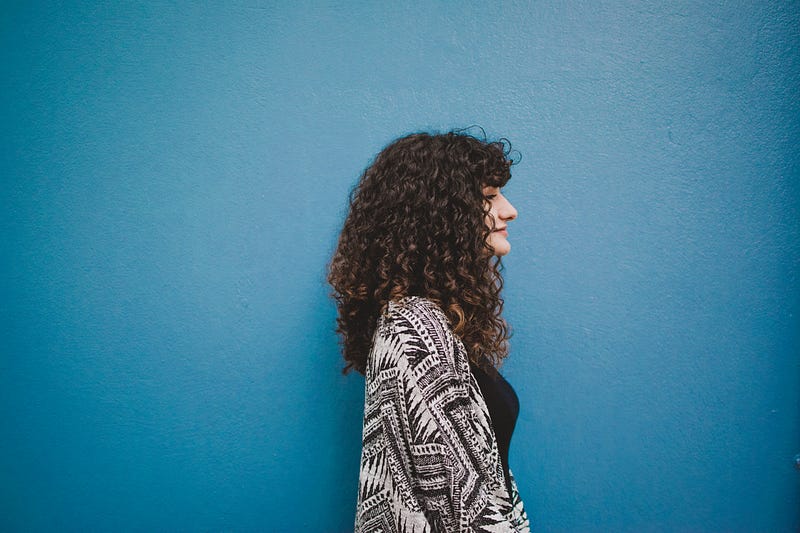
I can’t remember who recently asked me this question. No matter. The question was asked.
No, I didn’t give myself a life-long perm — my hair is simply unruly, curly and coarse for a white girl. In sixth grade I was teased. In college, I proudly sported a perfect fro, complete with pick in pocket to keep it round.
I never liked beer or white wine when that’s what everyone around me drank. I liked red, long before the average menu offered a choice of house cabs.
And I always liked dresses. Yes, pants were in vogue. I always liked dresses. With tie-up ankle boots. That was 40 years ago when sundresses and booties didn’t pervade the fashion pages.
But I didn’t decide to be different, in answer to the question someone I can’t remember asked me not so long ago. In fact, I remember being a bit put off by it. (Funny, I remember how I felt but not who asked me or where I was.)
No, it isn’t deliberate. It isn’t for effect. It’s just who I am. Who I’ve always been.
So why does this matter now? Because today everything is different. We are all different. The experience of living with the unnatural phenomena of social distancing is changing us as human beings. And those of us who find “different” a challenge, “change” and obstacle, will struggle to embrace their potential.
I am an advocate, whether for one of the not-for-profits I have represented over the years, or for a dying dad or troubled friend or rare disease, including from a personal patient perspective in order to help others. It’s my nature. I’m a fixer.
As a health and science writer, I question. It’s often my job to translate incomprehensible jargon into interesting, understandable feature stories that grab attention and hold interest. My goal is typically to inform, sometimes to engage action. Mostly, I want the reader to take note of something they didn’t know before, to consider thinking or acting differently.
It has never been my nature to be accepting of what I’m told without a good reason or proof. Just ask my mother. At the wise age of nearly 87, she would describe me as “a smart, loving, perpetually positive, rule breaker.”
All of which brings me to the power of being different. While not easy as an adolescent, I evolved to love my differences by the time I left home for college. I didn’t have to learn to speak up for myself. I didn’t have to grow into my own skin. Even as a young adult, I was confident in my attributes, that they would serve me well — in my work, my relationships, my life.
In my forties, I grew my curls to my waist. In my 60s people still stop me on the street to admire them.
In our new world, we are all challenged to embrace what is different. And through acceptance of our new behaviors and routines, restrictions and lifestyle norms, each of us is in a position to be different. We are in a position to evolve. We are in a position to become who we are, again.


