Are You and Your Spouse Word Compatible?
Being with a Writer is Not for the Faint of Heart
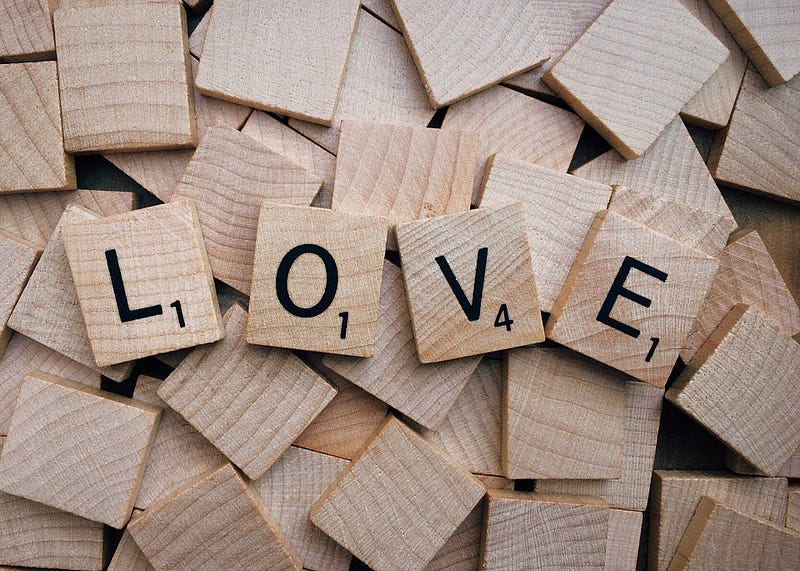
Are you and your spouse compatible when it comes to word usage? Did you even know that was a thing? I didn’t either. Trust me, it is. I have learned the hard way.
I’m a writer. My wife is a computer scientist. We look at words very differently, though probably not in the ways you would think. It’s true that I am more of a free-thinking artistic type, and she’s a logical, numbers-oriented person, but when it comes to words, I’m the one with zero-tolerance.
Like most writers, I love words. There’s something incredibly satisfying about combining and rearranging words until they are assembled in just the right way. The way the words are put together, the choices we make while constructing sentences are important. Words are important. That is a basic tenant of my life.
Words Are Important.
My wife, on the other hand, has a blatant disregard for words. She’s far more sensitive to the intent behind the words. She has actually uttered this phrase to me, “They are just words.”
Gasp! Just words? I nearly fell over in shock.
I’ve blocked out the details of why such blasphemy was used, but I’ll make up a scenario. Let’s say someone in your family tells you, “We’re out of milk.” To me, this means that we are literally out of milk, the jug is empty and in the recycling bin. It means I have to make a special trip to the store so I have milk for the recipe I had planned on cooking for that night’s dinner.
When I arrive home, I find that there are still almost two cups of milk left in the refrigerator, plenty for the recipe I had planned.
“We weren’t out of milk,” I say.
“Well, we were almost out. We needed milk,” says the guilty party.
“You said we were out of milk.” Those words mean something very specific to me and I don’t understand why someone would use the word “out” if they meant “almost out.”
“I meant basically out. Don’t take me so literally. They’re just words.”
That is how those conversations tend to go. My scenario about milk may seem trivial, but you can imagine how in the course of a relationship such views of how words are used can cause real turmoil.
Fortunately, my wife and I finally identified this as a potential cause of conflict and are more aware of our differences now. This makes us more in tune as to why the other person is being so unreasonable….I mean, helps us understand each other’s point of view.
Fortunately, my wife and I finally identified this as a potential cause of conflict and are more aware of our differences now.
This difference actually gave us some insight when it came to learning about our Love Languages. Dr. Gary Chapman’s The 5 Love Languages and related books explain how everyone gives and accepts love in different ways, called Love Languages. These languages are Words of Affirmation, Acts of Service, Receiving Gifts, Quality Time, and Physical Touch. If we don’t speak the same language as our spouse, that is, provide love in the way that is meaningful to the other person, it’s almost like they can’t even hear us.
Because of our difference in how we approach words, my wife and I knew there was a good chance our Love Languages were different. Most people can identify what their top 1–2 languages are just by reading through the descriptions, but there is a fun quiz to help you be certain. We both took the quiz, eager to better understand each other and be understood.
If we don’t speak the same language as our spouse, that is, provide love in the way that is meaningful to the other person, it’s almost like they can’t even hear us.
I found, not surprisingly, that one of my top languages is Physical Touch. I hug and touch my wife and kids multiple times a day because that’s how I express that I love them. On the other hand, my wife prefers Words of Affirmation, so I can hug her several times a day and it won’t mean as much as if I put my word skills to use and pay her a genuine compliment. Perfect! Words are my thing!
I tried this, “Honey, your ability to disregard the meaning of words in a sentence is truly amazing.”
No, I didn’t. I know the value of a beautifully constructed sentence. I also know the value of keeping my words to myself sometimes.
How about you? Have you found that you and your spouse view words, or perhaps actions, very differently? How have you overcome those differences?
More from Dakota… Are you a writer or dream of being a writer?
Do habits like procrastination and perfectionism keep you from being the productive writer you want to be? I’m an author and I also help people overcome self-defeating habits so they can work towards becoming the writer they dream of being. Click on the link below to find out about the video course that I am currently offering for free.
Find out about my free video course — Stop Procrastinating Write Now.


