
Are You Addicted to Social Media?
How to start using social media to your advantage — not your detriment.
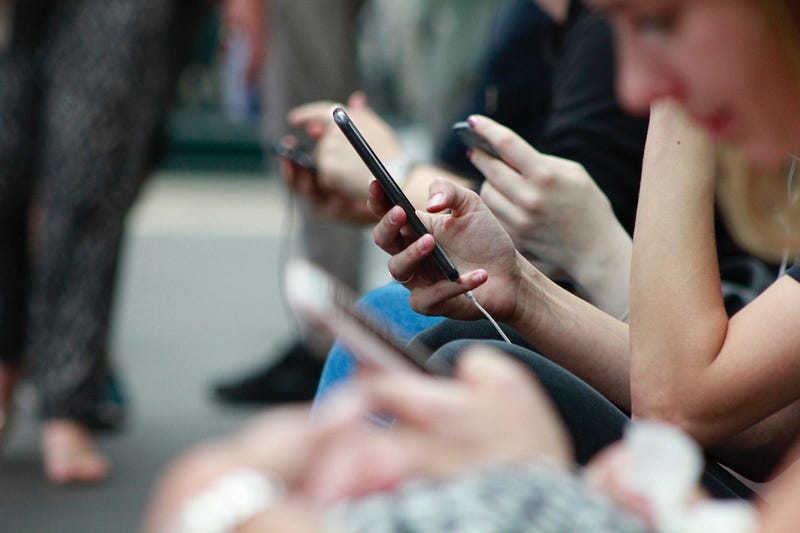
A reader recently left a comment on one of my articles about busyness and said that she did not own a cell phone. I was tempted to not believe her. It’s hard for me to imagine a day without a cell phone — let alone the rest of my life.
But her comment got me thinking about my use (or shall I say overuse) of my smartphone.
Have you ever tallied just how much time you spend on your digital devices — more specifically on social media apps? I know there are apps that will track this for me, but, quite frankly, I’m afraid to use them. It’s like tracking calories. What I don’t know can’t make me feel guilty.
You may have had similar concerns regarding social media or the unrestrained use of your smartphone, or you may be asking yourself how much of this is a good thing? Is any of it a good thing? Is it a “necessary evil” as some call it, or a tool that destroys relationships and discourages deep thinking?
And the bigger concern might well be: is all this invasive input and information good for me? Am I filling every waking moment with images, sounds, opinions, and information when perhaps I should be leaving white space in my life?
Solitude is a Key Component of a Balanced Life
Even if your life is busy and full, I posit that you still need to make time for solitude and silence. In the busy seasons of life, your solitude time may only be snatches of time you can take advantage. Examples might include that fifteen-minute window in the early morning when everybody is still asleep, those times when you’re alone in the car after returning home from work or afternoon walks and evening baths.
The truth is, our heads are full, are ears are ringing, our mind is spinning, and even our brains are tired.
We hear alarming studies about the shrinking attention span of our children and we think ‘I really should take those video games away’. But then we look at our smartphone glued to our hand and think what hypocrites we are.
When it comes to solitude and silence, technology certainly can be a distractor, but is it inherently bad? And what — if anything — can you do to self-monitor your use of technology and prevent it from eating away your opportunity for silence and solitude?
Let’s first state that no matter what your personality type — introvert or extrovert, busy-bee or sloth — everyone needs some solitude and silence time, aside from sleeping hours.
Our society has created a lifestyle where solitude is almost impossible and even perceived as negative or unproductive. Researchers suggest, however, that solitude can be affirming and strengthen our ability to sort out our emotions and problems.
In the wake of our 21st-century lifestyles and the invasion of social media, practicing the discipline of solitude has become nearly impossible.
We feel a nagging sensation that somewhere, someone wants to communicate with us. There is a sense of never feeling alone when our phone or tablet is turned on and nearby.
We feel obligated to respond, to interact, to check up or check-in.
So how do we balance social media and the fact that we are constantly connected and plugged into the world with the spiritual discipline and need to practice solitude?
Deciding Why Social Media is Important to You
What you want from social media will determine how you use it, respond to it, feel about it, and tame it. You have to ask yourself what exactly it is that you’re looking for.
We often do things on auto-pilot or continue to do things that no longer serve us out of habit. So, let’s explore the following two questions together.
What kind of person do you want social media to help you become?
Informed? About what? Stay in touch? With whom? Learn new things? Like what?
Are there other sources of media that can teach you these things better or that would be more helpful?
The level of clarity and depth with which you can answer these questions will determine how easy it will be for you to manage your online time and streamline your social media feeds.
Social media is designed to capture your attention and keep it, but being mindful about it in your life can help you place parameters around it. If you are clear about why you use social media, you can establish disciplines that will allow you to maintain mastery over it instead of it mastering you.
How Much is Too Much?
This is a question only you can answer and it may be better answered in reflection on how social media is impacting you now.
Ask yourself: Can you maintain your integrity in the face of multiple opinions that differ from yours?
This is a biggie. We all see it and we all struggle with it. I thought I’d solved this one by reducing my digital consumption to groups and discussions that were uplifting and edifying for me. But even within groups — where individuals are supposed to have something in common — controversy and varied views arise and threaten to topple harmony and peace.
- Is checking social media becoming a habit or is it distracting you from being present in the place you should be? Are you being a poor example to your family?
- Can you engage in these discussions without losing your temper, becoming rude and argumentative, or getting your feelings hurt? Can you scroll by and not allow what you see to upset you or set a sour taste in your mouth for the day?
- What things can you intentionally choose to remove yourself from in order to maintain your peace of mind and free up mental space for silence and solitude?
Sometimes what we choose to be absent from is as important as what we choose to participate in. Emily P. Freeman speaks eloquently of this in her podcast Choose Your Absence. (If you are struggling with overwhelm or a tired mind, you might find this podcast helpful.)
Choose to Be Intentional With Social Media
Choosing to be intentional with social media is crucial when it comes to preventing it from taking over your life.
To start, consider adopting some of the following habits and practices:
- Join Facebook groups that encourage you in your journey or allow you to ask for help and ideas.
- Choose which apps will be allowed on your phone and which platforms you will only check with your laptop. This can keep a sense of control over having access to social media 24/7.
- Turn off all audio and visual notifications. You don’t need to see that little number indicating that you have 22 responses on Facebook. That’s a shot of dopamine that keeps you coming back for more.
Moreover, when it comes to using social media intentionally, it can be wise to do these things before opening up Instagram:
- Check your emotions. If you are already feeling stressed or irritated with people, the best thing you can probably do is remove yourself from further interaction with people — i.e. refraining from using social media.
- Remember you are in control. You are completely in control. You don’t have to keep scrolling.
- Know that you don’t have to engage. You don’t have to have the last word. You can pretend you didn’t see that post. You can hide posts or pages, you can unfollow, unfriend, and even block.
- Beware of lack of context and single dimension impressions. There is so much of this on Facebook that it causes anger and hate where it doesn’t need to exist. What you are seeing on any post, photo, or video is a snapshot in time of someone’s life. It’s not the entire person.
No matter how well written a Facebook post is, you cannot communicate deeply and thoroughly about a complex matter. Sound bites and carefully crafted images will never tell the whole story.
Can you refrain from judging others based on a few posts? Can you resist the urge to criticize or talk about someone you may be misjudging from social media interaction?
When you are itching to pull the trigger on your comment or give your amazing advice, ask yourself a few things:
- Am I adding anything valuable to the conversation?
- Has someone already said what I am about to say?
- Is it necessary for me to comment?
Summary
“When we speak of ourselves and are filled with ourselves, we leave silence behind.” — Richard J. Foster
Ultimately, social media and the technology that brings it into our lives is the antithesis of solitude and silence. Technology, from the invention of the telephone and the radio to the convenience of smartphones and Wi-Fi, has always been about connecting us to others and the world at large.
In the end, though, the questions we should be repeatedly asking ourselves when using social media are:
- Am I using social media as a distraction to avoid being alone with myself?
- Am I hoping social media will fill a void in my life or heart?
- Is my participation in social media doing good, is it edifying to others and is it helping me become the person I want to be?
Technology and social media are not inherently bad or good. They are tools in the hands of human beings who have misplaced affections or selfish intentions. Things do not have intentions, humans do.
And when we dig into the questions of why we use technology and what we really want, we may find that what we really need is less connection to the world and more solitude in order to sort out what’s important in life.


