
Are You a Cognitive or an Emotional Empath?
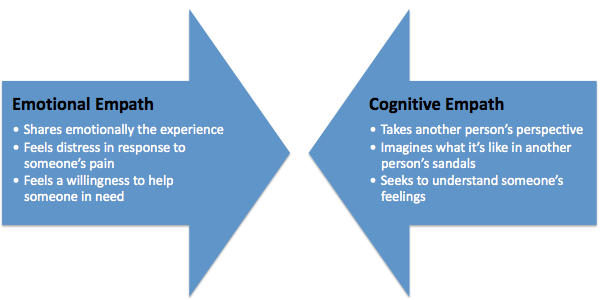
Do you empathise with others by imagining what it is like to be in their sandals or by feeling distress in response to someone’s pain?
As a confirmed empath myself, I like to dig into readings that surround that universe and the reality that goes along with the two-sided ability of empathy: too much empathy can be detrimental to one’s emotional well-being, their health, and their relationships.
So doing my curious today I came across this distinction between cognitive and emotional empathy that I found interesting. Bellow few take away.
Cognitive empathy or seeking to understand
Cognitive empathy, also called “perspective taking” or “Theory of Mind” is pre imagining what another person might think, intend, believe, or want. You attempt to put yourself into their perspectives in order to have a better understanding of what is going on in the world of the one you are interacting with.
Emotional empathy or feelings sponge
Emotional empathy is being directed impacted by the feelings of others. You feel what they feel: the good, the less good. You feel like crying when they cry, you feel like jumping of joy when they are joyful.
Social psychology researchers Hodges and Myers describe emotional empathy in 3 parts:
- Feeling the same emotion as the other person
- Feeling our own distress in response to their pain
- Feeling compassion toward the other person
Key take away
In short what I understood here is that the cognitive empath seeks to understand while the emotional empath seeks to share emotions and alleviate the eventual emotional pain. In both cases the empaths seek to alleviate whichever suffering they face in others because they feel it closely as if it was their own.
I think empathy is an essential and useful “gift” in human relations at all fronts. Nevertheless, I am also aware that it is double-tranchant because it can get overwhelming. For empaths there’s a balance to be found: be willing to understand and help others but also protect oneself so that other people’s suffering doesn’t get too close to them/us.
What about you fellow writers + You reading this, what are your thoughts on this topic ? Ever experienced the above or been closer to an empath? How did that feel?
Until next time, take gorgeous care you. Thank you for your precious time. If you’re an empath reading this, double take care of yourself, put yourself first unapologetically, that’s self care not selfishness.
One love 💜
Sources:
- Ongoing life experience
- Cambridge university press
- Very Well Mind


