
Are Women Ready to Let Men Carry the Burden of Contraception?
It takes two to make a baby, and two to prevent making one

Why won’t men take the pill? Because women won’t let them. Or will they? Whenever women complain (to me or in general) about how difficult the contraceptive pill is on their bodies, my first thought is: why doesn’t your man take it? And then I remember that we live in the real world, and my initial brain spasm doesn’t address how things actually function on earth.
In the real world, women don’t expect (or even want) men to take the pill. Or at least they didn’t in the 1970s, when the first male pill came out. Women booed it. And not because of some internalized misogyny that was making them care more about the interests of men than their own well-being. Not at all.
Here’s what happened: when the first contraceptive pill came out, it was a breakthrough. Women loved it! They could finally control their bodies, protect their health, and decide when and whether to have children, and with whom. They had control over their lives! And they didn’t want that control passed on to anyone else. Certainly not to men. It wasn’t even an option.
They could finally control their bodies, protect their health, and decide when and whether to have children, and with whom. They had control over their lives! And they didn’t want that control passed on to anyone else. Certainly not to men.
When the contraceptive pill came out, its side effects were not so well-known, like with any new drug. And even if they knew how utterly devastating it could be, women most probably wouldn’t even care. Because nothing is more devastating than an unwanted baby.
Women thought: Here’s a pill that prevents unwanted pregnancies and regulates my periods! A few headaches and irritability are not going to stop me from using it. The benefits were far greater than the costs.
Gaining access to the pill felt like discovering how to get drunk without the hangover. How to have fun without consequences. How to have sex without pregnancy! It was like finding gold.
Gaining access to the pill felt like discovering how to get drunk without the hangover. How to have fun without consequences. How to have sex without pregnancy! It was like finding gold.
In time, the contraceptive pill for women showed just how powerful messing with nature and hormones can be. We also learned that everything we do has consequences.
Trapped in a storm of synthetic estrogen and levonorgestrel progestin, women’s bodies and minds were bent into a pretzel. Sure, now we have safer and lighter options. And some women, like yours truly, are lucky enough to never have experienced the depression and lack of libido that a contraceptive pill can create.
Can you imagine? A pill meant for freer sex that has as a side effect the unwillingness to have sex. Kind of defeats the purpose, doesn’t it?
It turns out that 21% of users suffer from low libido on the pill — one in five women, quite a loss to the nation.
Some possible side-effects of the contraceptive pill:
- depressive moods or mood swings
- headaches, nausea, breast tenderness
- increase in blood pressure
- increased risk of some serious health conditions, such as blood clots and breast cancer
- reduced sexual desire
A whopping 77% of the 4,000 women who were part of a study about the pill admitted to feeling its negative effects. Still, for the longest time, women were willing to take it, just to have some control over their lives.
These days, however, Gen Z-ers are a bit more cautious. TikTok is raging against the endless negative effects of the pill and there is an increase in unwanted pregnancies because more and more young women take their advice from social media rather then medical professionals.
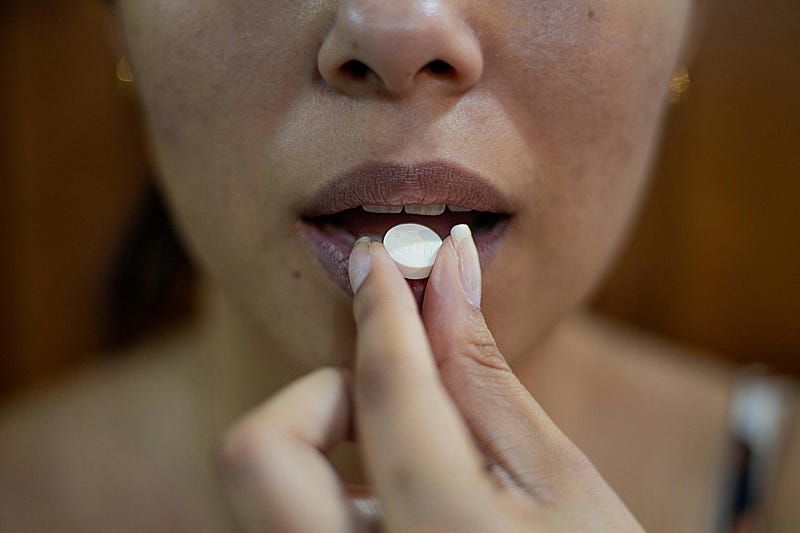
Why don’t men take the pill?
So why wouldn’t women be happy if men shouldered the physical, emotional, and mental burden of contraception?
At the UN’s 1974 World Population Conference, Elsimar Coutinho, today a famous sex and fertility doctor in Brazil, was promoting the drug, which he was testing on men at the Federal University of Bahia. However, attitudes surrounding sex and reproduction can be unpredictable, and not everyone was convinced of its worth.
“The conference hall was full of women,” Coutinho says on the phone, his gravelly voice matching his website’s picture of a suave doctor with slicked-back grey hair. “I was going to tell them, ‘Now you don’t have to take pills if you don’t want.’” Yet, having determined their own fertility through the contraceptive pill for little more than a decade, his female audience were determined not to relinquish control. “To my surprise, I was shouted down and booed out.” -The Guardian
Contraception was up to us, the women, and we were handling it. In 2011, a small-scale study asked women whether they trusted men to take a pill every day, and only half of them did. Perhaps this betrayed some impatience with the imputed fecklessness of men, but nevertheless, it also showed a high level of acceptance that the right people had the reins.
Be that as it may. Maybe men would be more likely to forget taking the pill, since the consequences of unwanted pregnancies affect women more than anyone else, but is that really the reason why male pills don’t exist on the market? Surely some men (especially those in steady relationships, who care about the well-being of their partner) could still be reliable enough to take the pill? Maybe.
The side effects of the old pill were the same for men
But something else happened with the 1970s attempt at a male pill: the male contraceptives relied on blocking testosterone, which would have resulted in panic among the male population, in a society that glorifies testosterone and the characteristics associated with it: energy, stamina, courage — even aggression.
What’s more, the male pill had the same effects in men as the female pill had in women. That was considered unacceptable (ha!), especially since these side effects (the mood swings, irritability, headaches, nausea, depression) were mainly associated with the feminine personality.
What’s more, the male pill had the same effects in men as the female pill had in women. That was considered unacceptable (ha!), especially since these side effects (the mood swings, irritability, headaches, nausea, depression) were mainly associated with the feminine personality.
Everything was put on hold and the burden of contraception became a female problem. Almost exclusively. Of course, there’s also vasectomy, but men avoid like the plague anything that goes snip-snip around that area.
These days, however, there is potential for change.
A new pill for men is being tested
Sixteen British men at a clinic in Nottingham will become the first in the world to test a new contraceptive pill designed for men. The YCT-529 works by blocking a protein to prevent sperm production, not by interfering with the world’s most important hormone: testosterone.
I wonder if this time women will boo it or wholeheartedly accept men’s much-needed contribution to contraception.
Time will tell.
For more stories about women and gender equity, follow Fourth Wave. Have you got a story or poem that focuses on women or other challenged groups? Submit to the Wave!
