
Are Women Actually More Agreeable?
Maybe they’ve just been domesticated, like foxes?
“This says that women are “naturally” more agreeable than men,” I said to my partner, James, with an ironic emphasis on the word naturally. I was looking at something written about The Big Five Personality traits, an analysis of personality survey data that is based on “common language descriptors.”
For example, someone described as conscientious is more likely to be described as “always prepared” rather than “messy”. This theory is based therefore on the association between words but not on neuropsychological experiments.
“That’s funny,” he countered with a wink, “I thought that women were known for being naturally bitchy and troublesome.”
“Yeah, I wonder which one it really is,” I countered, rolling my eyes just a bit?
The nature vs. nurture debate is a long-standing one, revolving around a variety of human traits, but unless we start raising children in isolation (which would cause a whole host of other problems) we may never know for sure how much of certain traits are innate and how much is socialized in. In fact, whose to say that traits that we might consider inherent are not just due to thousands of years of selection to favor those traits? Maybe women aren’t so different from the domesticated fox, which was bred over time to be docile and friendly.
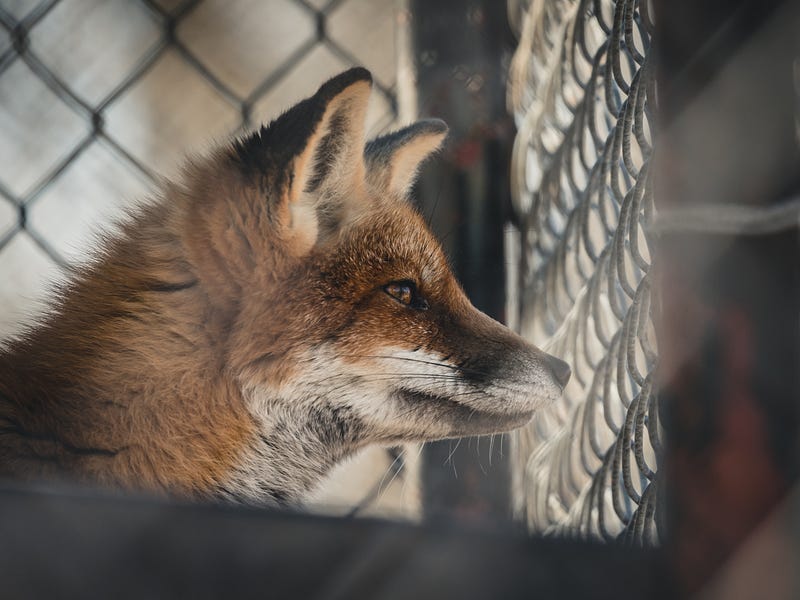
“Cultures across the globe consider foxes to be incorrigibly wild. In both ancient fables and big-budget movies, these fluffy mammals are depicted as being clever, intelligent and untamable. Untamable, that is, until an unparalleled biology experiment started in Siberia almost 60 years ago.”
Dmitry Belyaev, a Russian geneticist, started out trying to better understand how dogs became domesticated by working with foxes, who are also canids. By selective breeding of both tamer fox pups and a parallel program to breed more aggressive ones, Belyaev and his team “showed certain aspects of the fox’s behavior could be tied to genetics and spotted during breeding.”
Like foxes, women have also been considered incorrigibly wild throughout history. Perhaps they too went through a kind of selective breeding program to tame them. Doesn’t it stand to reason that when more patriarchal cultures began overrunning more egalitarian partnership-oriented ones about 10,000 years ago that women who were decidedly disagreeable by patriarchal standards might not have fared so well? They probably either got killed off out of hand or at least they were less likely to end up as somebody’s mother, thereby reinforcing more docile traits.
The most friendly of the domesticated foxes are known as “elites” and although they do not fear humans and actually seek out their companionship and affection, they still don’t make particularly good pets. Domesticated foxes tend to chew up your Christmas tree or pee in your coffee, and despite being terribly cute and cuddly, they ultimately have a mind of their own, domesticated or not. If you smack them with a rolled-up newspaper, they might pretend to be better behaved, at least temporarily, but turn your back and they may well burrow a hole in your sofa just to find out what’s inside it. Foxes are curious and intelligent by nature and if not given enough acceptable outlets for that, they tend to become destructive.

Women might not be so different. Maybe that’s why they are sometimes referred to as vixens. A woman probably won’t pee in your coffee (probably) but she might want to follow her wild heart to places that make you uncomfortable if you are trying to make her into a pet. As enjoyable as it might be to have an animal that is rightfully wild snuggled up in your lap, too much taming is not a woman’s natural state any more than it is a fox’s.
We may never know for sure how much of female agreeableness comes from socialization, but what we do know is that if we want and expect women to speak up for themselves, to stop being detrimentally accommodating or passive, we as a society can’t then proceed to hit them on the snout with a rolled up newspaper when they do what we are exhorting them to do. If it’s still considered true that an assertive man is a leader but an assertive woman is a bitch, then we’re never going to know for sure how much of any behavioral trait is nature or nurture, and we’re never going to allow for people to be whatever it is they actually are, regardless of gender.
More animal-related social commentary from Elle Beau:


