Are we safe online?
With the lockdown initiated in India- Zoom, Google Meet, Messenger, Skype, Microsoft Teams, Webex has become the buzz everywhere. No one knew what to expect in the future, but everyone tried to push their lives virtual. Starting from Online quizzes to Online debates to Online classes, our society is now in a different kind of digital revolution, where the digital environment is penetrating in our lives so much than ever before. Digital Literacy and adaptability is a new parameter for various job recruitments.

With the increased online activity, we have also witnessed increased cybercrimes during this small period contrary to the low reportage of physical crimes which dropped drastically.
Which state is number one in the same?
The shocking and surprising answer is none other Kerala! While overall, India has seen a big surge in cases registered, looking broader, we can see that this is a global phenomenon and not just restricted to a state or a country. As usual, humans do toxify wherever they have kept their foot.
What are the different types of crimes reported?
Majority of the crimes targeted personal data, wallet details etc. There were multiple websites which actually called for donations for the fight against Covid-19 but turned out to be a fraud. In some cases, duplicate sites popped up where they are an exact copy of the genuine ones. For eg- the PM cares fund or respective CMDRF. There were also cases where important defence details or documents were accessed through phishing and ransomware attacks. Many of the world’s embassies were also a victim of the same where their confidential data was found stolen. India is also one of the five most vulnerable countries to cyber attacks since it has around the third largest internet users in the world, with very little digital literacy. (Source)
What is the reason behind such crimes?
As the popular quote says, an idle mind is a devil’s workshop. The population got locked under their homes either by force or by one’s own will. This has led to a lot of mental health issues. Criminals, who were used to commit crimes physically has started using the cyberspace instead.

Companies giving Work From Home to employees has also made them and their data vulnerable. For example, using the same laptop for WFH and personal use or using the personal internet for work, can surely make you prone to these. With lockdown, online content distributors like Netflix, Amazon Prime, Disney-Hotstar Plus, Zee Premium saw a skyrocketing rise in demand for these. Many people fell for fake offers and fake websites or even say sharing passwords. According to the National Commission for Women (NCW), women faced multiple crimes during this period.

Online Classes and Online courses

The online class is the new norm now. Students across the world part of this experiment. Many websites like Edex, Coursera, Udemy etc did have such an idea before itself. Using recorded online tutorials, quizzes and assignments, students are more into online courses and certifications. Ed-Tech companies like Byjus, Meritanation, Khan Academy, Unacedmy, Vedantu etc also had publicised a lot on online learning or usage of computer/mobile to learn whatever is taught in school. IIT-JEE, NEET, IAS, GATE, NET coaching classes are facing the crunch as uncertainty looms on the exams as well as the preparation or coaching given to students.

Are the kids safe?
With online classes on the cards, kids as young as six are online. The sudden surge in online activity will show a negative effect as most of them are new to this and it’s confusing for many of them. The online activity comes in the threat of cybercrimes and predators. Majority of the population is still unaware of cybersecurity and important precautions.

Cyberbullying is the term used to define aggressive/harassing behaviour of teens online with others. With Online classes starting, not only other teens, but even teachers are a victim of cyberbullying. It can be just ordinary trolls but sometimes, it blows out of proportion. Like how trolls targeted a teacher while she was teaching students via the Victers channel. If the same crime is done by an adult, it is called Cyberstalking.
The NCERT and CBSE later had issued a set of instruction for students to keep safe. Karnataka even suspended online classes till 5th standard. Many students find a lack of interest in respective online classes and chances are that they try to do something while the classes are going on.
Cyber laws in India
In order to monitor these crimes, which happen online we have cyber laws. There is no formal definition of “Cyber Crime” in any of the laws, but in general, Cyber Crime is a crime which involves a computer.

Cyber laws, just don’t end with discussing cyber crimes also goes much deeper into various concepts like Privacy Policy, Cookie Policy, Copyright, Trademark, Patent, Intellectual Property Rights, Defamations etc.
Primary and the most important act with respect to cyber laws in India was the Information Technology (IT) Act (2000). This law was quite based on the UN Commission on International Trade Law (UNCITRAL), which dealt with e-commerce which also electronic records, electronic documents, digital signatures etc. It also brought amendments to the Indian Penal Code of 1860, the Indian Evidence Act of 1872, the Banker’s Book Evidence Act of 1891 and finally the Indian Reserve Bank Act of 1934. This act defined offences in the cyber world. IT Act has 13 chapters and 90 sections.
In 2008, the IT Act was further amended strengthening the earlier law as well as addressing more on e-commerce, e-communication, technology and computers. More powers were given to IPC than IT Act when it came to crimes. This Act is called the IT Amendment Act 2008 or ITAA.
ITTA was successful in defining Data Privacy, Info-security, Cyber terrorism, etc. The commonly used terms computer, computer system, data, information, etc were also defined.
Cyber Crimes in the IT Act
Following are the sections from the IT Act which talk about offences
- Sec 65- Tampering of digital information or the computer system.
- Sec 66- Cracking, which stands for data theft.
- Sec 66A- Sending offensive messages over the internet or even trying to mislead a person through it.
- Sec 66B- Dishonestly receiving a stolen computer while
- Sec 66C- Illegally using others password or electronic signature.
- Sec 66D- Cheating a person with use of the computer.
- Sec 66E- Violation of Privacy and
- Sec 66F- Cyberterrorism ie. killing or putting others lives in danger.
Punishment for Sec 65–66 D is fine or imprisonment to 5years almost, but for 66F is life imprisonment.
Section 69 allows the government to access, decrypt any message/information through the mentioned procedure. Sec 69A allows govt to intercept/monitor/block any website. Unlike physical crimes, there is nothing a crime scene in the cyber world. So, each and every evidence is important. This includes log files and information records. Also, the majority of the evidence is volatile and can easily be destroyed.
IPC crimes
Forgery of e-records, Bogus websites, E-mail abuse, harassment through emails, frauds, illegal sale etc come under various sections of the Indian Penal Code. All these crimes are cognizable where the accused can be arrested without an arrest warrant.
How to file a cyber case?
As per the Criminal Procedure Code Section 154, cybercrime can be filed anywhere in India irrespective of any jurisdiction. You can approach the cyber cell of your city. If you don’t have a cyber cell in your city, then you can approach a local police station and file an FIR. You can also report a complaint using email or by call too.
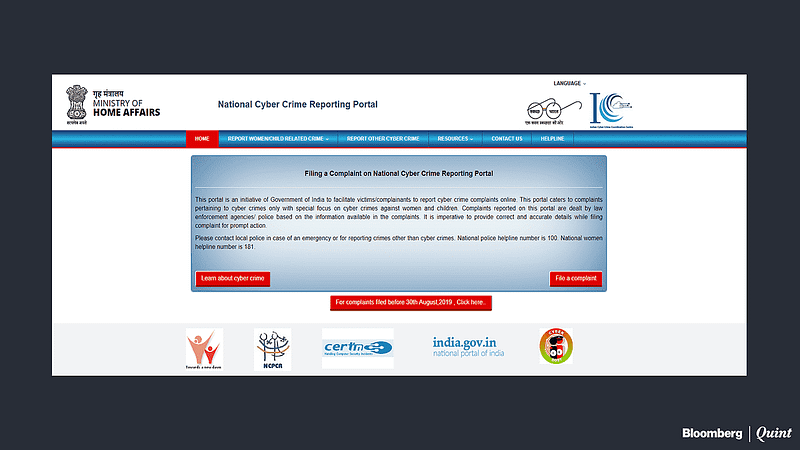
In addition to police, you have different Social Media having its own complaint cell, with well-defined policy and guidelines. You can directly report it to social media cells. As far the evidence is a concern for social media, screenshots are considered as valid proof.
More on ways to complaint and types of evidence.
Disadvantages of Cyber Laws
- As discussed before collection and storage of digital evidence is not so easy. It is highly volatile which makes it indeed challenging.
- Majority of Indians are unaware of Cyber laws, IT Act etc which make them not only vulnerable but also hinders them from reporting the crimes.
- Internet is not owned by anyone. We just share and use it. There is no one to take the responsibility of evil things happening in the virtual world.
- It is very hard to trace perpetrators across the borders, Local police will need big help from International Organisations, Firms, etc. Interpol is a good example of such an organisation.
Instances of big cyber crimes across the globe
As discussed before, many large scale cyber-attacks, affect many countries together. Most of these attacks are done by organisations with vested interests. Some of these also fall under cyber terrorism. Most of the cases, the people doing these are protected by someone or go untraced. Most hackers across the world target their rival organisations or rival countries. For eg- Indian and Pakistani hackers had done multiple attacks on each other’s govt websites as a part of the rivalry which can be also called as Cyber War. Companies have tried to access information from Iran’s Nuclear Centrifugesin Nantaz causing them to malfunction.
Intelligence agencies like Mossad, CIA, Raw, MI5, ISI etc use their cyber wings to gather confidential information from their opponents. Often, they also snoop on politicians, businessmen, military officials and bureaucrats.

The biggest data breach was reported in 2016, where Yahoo had confirmed that over 3 Billion user data records were compromised in an attack. Another controversial cyber attack was in 2018 where Cambridge Analytica, a political consultancy firm took data from 87 Million Facebook profiles of Americans and worked in favour of Donal Trump during the 2016 Presidential elections. The same company also is claimed to have worked in favour of “Leave” Campaign during the Brexit Referendum. Donald Trump accused Hillary Clinton of using her private email account for communication, instead of using the official account. The Indian National Congress was also a client for the company.
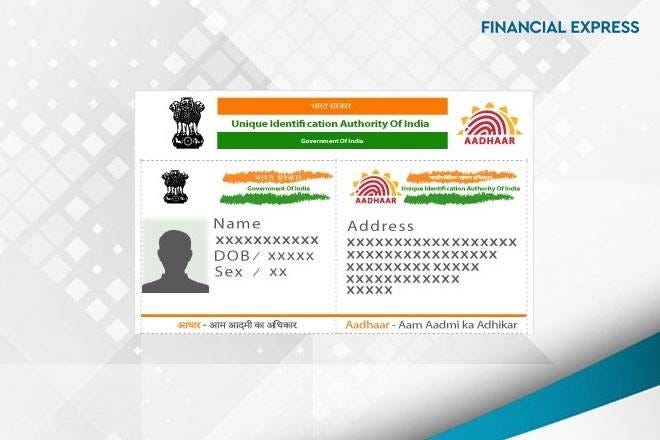
In 2016, AADHAR which is the largest database on Earth is claimed to have faced multiple breaches, where details are said to be leaked to the black market and deep web. The UIDAI, the owner and administrator of the database said that AADHAR database can never be hacked during 13 billion years or the age of universe till now as it is protected by 2048 bit encryption. The time is 2²⁰⁴⁸ while ordinary databases use 256-bit encryption. The IT ministry said that even in 100 Cr attempts you cannot access it.
An International organisation named Anonymous under the motto “We are Anonymous”, is infamous for attacking government and govt affiliated agencies. They vouch for anarchy, mainly carry out attacks favouring the public in the form of a resistance movement. In the recent Black lives matter protests, the hackers have announced their support for the movement. In the past, they also threatened ISIS with cyber attacks. They are said to have grown from the 4Chan community which is an anonymous platform. They had stacked US, Israeli, Tunisian govt, and companies like VISA, Mastercard, PayPal, Sony and many others.
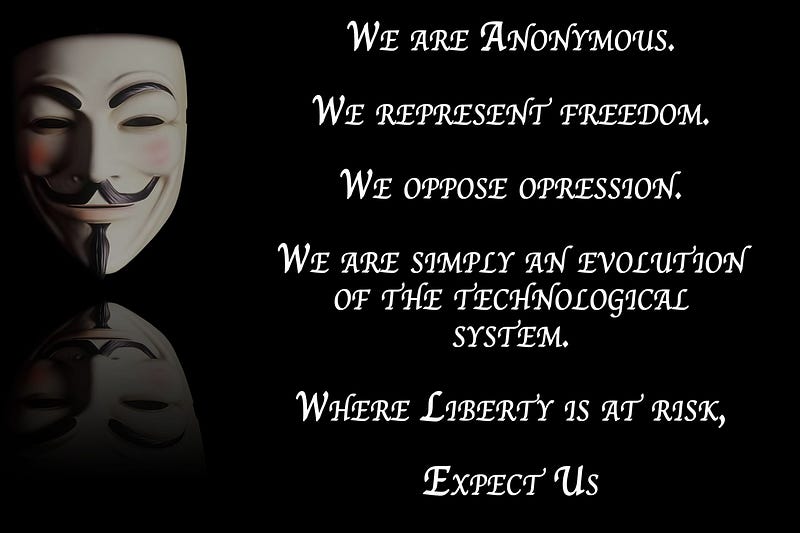
In 2012, Time put Anonymous amongst 100 most influential people in the world. They remained unknown to the public much till now and re-appeared during the George Floyd protests.
Canada is said to have one of the best cybersecurity in the world followed by Nordic countries and Japan.
Despite all odds, indeed we can say that we must learn cyber laws, keep ourselves aware of both plus and minus of the Internet and it’s usage. It has made everything simple but it has made crimes and illegal activity complex to track. Defamations used to be a rare word back then, but now it is very easy to accuse or defame a person over social media. The attention it gets aligns with basic human psychology that we like to spy, snoop or like to see negatives in a person than his positives. Just like we say, wherever there are humans, he carries with him his evil mind and rules. Internet is just one of it.
Let us use the Internet for its positives and at the same time denounce its negatives.
Did you like this article? Mention in comments below! Don’t forget to follow us on Medium to get updates on all latest stories and catchy poems and join us on social media to stay in the loop! Follow us on Instagram(@paperkin_blog), Facebook(@PaperKinBlog) and Twitter(@kin_paper)!


