
Are We Really the Smartest Species on the Planet?
Humans are the only ones knowingly destroying Mother Earth
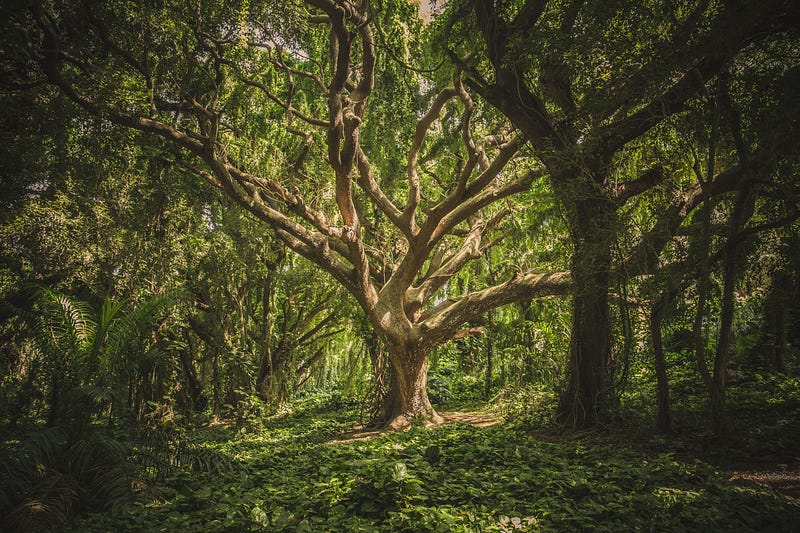
Conventional wisdom says that humans are the most intelligent, advanced species on the planet. We can imagine things. We can plan for the future. We can communicate with others and tell stories through language.
Thanks to our intelligence, we have built empires and civilizations around the world. We have altered and conquered nature through science and technology. We have cloned animals and genetically modified crops to make them more efficient. We can even make food in labs, and babies in test tubes.
But are we really the smartest? Have we really conquered nature?
The answer depends on how we define smartness and intelligence. Before we attempt to answer this question, here’s some food for thought:
- We are only one out of millions of other species that exist on this planet. And yet, we are causing the massive extinction and endangerment of species — like frogs, orchids, and fish — thanks to our destructive, extractive practices that harm our environment and ecosystems.
- We are one of the youngest species on the planet. Our earth formed around 4.5 billion years ago. Nonhuman species — like many trees, plants, and animals — started appearing millions of years ago, and have evolved over time. In contrast, our lineage started a mere 500,000 to 750,000 years ago.
- Many species naturally have the ability to do amazing things that we can’t do. Trees and plants absorb carbon and turn it into oxygen. Clams and oysters absorb excess nitrogen to clean water. Among other things, the multi-talented mangroves protect our coastlines, water quality, prevent soil erosion, and serve as a habitat for marine species.
- We are the only species proactively and knowingly destroying the planet. We have known for decades about the dangers of burning fossil fuels and climate change, yet here we are. We are quite literally jeopardizing our own lives as well as future generations’ chance to have a livable future.

Despite many of the amazing feats we have accomplished throughout history, we have failed to build anything that resembles a utopian world. In fact, because of how we have short-sightedly treated our planet, we are facing imminent existential threat.
Many people think we can outsmart the climate and engineer our way out of this crisis, for instance through geoengineering or carbon capture. And maybe we can, at least in part. Maybe that will be enough — but maybe not. No one knows for sure. Others, most notably Elon Musk, think we can just ditch this planet and colonize another one. Perhaps it makes sense to have multiple options available, since climate change is not something that will go away if we ignore it. And we likely won’t have a second chance if we can’t stop runaway climate change.
But at the same time, we can’t just carry on with the mindset that humans are the most advanced, intelligent species that can figure anything out. We need to come to terms with our often unwarranted overconfidence and acknowledge our inherent fragility and dependence on the planet and on nature. Without nature, we have nothing. Without natural resources, we can’t extract or produce anything, let alone eat or breathe. We simply won’t be able to survive. And why would we want to anyway?
Even if we could figure out techno-fixes that enable us to artificially survive on a hotter planet, I’d much rather live in a world in which I can be a part of nature, not apart from nature. I want to be able to enjoy nature with my son. Since the day he was born, he has loved the trees, the plants, the flowers, the ants, the sky, the moon, and the stars. He lights up when we go outside. I want him to grow up having the opportunity to experience oneness with nature, our planet, and our universe.
There’s so much we can and should learn from nature and other fellow species. That doesn’t make us worthless or less intelligent.
We don’t have to win “the most advanced, most intelligent species on the planet” prize. No other species is keeping track. The mentality that people are above and separate from nature can’t save us, but remembering that all of us are a part of nature, and that there is a lot we can learn from nature itself, is a step in the right direction.
There is hope. History has repeatedly proven that people are resilient and can overcome all sorts of challenges. We have the intelligence. What we need is the humility, open-mindedness, and willingness to update our mindset and ways when we find out we are wrong. That time is now.