avatarVeritas Civis

Free AI web copilot to create summaries, insights and extended knowledge, download it at here

1088

Abstract

for the future of war is “Antibiotics.”</h2><p id="83f2">As of April 2021, we had no large capacity for <a href="https://www.marketwatch.com/story/china-has-cornered-the-market-on-antibiotics-so-the-u-s-must-rebuild-its-manufacturing-capacity-11619640612">manufacturing antibiotics.</a> China has that market cornered. How long do you think an large body of men fighting a war will last without antibiotics?</p><p id="d8fe">There is also a secondary problem described by Dr. Julian Davies, in his article “<a href="https://www.ncbi.nlm.nih.gov/pmc/articles/PMC2095086/">Where have All the Antibiotics Gone</a>?” where he describes how new infections are becoming resistant to antibiotics and we are running out of ideas of how to kill the microbes. According to the multi-authored article “<a href="https://www.ncbi.nlm.nih.gov/pmc/articles/PMC7672122/">Microbial Resistance Movements</a>: An Overview of Global Public Health Threats Posed by Antimicrobial Resistance, and How Best to Counter,” — “infectious diseases remain the leading cause of death in the world.”</p><p id="092e">Duri

Options

ng WWII, we did show great capacity for unity and reaction time, where we brought to bear all our “blood, toil, sweat and tears” (<a href="https://www.thoughtco.com/blood-toil-tears-and-sweat-winston-churchill-1779309">Churchill</a>) to bear on the war effort. People then were used to “work.” Many came out of farms to go into manufacturing to help the war effort. They were used to hard work. Today that type of workforce is a question mark.</p><p id="2d90">There are larger questions to be investigated. The question on antibiotics is not only that we do not make them on a large scale. The question behind that question is the Why? There are no profits in making antibiotics (we are not competitive) so, who pays? Then, to be medicine independent, what do we do long term? Pay more taxes for a stockpile in case of war? China has cheap labor, we don’t.</p><p id="8026">Besides, this is just one problem. There may be others we do not know about. The Government has learned to treat us like children, they say nothing; mostly because they see this is how we behave.</p></article></body>

Are We Even Ready for a Large Scale War?

There is a lot of chest-pounding going on these days, and people are arguing the pros and cons of “going to war.”
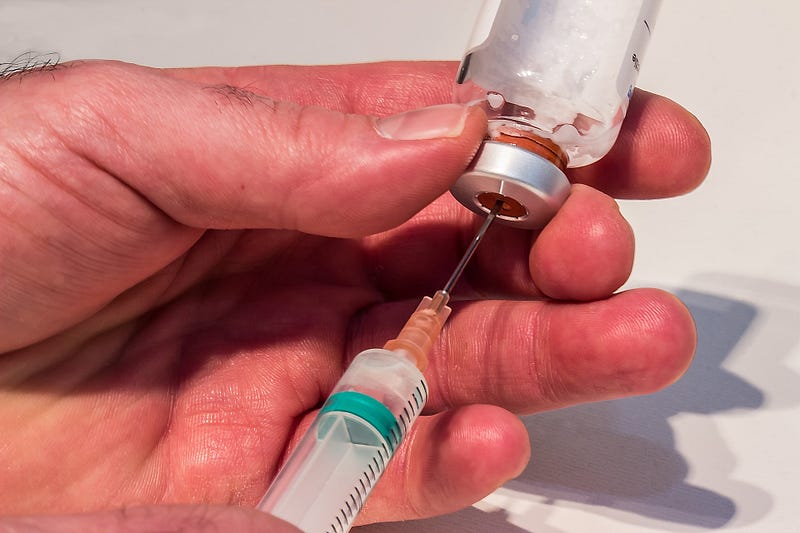
We Need Large-scale Meds. — Attribution, Myriam-Fotos, here

Before we get too far gone down the “war” rabbit hole, we need to ask ourselves one question, “are we ready?”

There is one word that ought to hold us back before we sent our Professional Army to the shredder. When I thought about it, I was reminded of the1960’s film “The Graduate,”

when Mr. McGuire takes Ben (the graduate) to the side to “talk to him.” Then says, “I just want to say one word to you. Just, one word.” Ben, “Yes Sr.?” McGuire, “Are you listening? Ben, “Yes I am.” McGuire, “Plastics.”

The word for the future of war is “Antibiotics.”

As of April 2021, we had no large capacity for manufacturing antibiotics. China has that market cornered. How long do you think an large body of men fighting a war will last without antibiotics?

There is also a secondary problem described by Dr. Julian Davies, in his article “Where have All the Antibiotics Gone?” where he describes how new infections are becoming resistant to antibiotics and we are running out of ideas of how to kill the microbes. According to the multi-authored article “Microbial Resistance Movements: An Overview of Global Public Health Threats Posed by Antimicrobial Resistance, and How Best to Counter,” — “infectious diseases remain the leading cause of death in the world.”

During WWII, we did show great capacity for unity and reaction time, where we brought to bear all our “blood, toil, sweat and tears” (Churchill) to bear on the war effort. People then were used to “work.” Many came out of farms to go into manufacturing to help the war effort. They were used to hard work. Today that type of workforce is a question mark.

There are larger questions to be investigated. The question on antibiotics is not only that we do not make them on a large scale. The question behind that question is the Why? There are no profits in making antibiotics (we are not competitive) so, who pays? Then, to be medicine independent, what do we do long term? Pay more taxes for a stockpile in case of war? China has cheap labor, we don’t.

Besides, this is just one problem. There may be others we do not know about. The Government has learned to treat us like children, they say nothing; mostly because they see this is how we behave.

Politics
Leadership
Health
Technology
Education
Recommended from ReadMedium