
WEALTH INEQUALITY
Are We Better Off Financially Now Than During the Great Depression?
The answer may surprise you
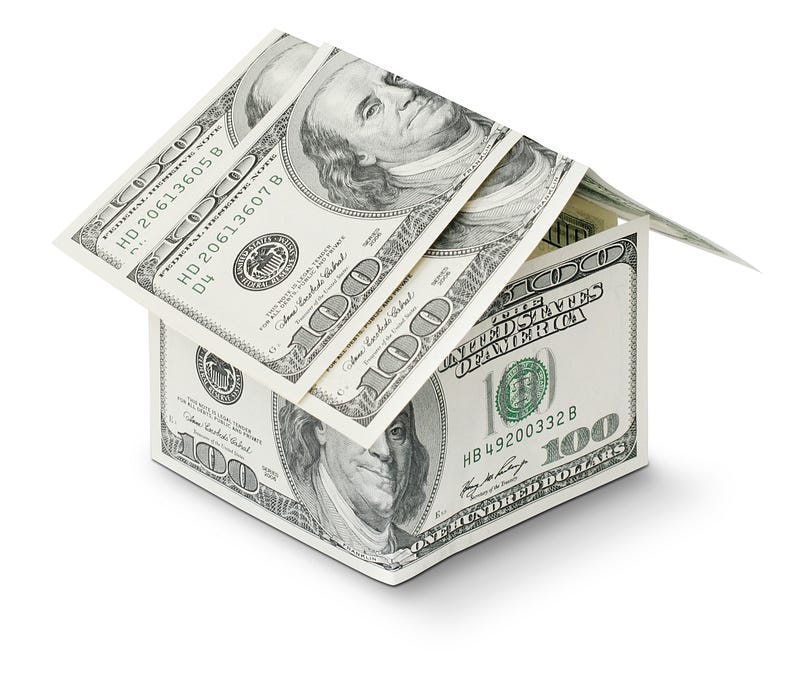
We hear a lot about wealth inequality. People are saying it’s worse today in America than at any time since the Gilded Age and the Great Depression. I said so myself in an article I published on May 24 titled “If Today’s U.S. Net Worth Were Distributed Fairly, Here’s How Much Money You’d Have.”
Nobody alive today is old enough to remember the Gilded Age. I’m old enough, however, to remember personal accounts of the Great Depression, which lasted from 1929 to 1938. Here’s one such account: In 1935, with both parents working in a shoe factory, my father spent a New Hampshire winter sharing one coat with six brothers and sisters, one sibling wearing the coat and roaming about for a few hours while the others stayed under blankets in bed, then rotating the coat to another sibling. This story was always the first one my father would tell his family about this awful time.
There are so many stories from that time about families losing their life savings, people willing to work but finding nobody with enough money to hire them, and the “down-and-outs” standing in long lines for a bowl of soup. Meanwhile, amid the misery of that time, many of the rich got even richer by buying up foreclosed properties and shuttered businesses. An article on 1930s High Society on PBS details the misery and concludes with “America has never again seen such obvious excess at a time of widespread poverty.”
Our financial situation can’t be that bad today. Right?
Let’s compare wealth inequality in 1938 and 2022.
How rich were the rich then, and now?
In 1938, the top 10 percent financially owned one-third of all the wealth in the country. Today, they hold 76 percent of the nation’s wealth. Today’s oligarchs are considerably wealthier than the rich were in 1938.
Meanwhile, we work harder and harder
In 1938, by law, the workweek was 44 hours. Today, the average for those of us classified as professionals is 50 to 60 hours. Our workweek is from six to 16 hours longer than it was in 1938.
We do make more money
Yes, we do. Average annual income in 1938 was $1,731. In 2022, it is $67,521. We make about 40 times what we made then.
Even so, the American Dream is now mostly out of our reach
The price of a home in 1938 was about $3,900, two-and-a-quarter times the average annual income at that time. Now, the median price of a home is $450,600, seven times our average annual income. (Note this is the median home price; prices for Mar-a-Lago et al don’t figure into this.)
So, today it’s less likely you’ll be able to afford to buy a house. You’ll probably be renting. Rent is now, on average, $1,322 per month, which may be more than a third of your income if you live in a low-wage state or you make less money than average. In 1938, rent averaged $27 a month, which was a little less than 20 percent of one person’s income.
It now takes more than four times as long to save up for a house as it did in 1938. And rent is so high you probably won’t be able to save up that amount.
Then there’s food and gas and doctor visits
The cost of groceries has not risen much, comparatively speaking. Costs for gas and health care are a different story: A gallon of gas, which was 10 cents in 1938 and may not even have been needed if you had a horse and buggy, now costs up to $4.60–46 times as much as it did. And a visit to the doctor, if you don’t have insurance, can cost from $300 to $600. Compare this with my grandfather’s charge for a house visit during the Great Depression: a dollar or two, if you had it, or a basket of peaches or corn on the cob.
Getting to work and the grocery store is forty times more expensive than in 1938, and health care is so much more expensive it can hardly be compared.
Not to mention a college education for the kids
Going to Harvard in 1938 would have cost your parents $420 a year, about three month’s worth of the average income at that time. Tuition at Harvard in 2022 is $55,587 a year — 132 times as much as in 1938 and about 10 months of the average income today. Getting a good education is more than three times as expensive now than it was in 1938.
Wow!
When we look at these figures, we can see that an era that has become infamous for having the greatest wealth inequality in modern times may actually have had less inequality than we have today. Many of us in this country may be more financially insecure now than our great-grandparents were during the Great Depression.
Maybe it’s time we do something about wealth inequality.

I appreciate your feedback, whether you agree with me or not, so please comment, highlight or clap (up to 50 times). If you’d like to be notified when I publish, request email notification here. And if you don’t yet have access to all Medium writers and writing, subscribe here. (Part of your subscription will go to pay writers — like me! — and keep this site ad-free.)



