
Decision Making | Biases & Heuristics
Four Biases Subconsciously Affecting your Decisions
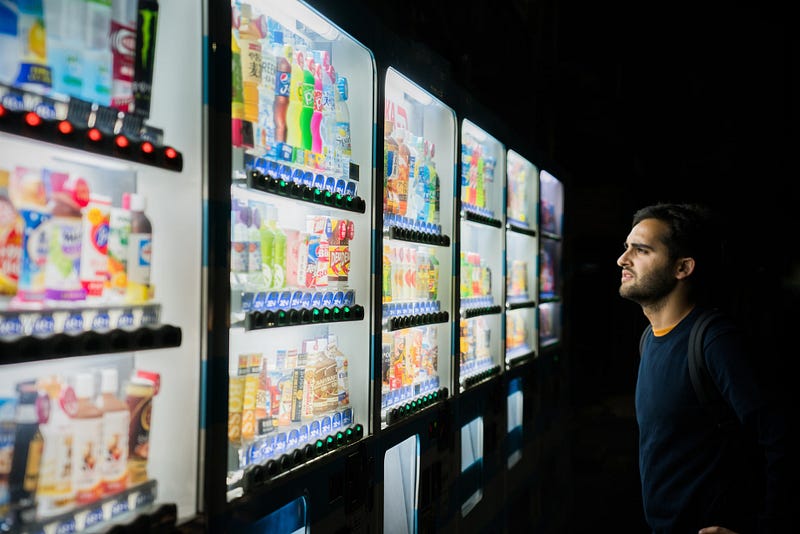
As adults, we make decisions practically every other waking second. Assuming a 7 hour sleeping period on average, it is close to 30,000 decisions everyday. Are we making these decisions the best possible way?
Get up or snooze that blaring alarm, to eat this or that, wear blue or black, the list goes on. Some of these decisions have a significant impact on our lives, while some are barely consequential. Most of these split-second decisions are laced with unconscious biases that we never notice. These biases are sometimes useful as they help in decision making in emergencies. But in regular life, they are primarily detrimental.
Behavioral economists have done extensive research on decision making while trying to understand the underlying factors affecting it. Several bestselling books have been written about the irrationality of human decision making. Cognition of these irrationalities is the first step towards avoiding them in the future.
Since the 1970s, several biases have been identified and discussed in literature. Here are the four most common of these biases that routinely creep in our decisions.
Sunk Cost Fallacy
Remember that time, when you went to an all you can eat buffet and ended up eating till you were sick because you wanted to make it your money’s worth?
The money you paid for the buffet is sunk cost. It's gone. Pifff. It cannot be recovered. If you ate too much to utilize your last cent and ended up sick the next day, you lost time, health, and probably some money (fuel to go to the pharmacy and cost of medicine). That was probably not worth the bargain.
That dream house/car you finally bought, but unanticipated maintenance/running costs sucking you dry? Sell it. But it was your dream house/car and you already invested a lot of money on it. Still, sell it. That money is already gone, it is not coming back and there is no point in throwing more money on it.
Sunk cost fallacy is another reason organizations get someone from the outside for turnarounds & major restructurings. The outsider will not have any baggage of past decisions and associated rationale. They would more easily shut down loss-making ventures rather than give them a lifeline instead of putting this money to better use.
Optimism Bias
Acoording to a recent Bloomberg article, more than 80% retail traders lose money in stock markets. Additionally, only a paltry 0.03% make consistent profits.
You have recently started trading in stocks, have made some profits and losses and you come across this article. Do you stop trading thinking you might actually end up making losses? Most probably not. Most of us assume that we aren't failures, we have superior knowledge to beat the market and thus will not be in that 80%. Guess who constitutes that 80%. People like us.
Optimism bias is a common bias where people are too optimistic about their capabilities and don't believe that bad things can happen to them.
Kahneman & Tversky laid out an example in their book where a group of academicians was tasked to prepare a course outline/syllabus. They were asked the following questions
a) How much time it would take to complete this task — ‘x’ years.
b) How much time have similar tasks by other groups which they were a part of taken in the past — ‘3x’ years.
c) Did the group think they were much better than the previous groups. No.
How much time did the assignment finally take? More than 3x years.
Anchoring Bias
You are bargaining with a seller over an item and the price tag says x. Do you quote 0.1x? No. You would probably start bargaining from .5x and ultimately agree at .7x, happy about a cheap deal. But is it really a cheap deal? What if the actual selling cost was .2x and the seller put a higher price on the tag anticipating a bargaining customer.
With no prior knowledge about the actual price, you have anchored onto the price offered by the seller and assume that it is near the actual price. This bias is prominent in situations when the only information available with the decision-maker is provided by the other party. Anchoring bias is especially cataclysmic in financial negotiations.
Availability bias
I have seen it, thus it must be common.
No one before Jan 2020 would have agreed that there could be a disease in the world that would cause major countries to close borders, suspend travel, go into total lockdown, and have most of the people work remotely. Ask this 5 years later and these same people would say that this is highly probable. Why? Because they have lived through it.
Availability bias comes up when people correlate the chances of happening something with the number of similar instances they can recall. If you have seen it happen, it could happen again. If you haven't heard about it, it's improbable.
Imagine having a neighbor who can play a total of 10 instruments. If asked how many people in the world could probably do this, your guess would be much higher than someone who doesn't know anyone like this. This is irrespective of the fact that you know that mastering 10 instruments is a rare feat.
So now we know some common biases and have observed how they cloud our decisions. Now that we are familiar with them, we can re-evaluate our recent decisions and look for these unconscious biases.
The major question still remains — how to avoid them. These cognitive biases are difficult to overcome in split-second decision making. To neutralize these biases, try not to go with the first thought that comes into your mind. Take 5 seconds and analyze if that thought is riddled with one or more biases. Try to see if you are as objective as you imagine you are and see if your decision needs revision.
These extra 5 seconds might save you substantial heartache later.
Most of this article is based on the book — ‘Thinking Fast & Slow’ by D. Kahneman based on this work with A. Tversky. You can read their work in their books and various research papers.
I would love to hear if you have noticed these biases in your decisions, feel free to comment!


