
Are Stories One of the Most Effective Ways to Communicate?
When we listen to a story, our brain does a few amazing things simultaneously.

First, it focuses on the story we want to hear, even if there are noises in the background. This focus is called our “attention.”
At this same time, our brain starts to remember the story, which involves “memory.” It is like remembering the details of a movie you watched so you can tell it to someone else later.
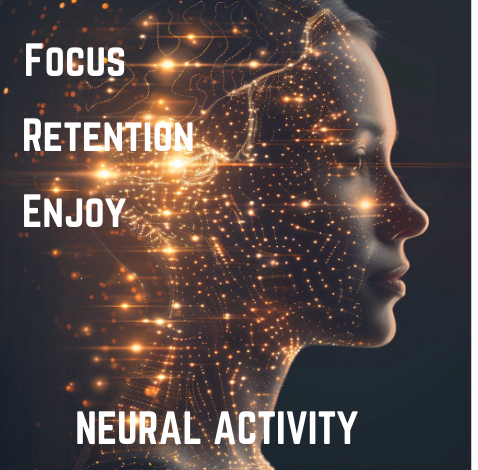
Lastly, all of this involves “neural processing,” which is a fancy way of saying that many different brain parts are working together to make sense of the story. They help us understand the words, imagine the scenes, and feel the emotions the story is trying to convey.
So, when we listen to a story, our brain’s focus, memory, different brain parts — all come together like a well-coordinated team.
The Scientific and technical community has embraced the power of storytelling, as there is enough interesting research now on neural activity in cortical and subcortical areas of not only the listeners, but also the narrators!
Next, let us read a short story to explore four key insights into the subtle craft of weaving stories into our narratives.
“The Ink of Wisdom: Miko’s Journey Beyond the Quill”
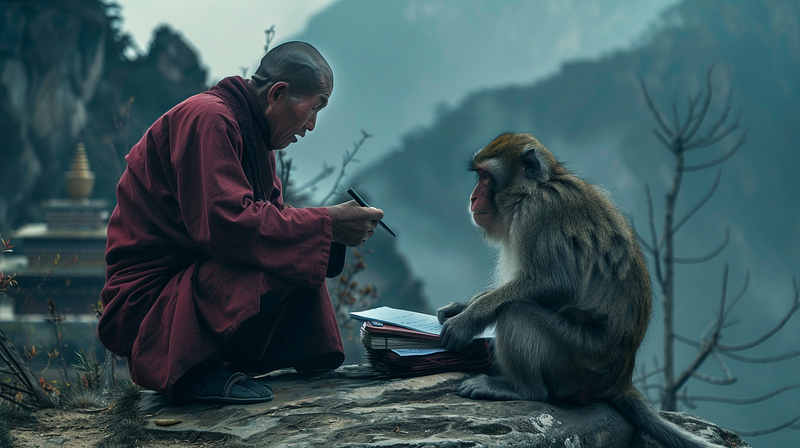
A curious monkey named Miko lived in a serene monastery nestled among verdant hills. Miko was fascinated by the monastery’s resident Monk, Pema, who spent his days immersed in writing and giving sermons to hundreds who would flock to listen to him.
Miko would perch on a nearby windowsill, watching in awe as Pema’s quill danced gracefully over parchment when Pema was deep in putting his thoughts on paper.
Driven by a yearning to wield the magic of writing, the monkey made a plan. Under the moon’s cloak, he tiptoed into the saint’s abode and swiped the precious pen and ink. With great excitement, he attempted to replicate Pema’s elegant script. Alas, all he managed were splotches and scribbles.
The realization dawned on him that the art of writing was not merely in the pen but in something much more profound.
Heavy-hearted, Miko returned to the Monk, the stolen items in hand, ready to confess and seek forgiveness. Far from angry, Pema greeted Miko with a gentle smile. Recognizing the sincere desire to learn in Miko’s eyes, he decided to impart four crucial skills:
- 🦅🦅 The First Skill — Observation:
Pema recounted the tale of an eagle that soared high above the clouds. The eagle’s keen eyes observed the most minor details from great heights, from the trembling leaves to the silent fish beneath the water’s surface.

To learn the art of storytelling, Pema explained, you must
- Practice Keen Observation: Emulate the eagle’s ability to observe minor details by practicing mindfulness. Please pay attention to the subtle nuances around you, whether it is people’s expressions or body language. These details can enrich your writing and bring your narratives to life

- Elevate Your Perspective: Just as the eagle soars high to gain a comprehensive view, try to elevate your perspective when writing. Consider different angles and viewpoints to present a well-rounded narrative that captures the essence of your subject matter.
- Focus with Intention: The eagle’s focus on its prey is unwavering. Similarly, eliminate all distractions, fully immersing yourself in the task at-hand.
2. 🧜 🧜 The Second Skill — Imagination: The next story was that of a Writer who saw not just shapes in the clouds but whole stories unfolding in the sky — a dragon breathing fire, a knight on a quest.
“Imagination,” the Monk revealed, “is the wellspring of creativity, turning the ordinary into extraordinary narratives.”

Incorporating imagination can transform mundane tasks into opportunities for innovation and problem-solving.
Here are some practical tips to foster imagination in a professional environment:
- Embrace Brainstorming Sessions: Be active in brainstorming sessions, which could enhance your practice for imaginative ideas.
- Leverage Creative Resources: Just as the writer in the story used the shapes of clouds to fuel their imagination, use resources or tools that can inspire creativity. This could be access to creative software, workshops, or even a library of inspiring literature and art.
3. 🎅🏻🎅🏻 The Third Skill — Wisdom: The Monk shared the river’s wisdom, knowing when to flow gently and carve through rock.
“Communication,” he imparted, “demands the wisdom to know what to say, how to say it, and when silence speaks louder than words.”

- Listen Actively: Before you speak, listen. Understand the context and the emotional state of your audience.
- Choose Your Words Carefully: Reflect on the impact of your words. Aim for clarity and kindness, ensuring your message is understood and respectful.
- Adapt Your Approach: As the river changes its flow, adjust your communication style based on the situation.
Embrace Silence: Recognize moments when not speaking can be powerful. Silence can give others space to reflect and respond, often conveying understanding and empathy better than words.
4. ⛹🏻♀️⛹🏻♀️The Fourth Skill — Practice: Lastly, the saint spoke of his journey, how each stroke of the pen, each word written, was a step on the path to mastery.
“Practice,” he concluded, “is the key to all the above.”
“Practice makes perfect. After a long time of practicing, our work will become natural, skillful, swift, and steady.” ―Bruce Lee.
“Champions are made when no one is watching.” — Drew Brees, NFL quarterback.

Miko, now enlightened, bowed deeply to the saint, his heart brimming with gratitude. He understood that the writing journey was not through the theft of a pen but through the cultivation of essential skills.
I work on these strategies to effectively incorporate the art of storytelling in my posts:
✍. Define the key Message: Before I begin writing, I think about the key benefit I am trying to provide my readers. This thought guides me to structure the content.

🦾. Using a Strong Opening: What is an intriguing question, a surprising fact, or an anecdote that captivated me during my research? This is what I use as an opening for my post.
🧞 Personal Experiences: Personal stories are powerful because they add authenticity and relatability.
🎥. Use of Words/Language that can paint pictures in readers’ minds: Am I able to ‘show’ and not just ‘tell’, by using sensory details to bring life to the story.
🗣. Using Dialogue: Am I incorporating dialogue, questions, and answers that can make my posts more dynamic and give them a personal touch?
🧌. Visuals: I greatly champion fewer words and include more visual elements that can complement my storytelling.
🔚. How to Conclude: Is there a strong closing that reinforces the core message, leaving my readers with something to think about or take action on?
(💁💁 Please share your focus areas in the comments if you would like to).
Conclusion:
In weaving narratives into our communications, we unlock a profound ability to connect, persuade, and enlighten. The tale of Miko, guided by the sage wisdom of Monk Pema, illuminates the path to mastering storytelling through observation, imagination, wisdom, and relentless practice.
Like the eagle’s keen sight, the boundless realms of imagination, the river’s intuitive flow, and the monk’s dedicated practice, these skills empower us to craft stories that resonate deeply, moving beyond mere words to touch the essence of our shared human experience.
— — — — — — — — — — — — — — — — — — — — — — — — — — — — — — — — — — — —
Thank you for reading. Your comments and suggestions are greatly appreciated.
Love reading? Join Medium for a low monthly price of $5 only and get access to a wealth of information.
— — — — — — — — — — — — — — — — — — — — — — — — — — — — — — — — — — — — -
MEET JASPER AND PICTORY 👋
jasper.ai: Create fantastic blog posts, art & images, sales emails, SEO content, and video scripts 10X faster with Jasper.AI.
pictory.ai: Script To Video In Just Minutes — pictory.ai
— — — — — — — — — — — — — — — — — — — — — — — — — — — — — — — — — — — — -
Disclosure: This post may contain affiliate links, which means we may receive a commission if you click a link and purchase something that we have recommended. Clicking these links won’t cost you any extra money; they will help us keep this site up and running! I appreciate your support!
— — — — — — — — — — — — — — — — — — — — — — — — — — — — — — — — — — — — -


