
Are San Marzano Tomatoes Worth Their Salt?
I splurge on them sometimes. Should you?
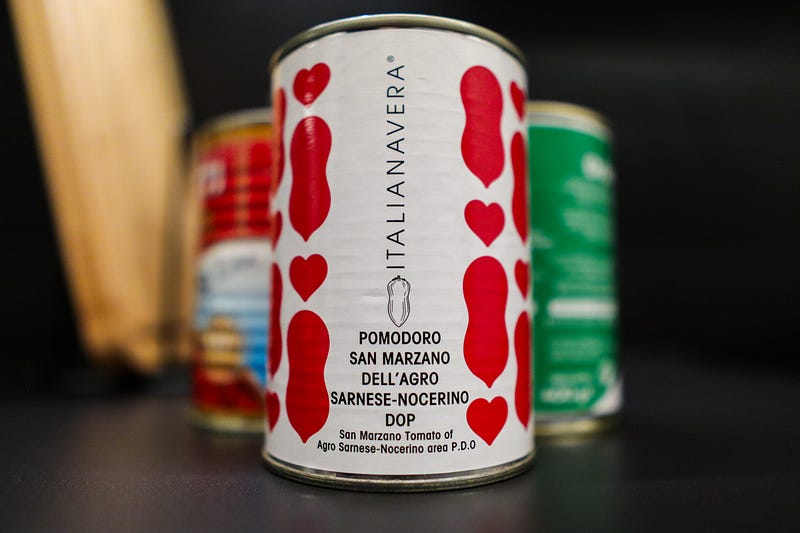
Much like the animal kingdom — and, as much as we may not like to admit it, our society — the world of canned tomatoes can be divided up into social classes.
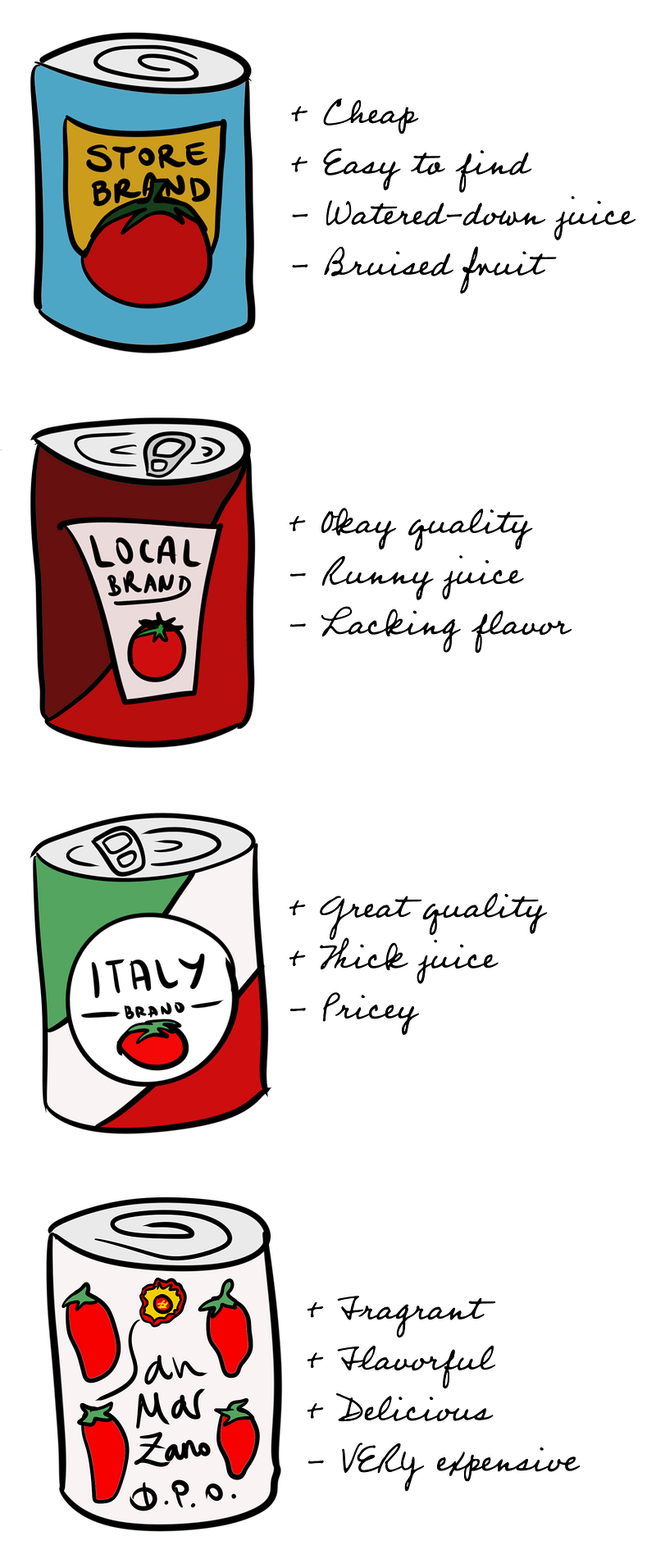
At the bottom of the whole-peeled-plum-tomato hierarchy, we find the cheap, everyman’s option — the store brand. The tomatoes that get the job done. But how well? Their juice tends to be watered down, and a quick sift through the can’s contents is bound to bring disappointment. Inside, the fruits are green-, yellow-, or brownish, and often bruised.
Next are the cans produced by local brands, whose price and quality will vary depending on where in the world you are. They are generally better than their store-brand counterparts, no doubt about that. The juice is thicker, more flavorful — if still runny — and the tomatoes have been matured for enough time and harvested ripe.
Moving up the ladder, we find the Italian imports:
Each and every Italian brand claims to have superiority over the others when it comes to the quality of the tomatoes you’re putting on the dinner table. (Consumers, beware: Some brands disguise themselves as Italian without having anything to do with “the old country.”)
Canned tomatoes are big business, and there’s a lot of dough — ahem, money — to be made in their sales. Depending on where you buy your food from and how good you are at reading Marketese, you may end up with either the good, the bad, or the ugly.
For most of us, the hierarchy ends there.
But for the initiated — chefs, restaurateurs, purveyors, deli owners, and connoisseurs of traditional Italian cooking — there is one more step in the food chain. The last step. The pomodoro dei pomodori. The haute couture of tomatoes, if you will, but in the domain of cooking: the one and only San Marzanos.
The tomato ladder, illustrated:
What They Are
Their name, in its fullest form, is a mouthful: Pomodoro di San Marzano dell’Agro Sarnese-Nocerino D.O.P.
The first part means “Tomatoes from San Marzano,” the latter being a small town in Italy’s Campania region, at the base of Mount Vesuvius, not too far from the birthplace of pizza and the cradle of fast food, Naples.
The second part, “dell’ Agro Sarnese-Nocerino,” means that the tomatoes were grown in the sun-kissed, low-elevation area of Sarnese-Nocerino, in the nutrient-rich volcanic soil of the still-active volcano that buried the historic city of Pompeii nearly two thousand years ago in 79 A.D.
D.O.P. stands for Denominazione d’Origine Protetta, or Protected Designation of Origin.
It’s a quality scheme from the European Union, which certifies that the tomatoes in the can are basically the real deal. Think of it as a trademark exclusive to food, wine, and vinegar. If a cannery outside of Italy and the Agro Nocerino area tries to use it, it gives the consortium of authorized producers the legal power to punch back.
How to Buy Them
The San Marzano tomato market is ripe with clever trickery aimed at wasting your hard-earned money on knockoffs.
“Real” San Marzano tomatoes must (must, must, must) have the D.O.P abbreviation — or P.D.O., if the label is in English — at the end of their name. They should also display the European Union’s red-and-yellow quality-scheme stamp somewhere on the label.
Here’s what that stamp looks like:
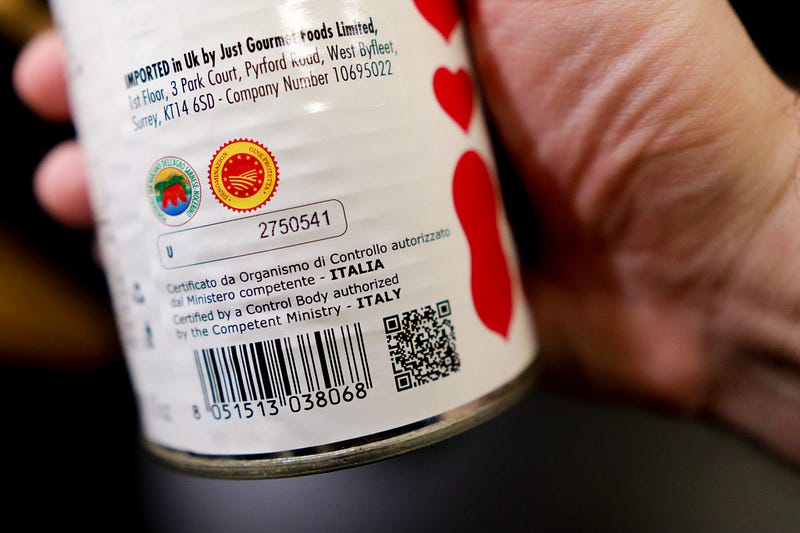
Keep in mind that some producers feature their D.O.P. stamp more prominently than others. In the case of the can I bought for this story’s photoshoot, for example, I had to look on the back of the label, just above the barcode.
When searching for San Marzanos on the Internet, you’ll come across many mid-priced options that lack the red-and-yellow stamp and without the D.O.P. / P.D.O. term at the end of the name.
Remember that “San Marzano” is a variety of tomatoes: European laws protect the name “Pomodoro di San Marzano dell’Agro Sarnese-Nocerino D.O.P.” — only authorized producers in the Agro Nocerino Sarnese area can grow and sell these — but they don’t (and can’t) prohibit the growing and selling of San Marzanos as a whole.
It’s that soil in Agro Nocerino-Sarnese, and not just the variety, that lends San Marzano tomatoes their prized sweetness, which has turned them into some of the most sought-after ingredients from Italy’s Campagna region and one of country’s most celebrated culinary exports.
Why the Hype Around Them?
There’s a lot to love about a San Marzano tomato, the Ferrari of canned tomatoes.
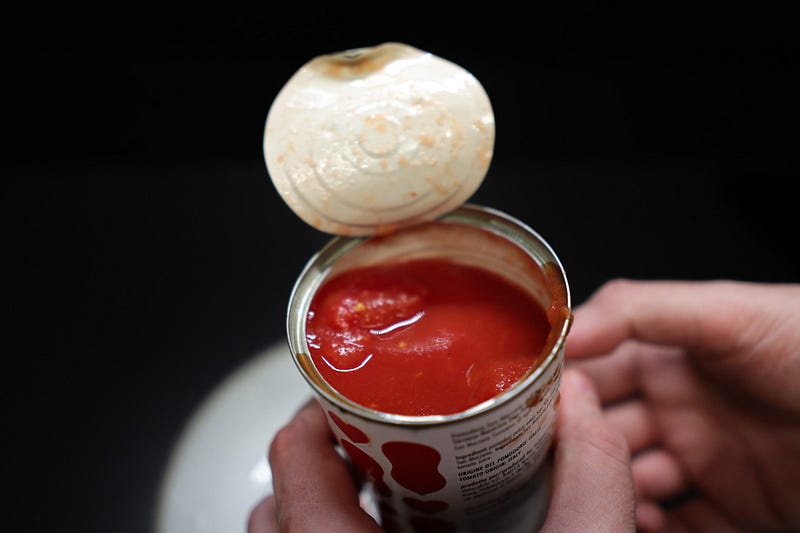
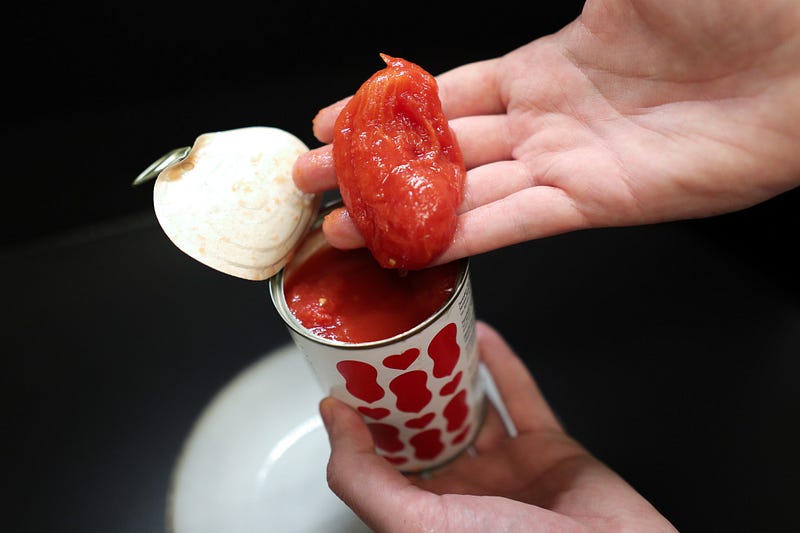
It’s thinner, more elongated than your regular canning tomato. It also contains fewer seeds. Its aroma is potent and its flavor is bright, with what can only be described as the perfect acidity level. It’s the ingredient that takes pizza, pasta, risotto, and traditional ragù from good to great.
San Marzanos are savory, but also sweet — at once carriers of an umami lusciousness and a dessert-like sweetness. They’re bursting with juice and are capable of lending a zippy tang to practically any dish they are added to.
The vines themselves take longer to start producing fruit, which contributes to the higher cost of the final product and makes it all the more in-demand by professional chefs and home cooks.
Some, however, find their price prohibitively high.
I live in Barcelona, Spain. We’re 16 hours away by car, 26 hours away by bus (through France’s Lyon), and just a two-hour direct flight from Naples. Even here, where Italian food is abundant and decent Italian delis can be found in every neighborhood, San Marzano tomatoes are hard to find and often sold at a gulp-inducing price.
At the time of writing, a 14.1-ounce can of San Marzano tomatoes, for example, sold for 5 euros (roughly 5 dollars and 35 cents, depending on the day’s exchange rate).
To give you a frame of reference, your regular can of Spanish tomatoes costs one euro and some change. The situation was similar stateside when I checked at the online stores of Kroger’s, Target, and Walmart, where 28-oz cans of San Marzanos ran for eight to twelve bucks a piece.
Are They Worth It, Though?
It comes down to the value you ascribe to tomatoes.
Some folks gladly pay hundreds of dollars for bottles of wine and whiskey. Is buying a bottle of single-malt scotch for your liquor cabinet really that different from stocking your pantry with a can of volcanic ash-grown tomatoes?
As with many other things in life, it’s a matter of perspective.
Yes, they’re just tomatoes. But they’re likely to be the best darn “just tomatoes” you’ve had. Do I cook with them all the time? No. Would I throw them onto a Chicago-style pizza or add them to chicken parm? By all means, no. There’s a time and a place for everything.
And so, I splurge on a can or two now and then. I top Neapolitan-style pizzas with them, incorporate them into simple, minimally cooked pasta sauces (where the sauce is more or less the main star), and sometimes make tomato-anchovy risotto with them.
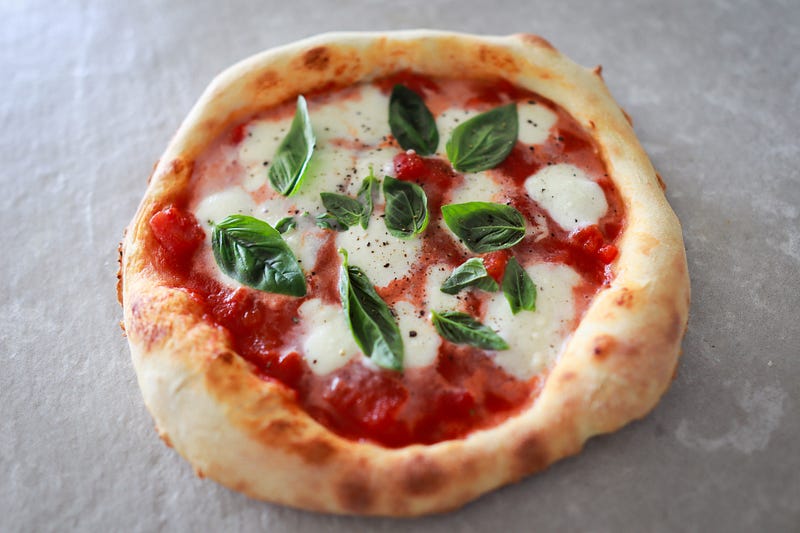
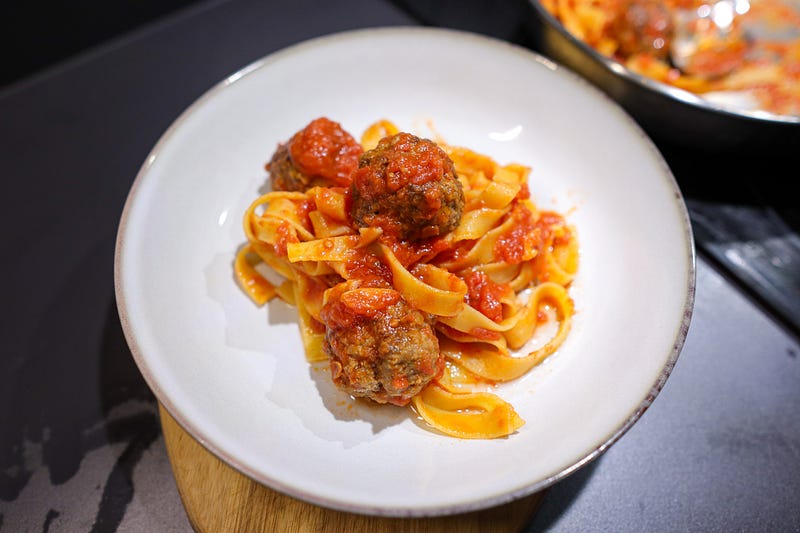
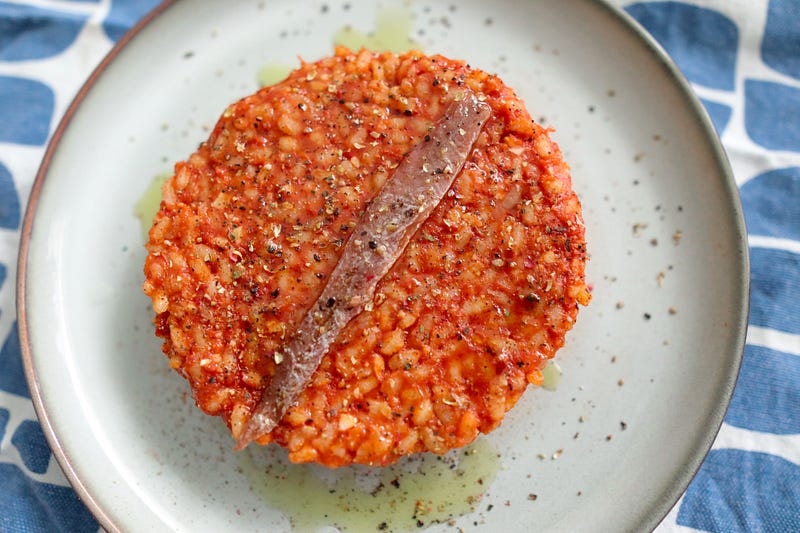
My method for making the most of a good can of San Marzanos is to cook them as lightly as I can. That’s how I preserve their natural sweetness and the fragrance of their juice. Cooking, after all, means meddling as little as possible with what nature has already given us — good ingredients.
Liked this story?
Or maybe you didn’t, but you think someone you can’t stand might dislike it too?
Either way, go ahead and give it some claps and drop a comment. I’ll be forever grateful for the support!
And don’t be a stranger! Click here to get my new stories delivered to your inbox. (Don’t worry, no spam — just good old-fashioned recipes and some cooking tips to swear by.)