
Are Ponytails Banned in Japanese Schools?
Well… kind of.
I recently did a short piece for the publication Everything Short Form about how Japanese high schools were starting to lighten up on rules governing hairstyles, underwear color, and other things.
In response, I received the following comment from Maddisson C. Zabitsky:
I’m not sure if this is true, but I read recently that some schools in Japan are banning “ponytails?” Not sure if you heard of this or if it’s fake news by chance?
I had never heard about a rule banning ponytails before, so I decided to do some checking.
I learned that the ponytail ban story was being reported in the global press.
News reports ranged from “some Japanese schools” (in more prominent, mainstream publications) to suggestions that the ban was being applied nationwide (primarily in publications based in India, Malaysia, and Pakistan).
According to most versions of the story I saw, ponytails were banned because the hairstyle exposes the nape of a girl’s neck. School officials feared the sight of the female neck would sexually excite male students.
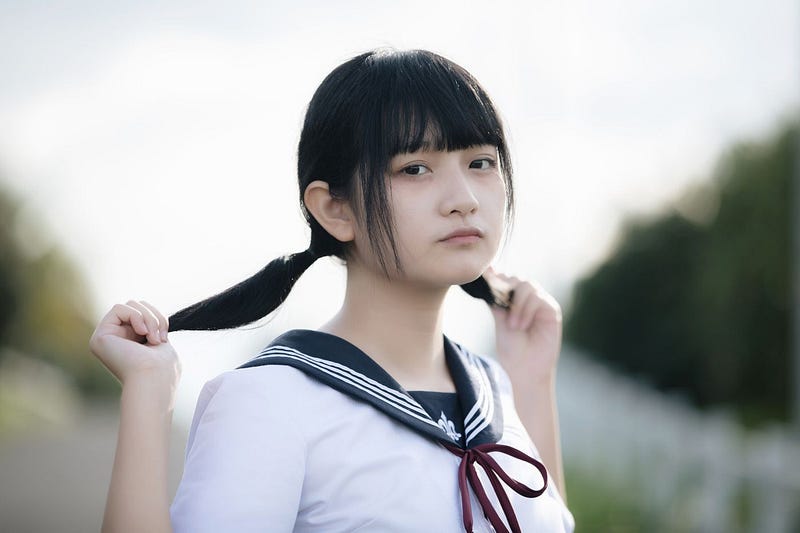
These reports were written in a way that smacks of the old, “Oh, those inscrutable Orientals!” trope. Take a few tiny kernels of truth, mix in great dollops of cultural misunderstanding, exaggeration, and stereotypes, and voila! Your highly clickable international urban legend is ready to circulate.
Here, I would like to look at the origins of this story/rumor, point out what is and isn’t true, and identify a significant cultural misconception that someone (either school officials or news organizations) is working under. I will also include some comments and reactions from my Japanese acquaintances and family members.
Where did the ponytail story come from?
The apparent origin of the ponytail tale seems to be Motoki Sugiyama, a former middle school teacher who makes TikTok videos criticizing Japan’s education system and its draconian rules.
According to Sugiyama, school administrators where he used to teach told him that girls were not to wear ponytails because exposing the nape of the female neck could “conjure sexual feelings” among male students.
School administrators said exposing the nape of the female neck could “conjure sexual feelings” among male students.
From TikTok, the story found its way to Japanese Twitter, where it ignited a typical Twitteresque discussion. Then, someone from an English-language publication picked it up and molded it into clickbait.
Other publications embellished it further to suit the interests and biases of their readers, and the rest is social media history.
Is the ponytail story true?
Well… kind of.
When Maddison first told me about the reports in the English media, my initial reaction was to discount them as fake news.
Still, I was aware that schools and other official government administrators in Japan are highly ossified and capable of astounding feats of illogic and obstinacy. I also understood that even wild rumors and fake news need a few kernels of truth to sound plausible, so I decided to dig deeper.
According to the information I found, some Japanese schools do indeed have a rule that forbids female students from wearing ponytails. But it is by no means a universal nationwide ban, as being suggested by some English-language publications.
I could not find any actual statistics about the number of Japanese schools that ban ponytails. But one survey taken in 2020 reported ponytails were not allowed in 10% of the schools in Fukuoka Prefecture, one of Japan’s most conservative prefectures.
I suspect that the percentage is much lower in Tokyo, where I currently live.
I asked my wife and a few other Japanese people about the story, and most of them scoffed at it. Some were aware of Sugiyama’s remarks and that they had caused an uproar on social media, which they brushed aside as a silly tempest in a teapot.
Finally, I checked with my 13-year-old granddaughter, who happened to have been wearing a ponytail when I caught up with her. She replied that she had never heard of such a rule where she goes to school.
What’s with this nape-of-the-neck thing?
The first question is whether teenage boys are gripped by uncontrollable lust at the sight of a woman’s neck. I don’t think so.
Are perceptions different in Japan? Probably not.
Here in Japan, you can see women everywhere going about their business wearing ponytails or with their hair pinned high up on their heads, which exposes the backs of their necks. Especially during the muggy summer months.
No one seems to notice or care.
A weak link to the past
There once was a time in Japan when the nape of the neck was a major turn-on for men.
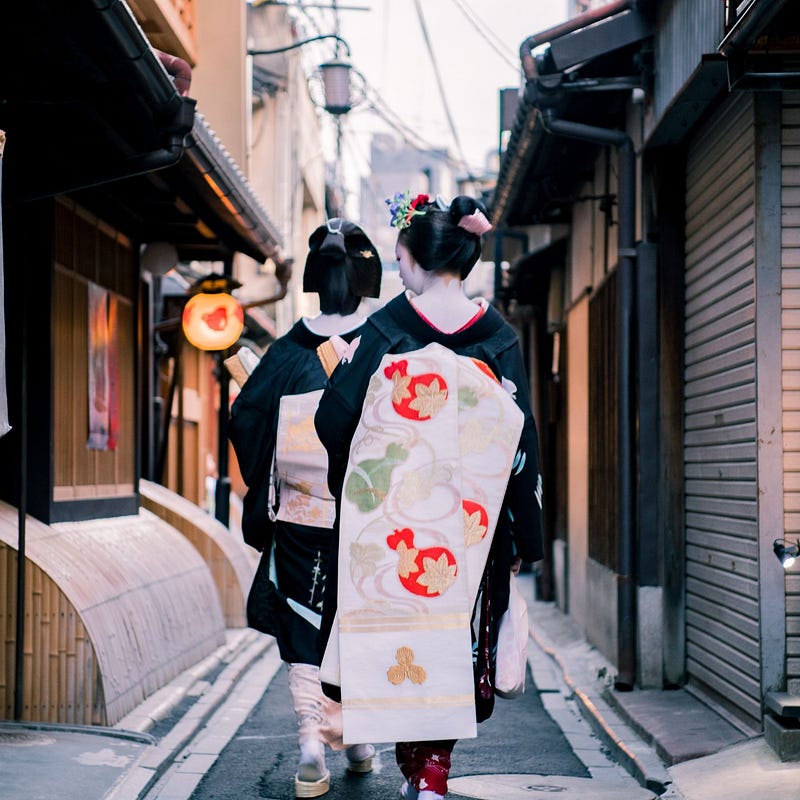
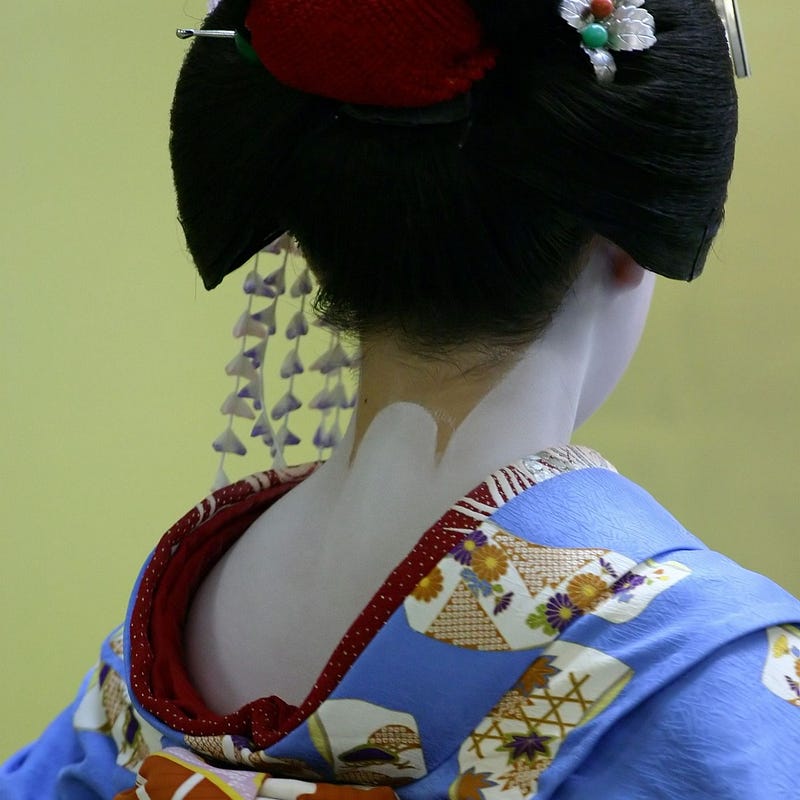
During the Edo Era in Japan, women wore kimonos, which completely covered their bodies, leaving only their hands and neck exposed. Back then, geisha, courtesans, and other women of pleasure would dress in a way that made the most of what they had to offer. For them, this meant wearing their hair up in the back, and the back collar of the kimono plunged low, exposing as much of the nape of the neck as possible.
It was like a plunging neckline in the back instead of the front.
However, if you believe that Japanese men today are excited by the sight of a woman’s neck nape based on the fashions and mores of hundreds of years ago, it would be equally valid to claim that modern Western men are turned on by the sight of the female ankle or calf today just as men were back during the Victorian Era.
Why is this ancient notion still in the books?
I have no way of knowing why the nape of the female neck is still a topic of discussion in Japan in 2020. But I would be happy to speculate based on my long experience in Japan.
I can imagine a time long ago when there was some aged male school administrator who was turned on by fading memories of feudal era erotica. One day at a meeting to discuss rules to govern their young charges, this ancient board member maybe introduced the notion of banning hairstyles that expose the nape of the female neck.
Rules are to be obeyed and never changed.
In deference to their senior member and to the notion of consensus decision-making, younger administrators present would have sat in respectful silence as the hairstyle ban was enshrined into official policy.
Why is it still a rule?
Because in Japan, rules are made to be obeyed and never changed. No matter how ridiculous, outrageous, or outdated they may be.
If you enjoyed this story, you may also like these stories on Japan:


