avatarJuan Ramirez

Summary

Robert Williams, an African-American man, was wrongfully arrested due to a facial recognition error, raising concerns about algorithmic discrimination and the potential for technology to reinforce racial biases in law enforcement.

Abstract

The wrongful arrest of Robert Williams in Detroit, based on a facial recognition system's flawed identification, has brought to light the risks of algorithmic discrimination in policing. Despite the technology's intent to provide investigative leads, the incident suggests that such systems may be used to confirm and act upon racial biases, leading to the disproportionate targeting of minorities. The American Civil Liberties Union (ACLU) has highlighted this case as a significant concern, emphasizing that the technology misidentified Williams as a suspect in a theft case, resulting in his arrest in front of his family. Although the technology is not meant to provide definitive identification, the incident underscores the need for stringent regulations and oversight in the use of facial recognition by law enforcement. In response to these concerns, some cities, like Boston, have started to ban the use of facial recognition technology for municipal purposes, recognizing the threat it poses to civil rights and its potential for racial discrimination.

Opinions

  • The ACLU argues that the use of facial recognition technology in this case led to a wrongful arrest and exemplifies the potential for algorithmic discrimination.
  • Shanon Banner, a spokeswoman for the Michigan state police, emphasizes that facial recognition technology is not meant to provide positive identification but rather serves as an investigative lead, necessitating further investigation.
  • City Councilor Michelle Wu of Boston expresses the view that facial recognition technology is racially discriminatory and poses a threat to basic rights, supporting the city's ban on its municipal use.
  • The context suggests that the incident with Robert Williams is indicative of broader issues related to the unregulated growth of facial recognition policing in a racially divided society.

Are Police Officers Using Facial Recognition to Confirm Their Racial Biases?

This could be America’s first known wrongful arrest involving facial recognition
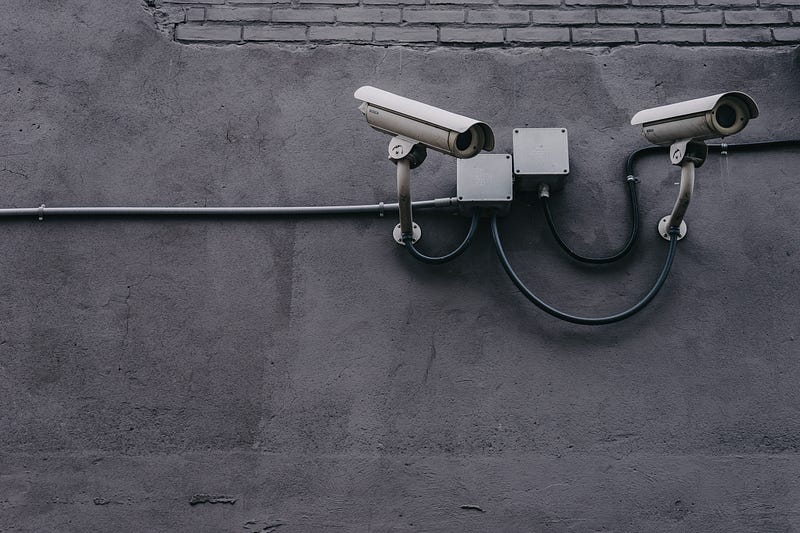
Photo by Scott Webb on Unsplash

When Robert Williams, an African-American man from Michigan, was pulling up to his house, a police vehicle drove up to him and two officers leaped out and placed Williams under arrest right in front of his wife and children.

Detroit police detained Mr. Williams on charges of stealing multiple watches from a local store. However, the American Civil Liberties Union (ACLU) has recently discovered that the officers were indeed wrong and led astray by a computer algorithm.

This technology has been used before in places such as concerts and airports, but organizations like the ACLU are concerned about possible algorithmic discrimination.

The ACLU complaint states that the Detroit PD was provided with the video surveillance of an African-American man stealing watches from the store. After running the footage through a facial-recognition system, it suggested a photo of Williams as a Potential Match.

Notice the bolded Potential Match?

Shanon Banner, a spokeswoman for the Michigan state police, explained that:

“This technology does not provide a positive identification. It is an investigative lead only and is not probable cause to arrest. Further investigation is needed to develop probable cause to arrest.”

Even though Mr. Williams was eventually released, this event hints at a future where institutions can start using technological advances to confirm their personal biases and disproportionally target minorities around the country.

But some places are starting to take action to prevent this. Boston voted to ban facial recognition technology for municipal use this week.

“Boston should not be using racially discriminatory technology and technology that threatens our basic rights,” City Councilor Michelle Wu said at the hearing on Wednesday.

As more and more accounts of the disproportionate use police force and brutality towards black and brown communities continue to surface, this incident hints at some of the many potential problems that may arise as facial recognition policing continues to grow unregulated in a racially divided country.

Race
Technology
Future Technology
AI
Future
Recommended from ReadMedium