avatarAastha

Summary

The article discusses the theoretical possibility of parallel worlds and wormholes as a means of traveling to them, despite the numerous challenges and the current state of these concepts being purely theoretical.

Abstract

The article explores the intriguing concept of parallel worlds, suggesting that while these worlds are currently only theoretical, the realm of physics often surpasses the imagination of science fiction. It delves into the nature of space-time, which is generally considered flat but can bend due to the presence of mass, creating the potential for wormholes. These wormholes are envisioned as tunnels in space-time that could hypothetically allow travel between different universes or dimensions. However, significant obstacles exist, such as the instability of wormholes and the potential for them to collapse upon interaction. The article also touches on the speculative concept of negative mass as a means to stabilize wormholes for safe passage, although the existence of such matter is not yet confirmed. Additionally, the article categorizes wormholes into types, some of which could result in travelers colliding with singularities or experiencing time in reverse upon reaching a parallel universe. Despite these challenges, the article frames wormholes as more than just science fiction, suggesting they are a legitimate area of scientific inquiry, much like black holes and Hawking radiation were before their detection and confirmation.

Opinions

  • The author believes that the concept of parallel worlds, while currently theoretical, could be possible within the framework of physics.
  • Wormholes are presented as a potential means of traveling to parallel universes, although they are fraught with dangers such as disappearance upon contact and the risk of encountering singularities.
  • The article suggests that negative mass, a form of exotic matter, could theoretically stabilize wormholes, allowing for safe travel.
  • The author acknowledges that wormholes are not just a product of science fiction but are derived from actual scientific equations, implying that they could be a reality to be discovered.
  • The article expresses optimism about the potential for future discoveries in this area, comparing the current status of wormholes to the once-theoretical concepts of black holes and Hawking radiation, which are now accepted scientific phenomena.
  • The author is open to feedback, indicating a willingness to engage with the scientific community or interested readers on the topic.

Are Parallel Worlds Possible just the way we see in science fiction?

Physics is stranger than science fiction, and parallel worlds might be possible. Right now, they are only possible on paper, i.e. theoretically.

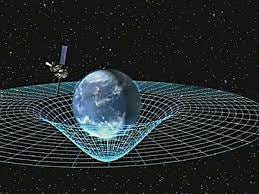
This is the fabric of space-time:
Source — space.com

Space time, which is generally accepted to be flat when no matter resides on it (dark matter doesn’t make a big difference to the curvature of space-time) , bends whenever a body of a certain mass inhabits the space-time.

Now,

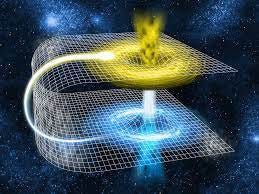
Theoretically, there are regions in space called wormholes. Wormholes, in layman terms, refer to the regions in space where the fabric of space time is bent (and/or stretched) in such a way that matter enters from one side and exit from the other.

This is a wormhole:
Source: space.com

The wormhole starts with a blackhole where matter gets sucked in and ends at a white hole, where you can exit to the other side, to the parallel universe, and to the other dimensions.

What’s the catch in entering a wormhole then?

Myriad of catches (and cataclysms) actually, the first one being that if you enter a wormhole it will suddenly disappear because wormholes wi disappear even if a ray of light or a spaceship nudges it.

There is a remedy to this though.

One of the variants of a certain type of exotic matter, called negative mass, if found,

can enter along with the wormhole and basically repel the wormhole in such a manner that the spaceship or anything that is travelling inside the wormhole doesn’t make it disappear and the spaceship progresses forward.

But what about colliding with singularity and stuff?

That brings us to the other problem. There are basically categories of wormholes, and most of them cannot be exited without you hitting the singularity and go long dead before you reach the ‘other side’.

It also takes an infinite amount of time for you to cross some wormholes, needless to say that when you get to a parallel universe, time would start running in the past. This is because time stops for you when you hit the singularity, and henceforth, after the time stops for you, you are bound to go into the past.

And indeed, wormholes aren’t a scientific theory, they are only some consequences of certain equations. Equations have speculated black holes, and proved the hawking radiation before. Wormholes are a quest too.

P.S. — This is my first post on medium, I would appreciate feedback :)

Astronomyforeveryone
Astronomy
Recommended from ReadMedium