
Are Gay Rights Here To Stay?
The gay rights movement and the civil rights movement have this in common
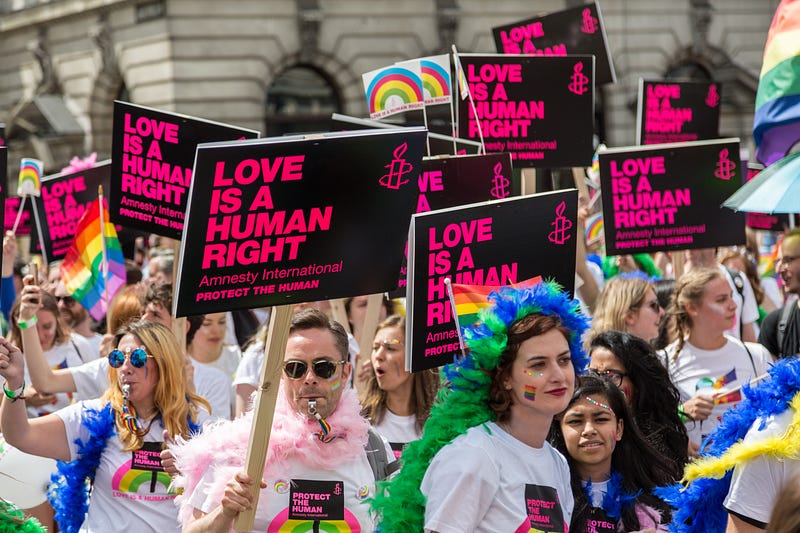
Just by the off chance that you were wondering, I am a heterosexual man. And again, if you ask, is a heterosexual man qualified to write about gay rights? — of course, I can. Who made you judge and gatekeeper over the gay rights kingdom?
So, gay rights. Gay rights activists have done a very good job. Decades of clamouring for equal rights have led society to accept that yes, everybody should be treated the same in society, irrespective of their sexual identity or sexual orientation. In the last few years alone, the gay community has won hard-fought victories and secured a range of protections under the law.
Just recently, Cubans voted to approve same-sex marriage by an outstanding majority. That’s right, same-sex marriage is legal in Cuba and if Cuba can enshrine gay rights in law, that shows you how much the world is really changing, and how far the world has come in terms of gay rights.
But the story is not finished.
There have also been some setbacks in the struggle for gay rights. Not all countries have been equally accommodating of the right of gay people as equals in society. In 2021, Hungary banned gay content from being taught in schools or shown on TV. Countries like Poland, Romania, and Croatia have also seen some erosion of gay rights or at least the public sentiment turned against gay people.
So, for the overall picture, it is a classic case of 2 steps forward, and 1 step back.
This makes you wonder; are gay rights here to stay? Or is it just a fad? Imagine you died today and your body was somehow cryogenically frozen. Sometime in the future, technology makes it possible that you to be brought back to life. Do you think gay rights will be non-existent when you wake up in that future world? Or will it be a world so accepting of the gay community that there is virtually no distinction between gay people and non-gay people?
To begin to answer this question, we can look at a similar movement; the civil rights movement. There are a lot of differences between gay rights and the civil rights movement, but enough similarities that we can learn a few things about one by observing the other.
The peak of the American civil rights movement was between the 1940s and the 1960s. The movement achieved a whole lot. Because of the movement, institutional racial segregation was slowly dismantled in the US. The movement also put an end to the systemic racial disenfranchisement in the US.
In other words, the fact that white people and people of colour do not sit in different sections of the bus, can use the same bathrooms and cafes, register in the same schools, vote and be voted for, etc. all that is thanks to the civil rights movement.
Yes! the civil rights movement achieved a lot, but the fight against racism continues today. There are still incidents of racial prejudice that make you wonder ‘are we really in the 21st century?’ Let’s not talk about the case of Michael Brown, George Floyd, or the many Karens that call the police on people of colour every day for looking at them the wrong way.
True, there are no more white people and coloured people sections on the bus anymore, but people of colour are still expected to behave in a certain way or to know their place in a society that is naturally hostile towards them.
You might be asking now, what does this have to do with gay rights? Well, it’s quite straightforward. The struggle against racial discrimination took a long time, and the struggle for gay rights will take a very long time.
Not because gay rights are special, but because people are naturally resistant to change. Moreover, a shift in people’s opinions and disposition towards the gay community requires a re-educating society, which is a herculean task and takes time.
If all these years after the civil rights movement, 59 years after Dr. Martin Luther King Jnr gave his famous “I have a dream” speech and people still complain of racism, discrimination, and racial injustice, then there are a lot of lessons to be learned for the gay community.
1. More countries will accept gay rights, but it will take some time for them to become universal. In other words, it will take time before every country puts it in their laws that gay people should have the same rights as the heterosexual community.
2. As more countries accept gay rights and legalize them, the sentiments towards the gay community will become negative in other countries. In other words, the rate of progress will be different in different communities and countries.
3. The struggle for gay rights is a continuous endeavour. Even in countries where same-sex marriage has been legalized, the struggle doesn’t end there. There will always be more injustice and prejudice to fight against. Aluta continua!
4. Yes, if you died today and were resurrected in 100 years, technology would have advanced and the world might be different, but people will still be fighting for gay rights and against discrimination, just like people will still be fighting for racial justice and against racial discrimination.