
Are Conservatives More Pragmatic Than Liberals?
Canadian humanism, Machiavellian duplicity, and the evolutionary assessment of political systems
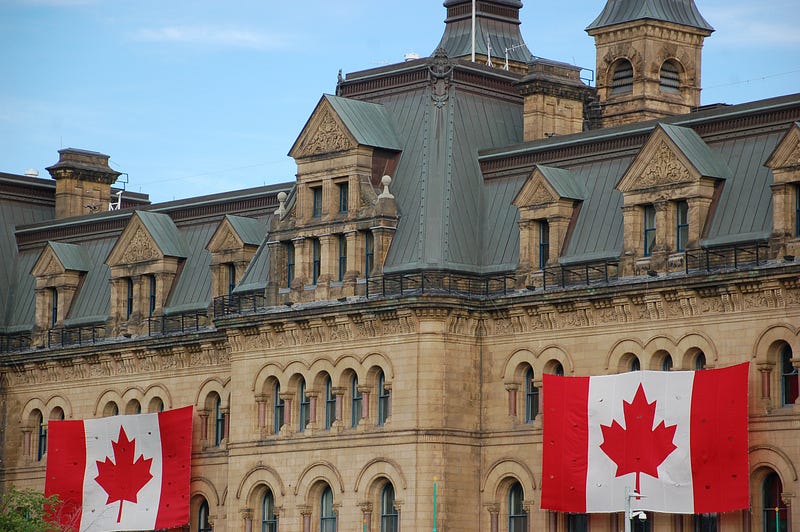
Many Canadians seem to view American politics as entertainment. The political polarization in the US is dramatic in just the sense that would be relevant to producing a reality TV show. In other words, American politics can be consumed as just such a show, and it’s as though the conflicts between Democrats and Republicans since at least the 1990s have been stage-managed to promote that level of engagement.
But it’s unlikely there’s any such conspiracy afoot. Instead, there’s a lot more private sector money flowing through the US government than through Canada’s, and that long arm of capitalism evidently exacerbates the natural tendencies of any democracy to become tribal, demagogic, and populist. At least for several decades, American politics is more about business than statesmanlike government, which is to say that the two main American parties are run as businesses.
In the late industrial era, the unbridgeable ideological divide between Democrats and Republicans arises as a conflict between brands. These parties compete for voters in gerrymandered districts, bringing in immigrants to swell the numbers or suppressing unwanted votes.
Who benefits from the big business of that political reality TV show? Mainly the politicians who use the revolving door between the American public and private sectors as a gateway to great wealth, and the lobbyists and corporations that flood the government with money to add loopholes in the laws that are supposed to regulate the industries for the people’s benefit. The American people, of course, are the main losers, although many feel compensated by the entertainment value of that reality TV show.
But let’s set aside our TV remotes and consider the possibility of conservatism that hasn’t been toxified by culture war, lobbying, corporate campaign contributions, and the production values of reality television. If you speak to Canadian conservatives, for example, you’ll find that they take pride in being more pragmatic than ideological.
Erin O’Toole, the Leader of the Conservative Party from 2020–2022, repudiated Trumpian populism in response to the storming of Capitol Hill, saying, “The Conservatives are a moderate, pragmatic, mainstream party — as old as Confederation — that sits squarely in the centre of Canadian politics…There is no place for the far right in our party.”
That statement would be unimaginable in Trump’s Republican Party — or in Newt Gingrich’s, George W. Bush’s, Sarah Palin’s, Mitch McConnell’s, or Fox News’s. “Moderate,” “pragmatic,” and “mainstream”? That sounds like the antithesis of Republicans who have become cultists at the altar of Donald Trump, Fox News, Evangelical Christianity, white supremacy, and American plutocracy.
To be sure, O’Toole’s leadership was brief as he was ousted from the role by populist conservatives, and Pierre Poilievre, a self-described libertarian and populist is in the lead to take over that position, in a race with the centrist Jean Charest. Yet the more that party is Americanized, the more irrelevant the conservatives will likely be on the national stage in Canada. What’s more pragmatic than ideological seems to be Canadian culture, and that may be so in Europe and Australia, too, the free-wheeling US being an outlier among liberal democracies.
What, then, is pragmatic conservatism?
Canadian versus American conservatism
Judging from the microtargeted or data-driven political debates in Canada, which are designed to put the audience to sleep rather than to inflame Canadians with reality TV-style scandals, pragmatic “conservatism” is only a shade of liberalism. Canadian liberals and conservatives squabble about the narrowest differences in the mechanics of implementing preestablished policies, not about the big picture.
Indeed, you’ll often hear ordinary Canadians say that Canadian politicians “have no vision,” as though these folks had read Sheldon Wolin’s Politics and Vision. This is to say that these “pragmatic” politicians avoid philosophical or religious disagreements, to appear centrist and mainstream to the public.
(Political campaigns in the US also target micro issues to win over independents in key districts, the broad electoral map having been largely decided for some decades. But the American primaries are infamous for facilitating the symbolic triumph of political vision, when the politicians are free to “throw” their constituents “red meat” to win the nomination, as the media cliché puts it. These pandering politicians, too, are supposed to “move to the center” in a national election or in a swing state.)
On the Canadian coasts you have progressives or social democrats (“commie socialists” in America’s skewed parlance); in the land-locked provinces you have conservative strongholds, and in Ontario you have the Canadian equivalent of a swing state, that province being divided between the centrist Liberals, the conservatives, and the more socialist NDP; in Quebec you have the bizarre dominance of the anti-Canadian, separatist Bloc Quebecois Party; and in the north you have a split between the Liberals and the NDP.
The Canadian conservative party used to be stronger, under Steven Harper and Brian Mulroney, following along, it seems, with the conservative surges in the US under George W. Bush and Ronald Reagan. But Trumpism pushed Canada away from conservatism.
Could that have been a pragmatic decision rather than an ideological reaction?
In Canada, you see, there’s a group-oriented status quo which is sacrosanct. This Canadian respect for citizenship and for “good, effective government” has several causes. Most Canadians live under the influence of extreme cold weather, and they’re next door to the American superpower, so Canadians value cooperation, knowing that they can’t afford to be so ideologically divided if they’re to survive in competition, as it were, with the elements and with the US. As much as Canada depends culturally, economically, and militarily on the US, Canadians define their political values largely in opposition to American extremes.
Moreover, the US has a two-party, republican system which is effectively winner-take-all, whereas Canada’s is a parliamentary system in which numerous parties negotiate to form coalitions, which makes Canadian politicians more pragmatic and compromising. The minority parties in Canada can call for a vote of no-confidence to trigger an early election, so all the parties must work together to make deals. By contrast, the American president would have to be impeached or removed on grounds of mental or physical incompetence (as per the 25th Amendment), which would in any case remove from power only the president not the party.
There’s also the fact that Canada wasn’t founded on a war. Americans define themselves mainly as individuals not as members of a group, because the US broke away from Britain, so America is a self-made nation. American individuals strive, then, to be self-made as opposed to relying on government benefits or “handouts” that they supposedly deserve just by being citizens of the country. Like the British, Canadians take pride in waiting for their turn as they stand in line, as they compromise on their individual interests for the greater good.
In politics, what matter to Canadians are the results, not the ideologies and creeds, the supposed honour of flourishing thanks to individual grit, or the alleged dishonour of being propped up by cooperation and sound government planning. Overall, Canadians respect the political center, avoiding the libertarian, socialist, or theocratic extremes because the centrist policies seem to work the best for Canada.
For example, Canadians prefer sensible gun regulations and a universal healthcare system. But those policies are possible only because Canadians believe government can work for the common good. Although Canada has a thriving hunter’s culture, Canadians understand that government can regulate the ownership of guns, and that that regulation benefits the whole country, including gun owners. And Canadians understand that as powerful as capitalism may be, some areas of life shouldn’t be treated as pure businesses, medical care being one of them.
Early modern humanism and classic liberalism
If all political parties in Canada are united by that culture of pragmatic cooperation and of respect for Canadian institutions, and Canadian political disagreements are therefore relatively non-ideological, “liberal,” “conservative,” and “socialist” are labels that have little philosophical weight in Canada. Setting aside some minority extremists (such as libertarians in Alberta and separatists in Quebec), most Canadians are effectively just classical liberals, which means that in the big picture they’re humanists or modernists.
Early modern political philosophers such as John Locke, Jean-Jacques Rousseau, and Adam Smith explored the justifications of a post-monarchical, “free” society. The primary justifications they formulated or assumed were twofold. First, there was the “social contract,” the idea of a rational consensus that would be reached to save us from the brutal state of nature. If we had to decide how to set up a society, free from dogmatic traditions, what would be the most rational arrangement? Would we choose to live in a tyranny? No, we’d want to maximize our personal freedoms without endangering social stability.
This was the “liberal” compromise. The use of political power is justified only when the public implicitly consents to being governed by that power. Otherwise, the arrangement is tyrannical, and the people have the right to rebel. In practice, the political systems we think of as legitimate are those we call “modern,” namely systems that include some democratic control over the government.
The fact that for those early modern thinkers, the use of political power needs to be justified to the public takes us to the second consideration, which is that we’re speaking here of an anomalous species that removes itself from the state of nature. That is, we’re talking about a society of people who use reason in relatively godlike ways, who are capable, then, of creating new worlds. Science, freedom of thought, capitalism, industry, and democracy all testify to the humanism of this new outlook.
We’d build a “modern” world, ending tyrannies, imperialism, feudalism, patriarchy, and slavery out of respect for the equal rights of all people, the contrast being with animals. The American Declaration of Independence holds this second, humanist consideration to be self-evident, “that all men are created equal, that they are endowed by their Creator with certain unalienable Rights, that among these are Life, Liberty and the pursuit of Happiness.”
That Declaration is humanistic to the extent that its allusion to theology is only ceremonial. In practice, with the church-state separation, the “Creator” is irrelevant to the rationale for the American governmental system — unless that Creator is equated with Nature in a Spinozist manner, as is hinted at by the Declaration’s odd first paragraph, which speaks of the rebels’ need “to assume among the powers of the earth, the separate and equal station to which the Laws of Nature and of Nature’s God entitle them.” Nature’s God? Isn’t nature supposed to belong to God rather than God belonging to nature?
In any case, the point is that libertarian hostility to government, for example, isn’t justifiable in those two ways since extreme individualism takes a society back to the state of nature, whereas the point in modern politics is to harness our godlike power to free ourselves from that condition and to use reason to build an alternative, artificial refuge. Government is an instrument to help us sustain such a self-serving world. Our individual rights as persons, or as godlike, rational, self-aware, creative beings come to naught in an anarchical struggle to maximize our selfish advantage at the expense of all strangers in the society. Legitimate government looks after the interests of the citizens as such, as people with inherent equal rights.
Both liberal and conservative Canadians share that basic modern outlook. They’re all humanists in that early-modern sense, in that they think legitimate government is needed to protect the interests of all the country’s citizens, whereas an illegitimate government would play favourites with certain social classes, families, or individuals.
In so far as pragmatic “conservatives” are humanistic and they disagree with liberals, progressives, and socialists only about the details of policies, this non-ideological conservatism presupposes the essence of liberalism, namely respect for human rights and for democracy or self-government.
Pragmatism and Machiavellian scheming
Pragmatists compromise or optimize procedures to get results with greater efficiency. What pragmatists don’t do is argue endlessly about philosophical ideals or get caught up in tribal or ideological culture wars. But this raises the question of what goals a pragmatic conservative would try to achieve. If certain policies “work,” we have to ask the further question: “Work towards what end?” What kind of society does the pragmatist take for granted?
As I’ve just explained, in Canada, Europe, and Australia, pragmatic “conservatives” adopt the ideals of humanistic progress, classic liberalism, and modernity. Policies “work” if they sustain those values and if they promote that kind of society, one that respects the human rights of all the citizens and the government’s role in protecting them.
We can imagine a more Machiavellian kind of pragmatic conservative, though, a duplicitous, radical, anti-modern reactionary. This would be a conservative who only pretends to share those modern values, but who secretly or perhaps unconsciously works to sabotage them and to re-establish the power-driven state of nature that prevailed in the monarchic and aristocratic caste systems and dominance hierarchies of the ancient and medieval worlds.
“Pragmatic conservative” here would be a euphemism for something like “Machiavellian double-crosser.” This kind of conservative, for example, might disguise regressive policies by calling them “libertarian,” using the modern language of personal liberties to justify anti-modern outcomes such as plutocracy. Of course, the plutocratic and monopolistic outcomes of laissez-faire capitalism are “modern” in the sense that these problems happen in the historically modern period, but they’re anti-modern in that modernists regard them as problematic (because those outcomes are oppressive).
To say that this anti-modern scheming would be “Machiavellian” is to say that the pragmatic conservative’s effective values and aims would be socially Darwinian; that is, this conservative would at least implicitly picture people as being animals that aren’t, after all, especially anomalous (godlike). Niccolò Machiavelli, of course, said that politics is an amoral war between operatives who are seeking to outmaneuver and to disempower each other. This would be a Nietzschean world driven by the “will to power,” and humanistic myths of progress and of equal human rights would be secular fairy tales that stand in for the old-fashioned religious ones.
The evolutionary optimizing of society
The prospect of this more thoroughgoing pragmatic conservativism raises another question, which is whether the old societies — aristocratic, patriarchal, feudal, imperial or enslaved — work better than modern ones in amoral, evolutionary terms. Perhaps modern free societies will be short-lived, mere blips in history, whereas the unequal, class-based social structures are more stable and suitable for our species.
We might hypothesize that different environments call for different social systems to achieve the evolutionary objective of ensuring our survival. In the Stone Age, egalitarian nomadism worked best in that sense, but once we turned to sedentary life and separated ourselves from the wilderness, building villages, cities, and eventually kingdoms and civilizations, another social order proved to be optimal. Social classes developed to perform special functions, and political power had to be centralized to manage this more complex society.
In short, the law of oligarchy might singlehandedly give the edge to conservatism in these “pragmatic,” reductive terms. Free societies might not “work” in that they’re too unstable to be sustained in the long run. Rigid social hierarchies are evidently stable since they flourished for thousands of years in kingdoms and premodern civilizations, and they’re still prevalent in the modern private sector’s corporate structures, in the military, and in most other ruthlessly efficient organizations. Moreover, modern progress might be illusory in view of the damage our economic growth, consumerism, and populist madness do to the planet’s ecosystems.
Suppose what’s really happening in politics, then, is an evolutionary sorting of human groups by way of a competition between survival strategies. Instead of doing the math or thinking in strictly game-theoretical terms, though, we simplify and posit “conservative” and “liberal” value systems as short-hand ways of speaking about the underlying evolutionary reality. We merely try out various social systems, and those that succeed in sociobiological terms prevail in the loftier, ideological context. We celebrate the sustainable, efficient, optimal social conventions, calling them “divinely ordained” or “dignified” in their support for “human rights.” But what matters is the pragmatic question of whether they work in that evolutionary respect.
The problem is that, in recognizing the difference between the state of nature in the Stone Age, and the more artificial environment of civilization, this pragmatist would be equivocating on “evolution.” Animals evolve by natural selection, whereas people develop themselves by means of artificial selection. Such is the anomaly of godlike personhood that the modern humanist recognizes and that makes conservatism regressive.
There’s evidently a stage of animal evolution in which certain higher primates free themselves from the animal life cycle. They become autonomous and capable of thinking in idealistic, cultural terms. Now, to reduce those latter terms to “evolution” in the Darwinian sense would be conservative in the core, anti-humanistic respect since the presumption would be that godlike personhood is illusory.
We should think of this pragmatic conservative as an animalist, then, since this conservative would be implicitly opposed to the humanist’s dichotomy between animals and people. We’d all be animals struggling to survive, all cultural pursuits being mere simplifications of that Darwinian competition for survival, as opposed to having an autonomous, incommensurable logic.
However, if we don’t reduce culture to the natural selection of genes or species, the “evolution” of political arrangements might be compatible with humanism. We could speak of the non-Darwinian unfolding of our anomalous, emergent potential to experiment with artificially (humanly, not naturally) selected social systems.
In that case, a pragmatic “conservative” who concedes this break between Darwinian evolution (the natural selection of animals’ body-types in the wilderness) and non-Darwinian cultural development (the higher-level selection of body-types, mentalities, sexual orientations, worldviews, cultures, institutions, civilizations, and so on in a self-reflective, artificial environment) would be like the typical Canadian conservative: a humanist, modernist, and classic liberal.


