
Are Complex Carbohydrates Sugars That We Have To Fear?
There are too many “sugars” and “carbohydrates” floating about out there that we have to be sure of what’s what!
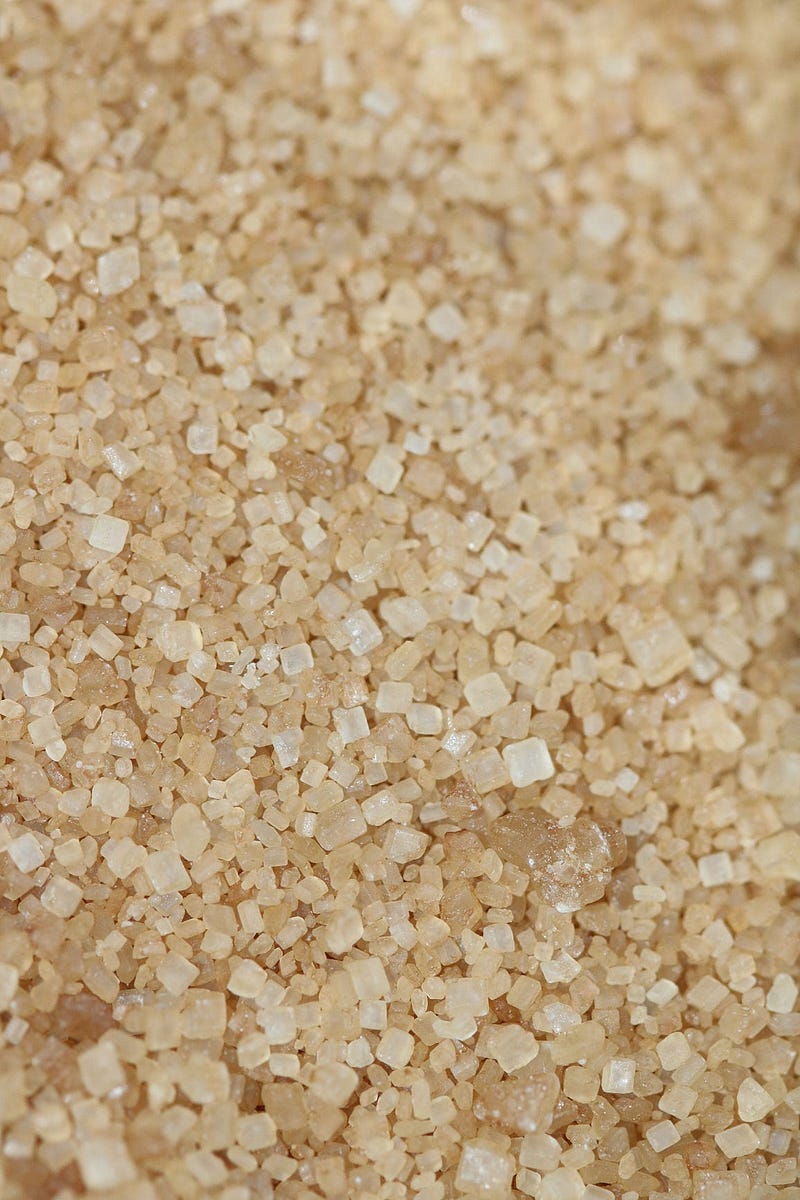
I think most of us have this love-hate relationship with sugar. Even myself. On the one hand, I do like my ice cream and cookies — but on the other hand, I do hate the sugar that I’m ingesting from it.
Because we do know what excessive sugar consumption can do to our bodies:
At the same time, though, it is important to distinguish between “sugars” and “carbohydrates”. Because while they are similar chemically, they may not necessarily be that similar biochemically.
Here’s what I mean.
The simplest and most commonly known sugars that we know exist as glucose and fructose. We know that our body can digest the food that we eat, break down complex things into simple things, and the simple things can then be absorbed via our intestines into our blood.
Such as glucose and fructose. They both possess similar chemical formulae (C6H12O6), which we can separate into 6 carbon (C ) atoms and 6 water (H2O) molecules.
That’s how we can take a tablespoon of solid glucose crystals, put it over a flame, vaporize the water molecules, and be left with a solid black mass of sooty carbon.
That’s also how the word “carbohydrate” comes about. It’s a blending of 2 words — “carbon” and “hydrate”, to indicate the fact that there is a mix of carbon and water in a carbohydrate molecule. We can also call these molecules “saccharides”.
So we can also tell that glucose and fructose are simple carbohydrates.
These are the common things that we’d want to avoid consuming too much of because of the links to Type 2 diabetes that an overconsumption will present.
Then we have the slightly more complex sugars such as sucrose (table sugar), which comprise one molecule of glucose and one molecule of fructose bound together. Again, it is a carbohydrate — and of course, sucrose can be broken down into glucose and fructose biochemically without much issues.
We could continue adding repeat sugar units to a glucose molecule until we get an extremely long chain of glucose molecules all bonded together — we can call this a polysaccharide to account for the multiple (poly) repeat units involved.
A polysaccharide is still a carbohydrate, no? One of the most common polysaccharides is cellulose, which is made up of many repeating units of glucose.
But the major difference that a nutritionist would spot from there is that the human body has digestive enzymes to break down sucrose, but it doesn’t have the capability to break down cellulose into glucose. Cows, sheep and horses, however, are animals that do have the necessary digestive enzymes to break down cellulose.
Hence, grass is an indigestible carbohydrate to us humans — but it’s still a carbohydrate.
Ditto for some vegetable leaves and plant stems — that’s why they end up being considered as “dietary fiber” for us humans. Because our digestive systems just cannot decompose all that cellulose.
If I were to burn a sample of sugar, I’d be able to liberate carbon dioxide and water from that sample.
In the same way, I could burn a sample of grass and also liberate carbon dioxide and water from that sample. In the same way, broccoli contains a trisaccharide known as raffinose that our digestive systems cannot decompose completely. Our gut bacteria may decompose small bits and pieces of the raffinose molecule, which leads to the production of carbon dioxide gas.
And then we joked over the fact that broccoli was fart-inducing. It’s just gut biological activity working on raffinose.
But my blood can only obtain glucose from polysaccharides that my digestive system can enzymatically decompose down into glucose.
So while we do look to cut out excessive carbohydrate consumption, especially from all those processed foods out there, we’d have to bear in mind that it’s the simpler carbohydrates that our body can digest and absorb into our blood, whereas the more complex ones may not be that easily digested.
And it’s usually the processed foods that are the easiest to eliminate from our diets, but they’re also the hardest to when we’ve got the most emotional attachment to them.
Whereas… how many of us actually heeded our parents’ calls to eat our veggies when we were growing up?
We don’t have to fear the complex carbohydrates that we can’t digest. It’s the simple ones that we have to watch out for!
Joel Yong, Ph.D., is a biochemical engineer/scientist, an educator and a writer. He has authored 5 ebooks (available on Amazon.com in Kindle format) and co-authored 6 journal articles in internationally peer-reviewed scientific journals. His main focus is on crafting strategies to support optimal biochemical functions in the human body at https://thethinkingscientist.substack.com.