
Are Books Getting Longer?
The short answer is yes. But why?
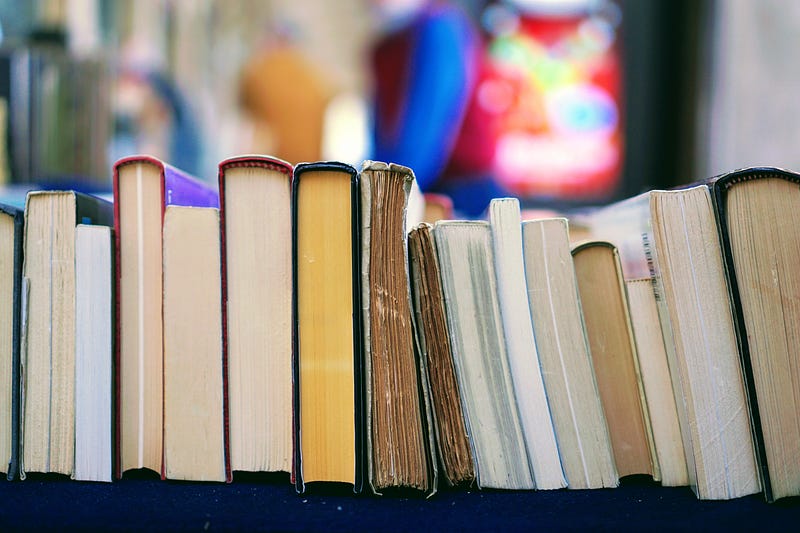
According to a survey by the publisher Flipsnack, books have been growing in length, fairly consistently, for a couple of decades.
The survey looked at 2515 books that had appeared on the New York Times bestseller and notable books lists as well as an annual survey of Google’s most discussed books. It found that between 1999 and 2014 the average book length grew from 320 pages to 407 pages.
It is a trend that has continued. In 2019 the average length of the six books on the Booker Prize shortlist was an impressive 530 pages.
Obviously page length varies depending on how many words per page but the trend for longer novels is undeniable.
Book-length averages
Generally, a novel is considered to be roughly 50,000 to 110,000 words. Nanowrimo (National Novel Writing Month) has just begun and its challenge is to write a 50,000-word novel in one month. At a rough average of 250 words per page, that would mean a 200-page book.
Something else to factor in is the genre. For example, thrillers tend to be shorter, coming in at around 70,000–90,000 whereas fantasy novels are usually 90,000 and up.
Even in the fantasy genre, the epic size of books continues to grow. The last Game of Thrones book, A Dance with Dragons, was a whopping 413,202 words. To put that in perspective, all three books of Lord of the Rings added together is 481,103 words.
The first Harry Potter book, the Philosopher’s Stone was 77,325 words but by the time Goblet of Fire was published the books had doubled in size. The Order of the Phoenix was 257,154 words. For reference, Crime and Punishment, a famously hefty novel, is 211,591 words.
There have always been long books such as War and Peace or Don Quixote but the average word count is noticeably on the rise.
So why are books getting longer?
Digital books
One obvious reason is the advent of digital books. When you see a large tome in a bookshop, it can be intimidating. Whereas when you are browsing an online bookshop, page/word count is just another number. It’s something to consider but the effect is less daunting than lifting a large book in your hand.
There is the added bonus that while a nice big book is nice, it is also heavy and not all that portable. A slim e-reader allows someone to carry around hundreds of colossal books. Length of a book and its portability is no longer an issue. This has consequently allowed people who prefer to write longer stories to find to indulge themselves and the market for their work clearly exists.
Cultural shift
There seems to be a growing demand for a longer narrative. This is increasingly evident across a variety of media. TV shows are more frequently telling a story arc over an entire series and are not as episodic as they were 20 years ago. Movies are getting longer with blockbusters regularly reaching the two and half hour mark. People enjoy character and plot development and don’t mind it taking time.
The shortening attention span of people commonly reported in the media doesn’t seem to be applying to those who love a good tale. Getting immersed in a longer story has never been more popular.
A change in what is popular
Thanks to the rise in popularity of genres that are frequently longer books, the average novel length will be affected. I mentioned fantasy earlier for a reason. Thanks largely to the films and TV shows, books like Lord of the Rings and A Game of Thrones remain hugely popular.
Any top-selling list of books that includes authors such as George RR Martin or Brandon Sanderson is going to have the average word count raised (and they are rarely out of the charts). And the genre is getting more and more popular.
I read a lot of science fiction and looking at my library there is a notable difference in book sizes from the 1960s compared to today. Asimov, Dick, Vonnegut and Clarke wrote shorter books than say, James A Corey with the Expanse series, or any Peter F. Hamilton novel. Sure, there was Dune and a few others, but I’m talking averages.
And it is not just popular genre inclusions that are lifting the average lengths. As mentioned earlier, more high brow books such as the Booker Prize shortlist are getting longer each year as judges show a predilection for length.
It is a combination of multiple factors
In addition to the above, there are a few factors to add to the mix.
It could be that with the rise of self-publishing, the power has shifted toward the authors. Writers are rarely keen on having their work trimmed and as they gain popularity editors get increasingly nervous to cut chunks from their work. “Could have done with an editor” is a fairly common complaint.
Of course, just looking at the bestsellers is not telling the whole story. Thanks to digital publishing, shorter fiction is gaining in popularity too with short stories and novelettes having a resurgence.
This shift in the variety of lengths points to another factor — the freedom e-readers have granted writers and readers. Traditional publishing preferred more traditional lengths for publication. Bigger books, short stories or novelettes were a harder sell unless the author was famous. Those perceived limitations, largely down to the business of printing and selling paper books, have been removed. If someone likes short fiction or long fiction, that can now be catered for more easily.
It is hard to pin down any single particular reason. But as trends go, it is a good one. As I have written before, reading has a surprising number of benefits.
So join the cool kids and read something epic.


