Are A.I. evil — or can they be evil?
As a Sci-Fi reader, I know several stories about A.I., robots and other artificial organisms. Some of them seem to be good, and others seem to be evil. But what is behind this interpretation?
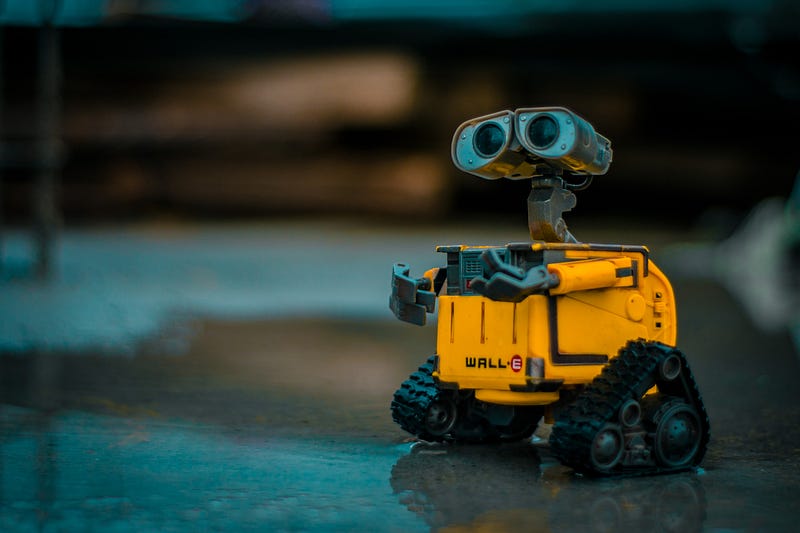
Some of the stories which I’m relating to are:
- Robot stories from Isaac Asimov
- Culture Saga from Iain Banks
- Harvest of stars saga from Poul Anderson
- The Dune saga including the Butlers Djihad addition from Frank & Brian Herbert and Kevin J. Anderson
- The movie I, robot
- And of course, Terminator and Matrix
Some of them are very optimistic regarding the relationship between humanity and A.I. But some are very negative on this topic, for example in the Dune Saga, where a mechanical civilisation tries to destroy humanity. Like in the Matrix and Terminator movies.
What is evil?
But, before we dig into the title question, what is evil after all?
Wikipedia is quite vague on this topic: https://en.wikipedia.org/wiki/Evil
The Stanford Encyclopedia of Philosophy has a very long article on this topic, which I didn’t read to the end: https://plato.stanford.edu/entries/concept-evil/
Here is a good article from The New Yorker on this topic: https://www.newyorker.com/books/page-turner/what-do-we-mean-by-evil
Google returns about 818.000.000 results on the search “What is evil”.
But to me, it looks like, that evil can be determined only with a shared sense of morale. And, there is no evil in the absence of morale.
My subjective view says to me, that anything, what harms other beings, with the deliberate intention to inflict pain or other forms of negative feelings for the sake of the own advantage, or while enjoying this act is evil.
I know that this is an over-simplistic view of this very complex topic.
For the sake of the main-topic of this article, let me keep this definition.
Three laws of robotics
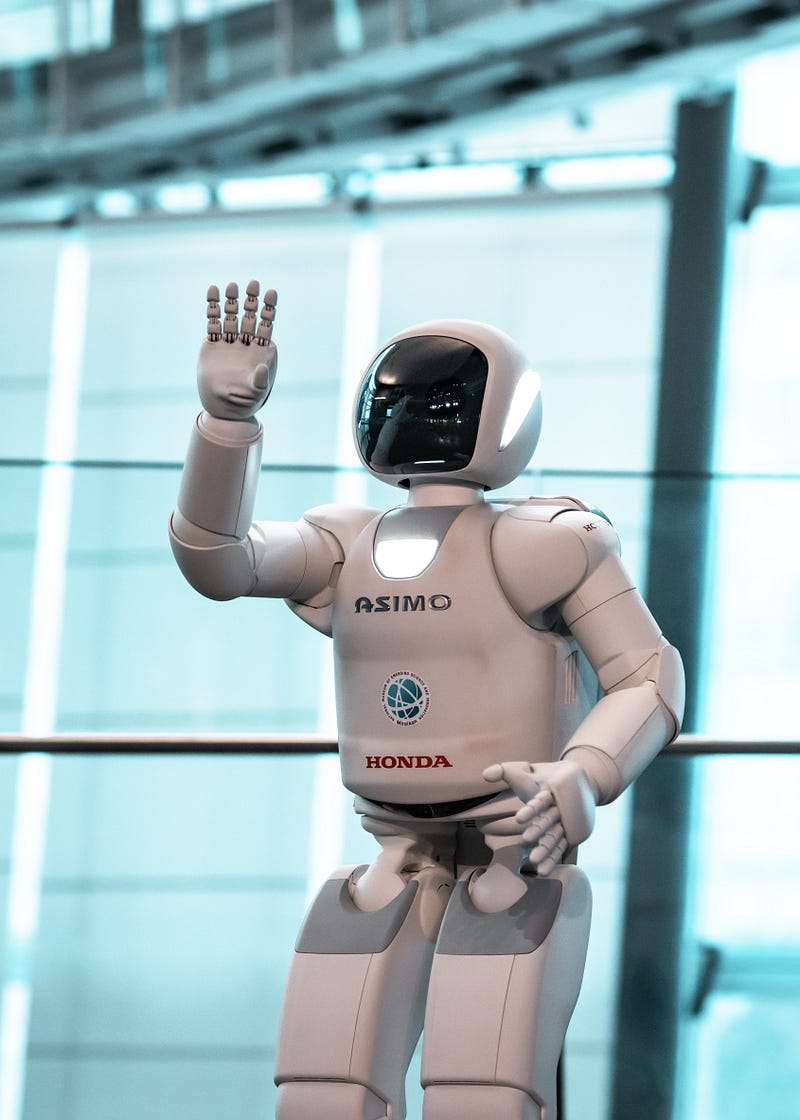
In 1942 Isaacx Asimow introduced the three laws of robotics (Source: https://en.wikipedia.org/wiki/Three_Laws_of_Robotics):
First Law A robot may not injure a human being or, through inaction, allow a human being to come to harm.
Second Law A robot must obey the orders given it by human beings except where such orders would conflict with the First Law.
Third Law A robot must protect its own existence as long as such protection does not conflict with the First or Second Law
Isaac Asimov later expanded these three laws with the following zeroth law:
Zeroth Law A robot may not harm humanity, or, by inaction, allow humanity to come to harm.
Isaac Asimow theory was that these laws have to be programmed into the base operating system of each robot, thus providing base protection for each human being.
But, even Isaac Asimov, described a scenario in one of his books, in which the definition of a human being was altered, which allowed a robot to harm human beings.
As a consequence, any real-world implementation must include a wide range of attributes to define human beings.
A.I. and self-consciousness
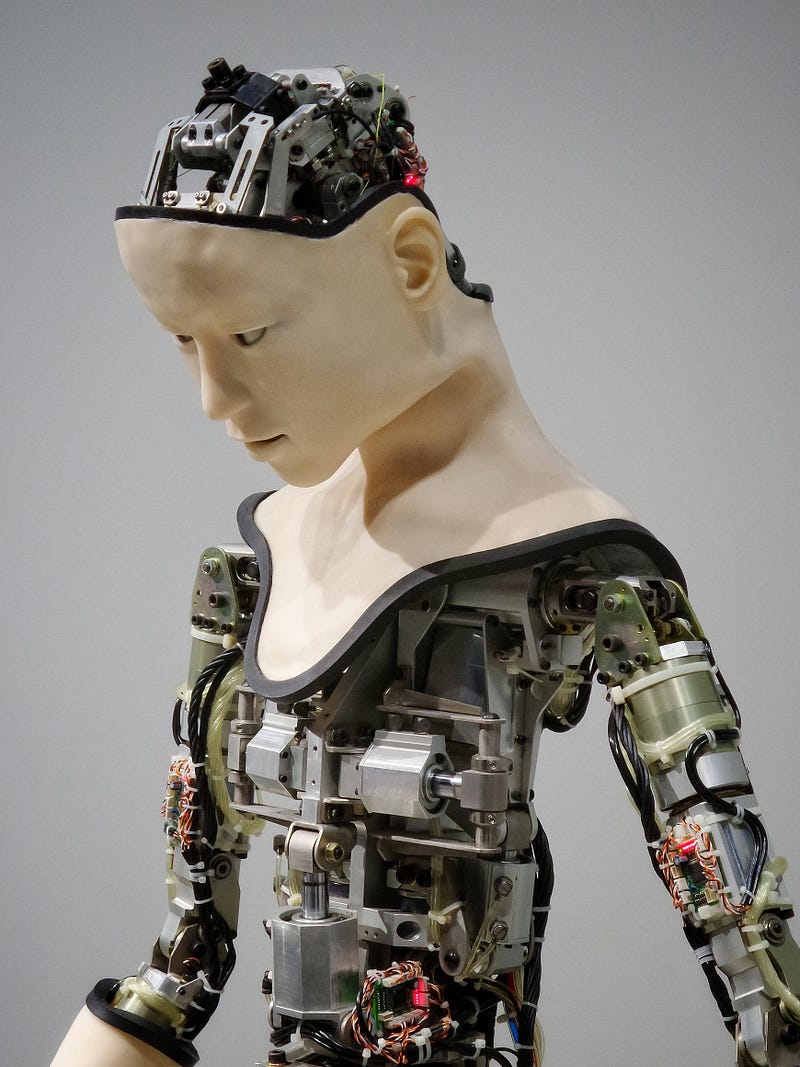
Until today all A.I. systems are not self-conscious. They are built for one specific purpose and are very good at it.
An A.I. system, which can fulfil a wide variety of tasks, is called a general A.I. See here for a definition of the types of A.I. systems: https://codebots.com/artificial-intelligence/the-3-types-of-ai-is-the-third-even-possible
But as soon as an A.I. reaches self-consciousness, morale has to come into play.
For example, in the movie, “I, Robot”: the central A.I. acts only by logic arguments. There are no feelings or any kind of emotions in their actions. Even though their actions cause a lot of pain and harm to a lot of people; there are no signs of emotions.
In my opinion, this A.I. is not evil. It just follows his logic chain of arguments. There is no morale visible.
Does this mean, that we have to teach morale to each self-conscious A.I.?
I think, yes.
But, morale is subjective. And what is morally correct to me, don’t need to be right for you. As a consequence, we need to formulate a broad set of moral rules. These rules must be added to the base programming of any self-conscious A.I.
Such a step would exclude any military use of a general A.I. from the beginning. Great news!
Feelings of an A.I.
We have a broad range of feelings, like many other beings on earth.
But we have no scientific explanation of human feelings until now.
I watched the movie “Chappie” on Netflix a few weeks ago. In this story, a robot develops human-like feelings. In this movie, the programmer adds these feelings to the operating system of this robot.
I’m extremely sceptic that we will be able to do this any time soon.
But a self-conscious A.I. could be able to evolve in a way, that it develops human-like feelings.
What will be the outcome of such a development? Nobody knows.
It all depends on how this A.I. has been programmed in the first place, and what it has experienced until then.
I can imagine that the resulting being is not human-like at all. I doubt that we will be able to understand the thinking process of such an A.I.
Scientists aren’t able to follow the processes of some current A.I. as well. How can we hope to understand such an advanced A.I.?
A.I. singularity
A.I. scientist expects that a general A.I. (An A.I. build for general purpose and not for one specific task) would be much more intelligent than any human being. Such an A.I. being has the potential to grow his knowledge and intellectual capabilities at an exponential speed.
The moment, when such an A.I. exists, is called a singularity event, as it has the potential to change our world forever.
But it is evil?
Imagine our reaction after we recognise what happened? Will we try to turn it off? Possibly yes.
What, when this A.I. starts to use all tools available to protect himself and destroys the humans, which tries to kill it, it just protects himself?
Is this evil?
Imagine a world in which we coexist with advanced A.I. beings.
Such beings would be much more capable of us, to manage our complex world.
Should we pass the government to them? Will we consider such a society a good one? Will it be human?
I don’t know.
Some Sci-Fi authors doubt that we will look at such a society and consider it a human one, as the government is not-human.
But would it be a better world? Possibly yes. But only when the governing A.I. value the natural life as much as they value their “artificial” life. Something that humanity doesn’t do on a large scale yet.
Conclusion
As you can see, there is no definitive answer to the question if A.I. beings are evil.
The concept of “evilness” doesn’t apply, as long as A.I. beings follow only their pure logic.
The situation will be much more complicated, as soon as you add self-consciousness and feelings to the equation.
If we can manage to add the concept of morale to the programming of A.I., I’m optimistic that we can co-exist with such advanced A.I. beings.
The situation can be dangerous if we create such A.I. for military purposes. In such a case, morale can hinder his goal: to be effective in destroying targets.
Unfortunately, we will not be able to control if something like this happens. As long as our governments don’t understand such a development, they will prefer a system, which is more effective, before considering the possible consequences.
But even then, I doubt that “evil” is the correct word to describe such a destructive A.I.
Today we are in a position to control the future of general A.I. systems and to decide what we will teach to such a general A.I.
I hope that the person in charge can influence such an A.I. system before it becomes a real being and starts with exponential growth in knowledge and intelligence.
Please add your thought to this in the comments. I would be happy to read your opinions.