
Are $500 Running Shoes Actually Worth It?
To some of us, yes
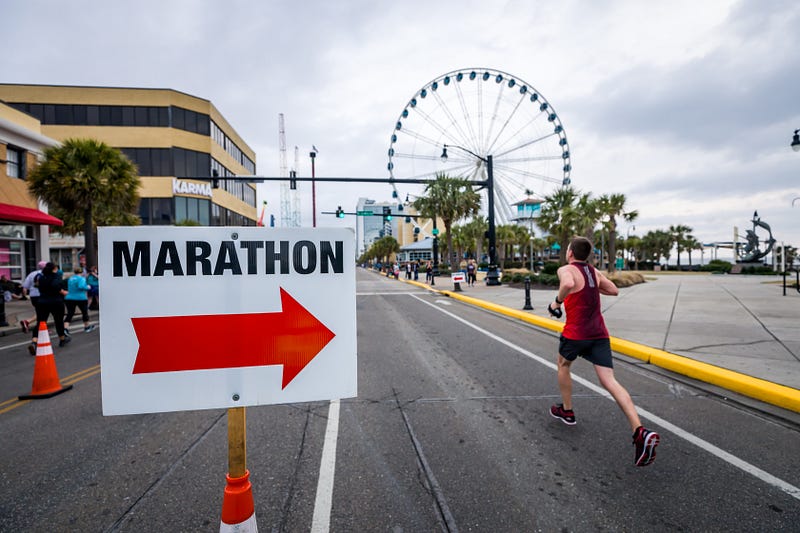
Over my lifetime, I would say I’ve spent around $3,000 on running shoes. I have been a competitive runner for 13 years, and with inflation, it seems like running shoes just keep getting more and more expensive. A general rule is to replace your training shoes every 300–500 miles, and I try to find the best deals to save on shoes as I shop at different outlets.
However, there’s another reason shoes keep getting more expensive beyond just inflation. If you are remotely affiliated with running marathons or know anyone who runs competitively, you may have heard the term “super shoes.”
These super shoes are known for having a full-rigid carbon plate that makes you run 1–2% faster. This carbon plate is supplemented with a stack of very responsive foam. The problem? They’re incredibly expensive. One of the most popular super shoes, the Nike Vaporfly 3, has a retail price of $250. Their reputation is they also have a very short life span.
When super shoes first came out, they were too expensive for me. I was a college student who couldn’t afford to shell out that kind of money. But eventually, I gave in to the hype after I had a job and loved the way they made me run so much faster. And there was a huge debate at the time (and there still is) about whether wearing super shoes is cheating, and whether World Athletics, the international governing body for athletics, should allow world records with super shoes to be ratified at all, or if they should be used in competitions.
Clearly, detractors did not win.
Super shoes are credited with the explosion of world records in almost all running events. When the Nike Vaporfly, the first super shoe, came out in 2017, it revolutionized the running world. All of a sudden, records were just shattering in all road races, especially the marathon. World records on the track have also been falling left and right in recent years with runners using the Nike Dragonfly, the track spike equivalent to the Vaporfly.
The best marathoner in the world, Eliud Kipchoage, made a famous attempt to break two hours in the marathon in the Breaking2 Challenge — coming astonishingly close in a time of 2:00:25. He then actually broke two hours in October 2019 at the Ineos 1:59 Challenge. Kipchoge went on to run two ratified world records at the Berlin Marathon: 2:01:39 in 2018, and 2:01:09 in 2022. His world record was recently shattered by 23-year-old Kelvin Kiptum at the 2023 Chicago Marathon.
These records were not ratified because they were on a race track with pacers cycling in and out, instead of on a real course through the streets of a city. His attempt was inspiring because it showed the human body could break a barrier that was previously thought to be unbeatable, like two hours in a marathon.
But although the athletes themselves were the major driver of success, much conversation was had around the shoes, too, and whether they were some sort of cheat code to making people run so damn fast. I navigate running message boards where people also frequently talk about suspicions of cheating, which I brush against because everyone is innocent until proven guilty, and I’m sure the most elite of runners get tested more than anyone else.
I don’t think you can quantify what running a personal record means to a competitive runner. Simply put, it’s the best feeling in the world. I’ve gotten married, achieved major career success, gotten into law school on scholarship, and had a plethora of what I consider substantial personal accomplishments that align with my values and goals.
None give the same thrill and exhilaration of running a personal best in an event that mattered to me, which includes the marathon, 5k, 10k, or whatever. Now, I haven’t run a marathon personal record in two years, so I haven’t had that feeling for a while. But I did run a half marathon personal best about a year and a half ago that was a similar feeling.
I’m sure every runner has that feeling. And at every race they run, they chase it because leveling up in running is like leveling up in life. It’s the ultimate form of self-improvement for reasons that are difficult to explain, but if I were to put a finger on it, I think it’s because many of us tackle our lives in a similar way we tackle running. Improvement takes a lot of consistency, but it also takes restraint, listening to your body, and sometimes just good luck.
When you run a personal best once, it becomes incredibly easy to get back to the same place and do it again. You can get into a toxic place trying to chase personal bests if you have too much going on, get injured, sick, or have some other circumstances that derail your running career, like I have at times. It can become unhealthy if your running personal bests are your identity. But it still is the best feeling to transcend where you were before.
Adidas has made a shoe that pushes the low durability, price, and speed like no other.
At the 2023 Berlin Marathon, Ethiopian marathoner Tigist Assefa absolutely shattered the marathon world record. Unlike Kiptum’s breaking Kipchoge’s world record by 34 seconds at the Chicago Marathon, Assefa shattered the women’s world record by over two minutes. When I first heard the news, I admit I was astonished. Two minutes? Not 30 seconds? 20 seconds? This was a record that stood for four years. The previous women’s marathon record set by Paula Radcliffe stood for 16 years.
Assefa wore the Adizero Adios Pro Evo 1, a shoe that costs $500. This is even twice as expensive as the Nike Vaporfly 3. The shoe only weighs 5.0 ounces for a U.S. size 10.5 runner, which is unbelievably light, and the shoe is only meant to be worn once due to the low durability of its midsole.
“In short, it’s not meant for you. Or me. It’s a single-use shoe meant for Adidas-sponsored marathon runners looking to break world records in the lightest marathon shoe ever created,” Thomas at Believe in the Run says.
Thomas goes on to say the shoe will likely disintegrate if you try to wear it to run more than 100 miles.
It’s the lightest and most expensive shoe that has ever been created by Adidas, and easily took the hype away from Nike in the super shoe market.
I’m a marathoner, but I’m not nearly as good as Assefa or Kelvin Kiptum. I have qualified for the Boston Marathon the past three of the past five years with times in the 2:40s, but it’s not up to my standards. There are a lot of things I would do to run faster, but they mainly revolve around training. I try to do different kinds of workouts, have more consistent mileage of 60–70 miles per week, and eat and sleep better.
Would I pay $500 for shoes? It sounds absolutely ridiculous. Pay $500 for shoes that only have the benefit of helping you run really fast once? Where’s the long-term benefit? Doesn’t it feel like we’re going a bit overboard?
Adidas certainly knows how much people value running personal bests and running fast. My marathon personal best is just under 2:40, in a time of 2:39:55. If I could get the guarantee that my personal best would drop to 2:25, yeah, I would splurge and save up for the $500 shoes.
If my personal best could improve that much, it means a lot more than just a personal record. Yes, it would mean leveling up in life and transcending my past performances, but it would also just mean I broke out of a cycle of stagnancy and mediocrity that I feel like I’ve been at for years.
If I can do it once, even in shoes that some people think are excessive and borderline cheating, then it shows me that it’s possible for me to run that time in other shoes. It shows me that it’s possible that I have not reached my limit, that getting faster and moving up is still possible despite all my challenges in running lately.
Yes, the $500 Adidas super shoes are another indication that running has become far too expensive. Marathons are, generally, not cheap to sign up for. I had to pay $230 for the 2024 Boston Marathon, for example.
For most of us, $500 shoes are for only the most elite of runners. The ones who are willing to pay are those of us who want to dream to be part of that elite.