
Hacks and Variants
Mega-Buildings in ‘Terror in Meeple City’
Buildings big enough to house tiny cities are fascinating
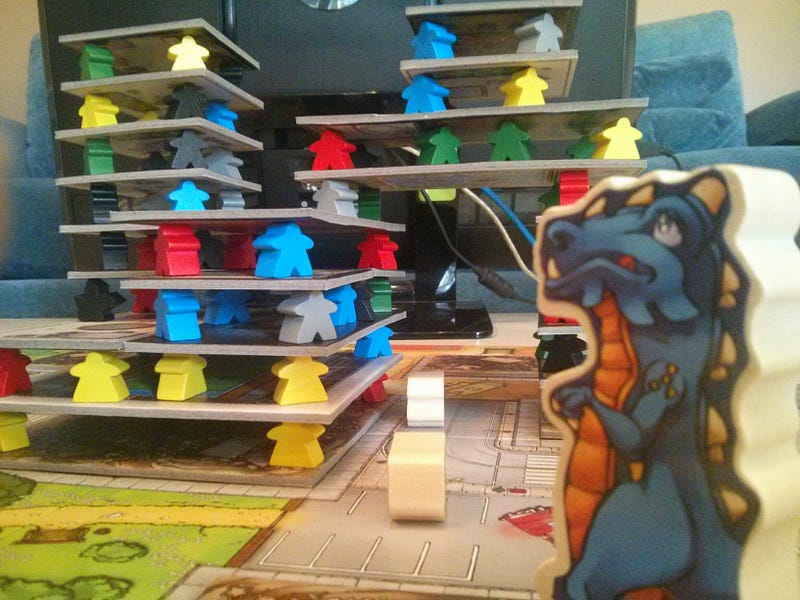
Arcology, a portmanteau of “architecture” and “ecology”, is a vision of architectural design principles for very densely populated habitats. The concept has been primarily popularized, and the term itself coined, by architect Paolo Soleri. It also appears in science fiction. — From Wikipedia
There’s something about enormous buildings big enough to encompass 10 city blocks. Science fiction is littered with structures that are somewhere between a domed city and a giant mall/airport/housing block hybrid. Judge Dredd, Necromunda, and Sim City all feature arcologies to one degree or another. They may be cesspools of crime and desperation, but they’re fascinating nonetheless.
The real world has a few examples. Alaska’s Begich Towers are often billed as a city under one roof. The Tel Aviv Central Bus Station was meant to be a city in one building. Venezuela’s Tower of David became the ultimate squatter arcology, with pirated electricity and a parking structure taxi service instead of an elevator. But the monstrosity called the Kowloon Walled City was the pinnacle of the ad hoc feral arcology. It is my favorite example of the concept.
But what does this have to do with Terror in Meeple City?
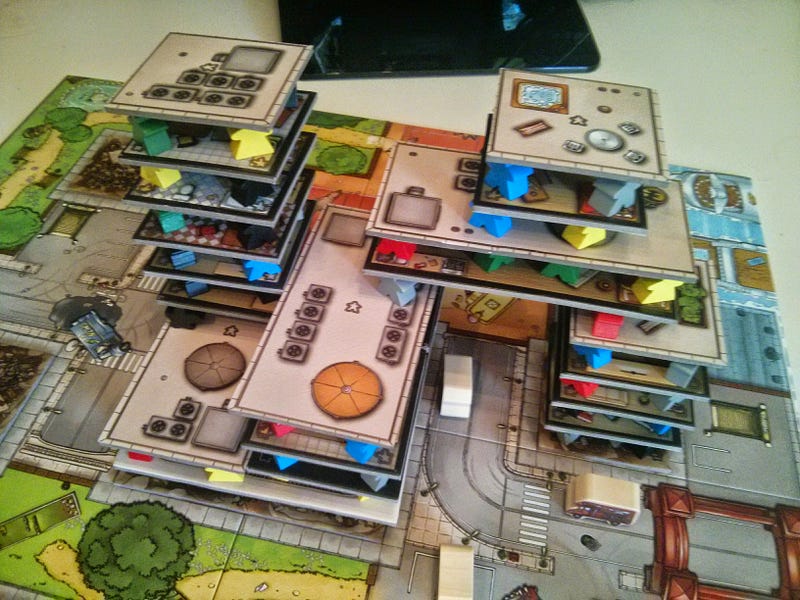
The other day I toyed around with an asymmetrical variant of TiMC (formerly called Rampage) and used all the building tiles to make one big structure. The intention was that one player would play the building’s defenses while another played the monster.
An arcology might not be pleasant to live in, but as a defensive fortification, it worked better than expected. Even though it was lopsided and a bit unstable, it fared well against monster “move” attacks, as well as breath weapons. Only dropping the monster on the building had much effect, and even that did modest damage. Some meeples were eaten, but we were surprised the whole thing didn’t just crumble under the monster’s attack. The additional horizontal size of the arcology added stability, even when you drop the monster on top of it.
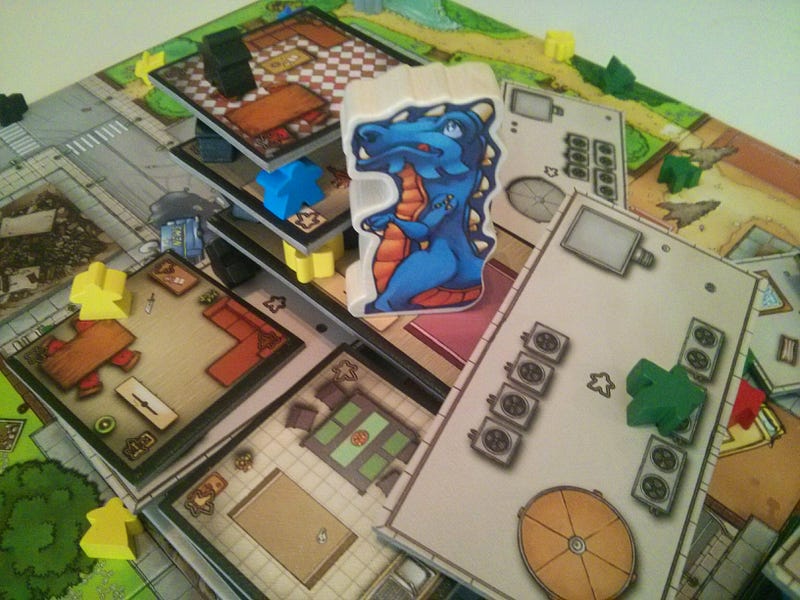
The arco is also able to defend itself. Vehicle tokens are used the same way monsters use them, except that the arco player can take them from anywhere. This represents anti-monster gun batteries. The arco player can also use “breath” attacks, but this hasn’t worked so well against the monster unless it shows it’s wider side to the arco.
This is still an inconclusive experiment, and requires further testing. As it stands, it takes too long for the monster to destroy the arcology, and the arco obviously can’t maneuver around the monster. This makes for a boring game. I considered stealing mechanics from Stronghold, but realized I might as well play Stronghold and add the giant monsters.


