Summary
Alan, a tailor in Brittany, performs the traditional "baz valan" by visiting the family of Mona, a belle who has refused his marriage proposal in favor of Youenn ar Drouz.
Abstract
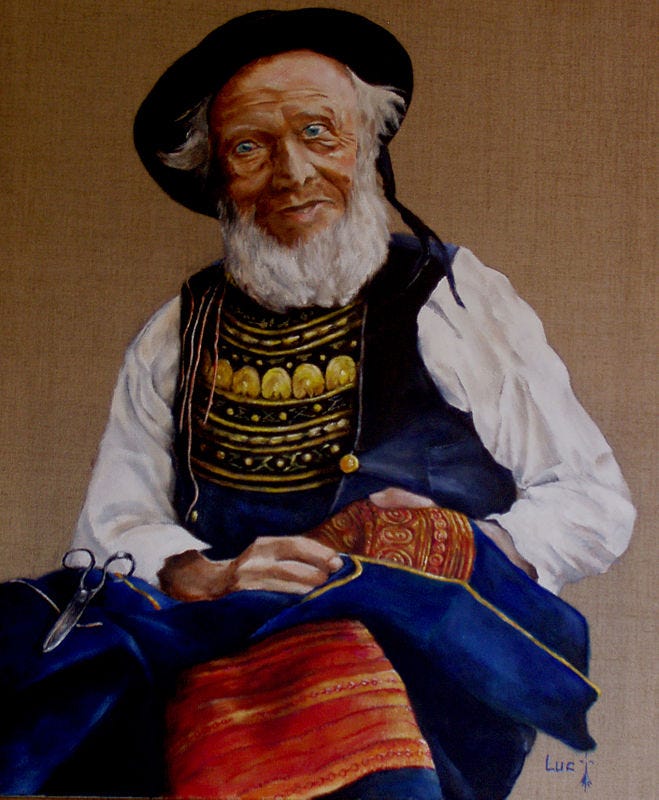
In a quaint Breton village, Alan, adorned in a festive black velvet suit with gold embroidery, undertakes the traditional role of "baz valan" – a go-between who, armed with a broomstick and mismatched socks, visits the family of a young woman on behalf of a suitor. In this case, Youenn ar Drouz has enlisted Alan's services to approach Mona's family, signaling a prearranged understanding between the young couple. Despite Mona's refusal of Alan's hand in marriage, choosing Youenn instead, the custom is respected, and the tailor's role is fulfilled, reflecting the enduring traditions of the region.
Opinions
- The author conveys a sense of nostalgia and respect for the Breton custom of "baz valan," viewing it as an integral part of the cultural fabric.
- There is an underlying tone of acceptance towards the young couple's choice, suggesting that tradition and personal preference can coexist harmoniously.
- The narrative implies that the community is well-acquainted with Alan, indicating a close-knit village dynamic where roles and customs are commonly understood and valued.
- The use of imagery, such as the embroidered outfit and the broomstick, emphasizes the importance of symbolism in traditional rituals.
- The inclusion of a link to another poem by the author suggests a personal connection to the theme and a desire to explore and share the cultural heritage of Brittany further.