
Apply These Damn Simple Ideas to Change Unwanted Behavior
Life hacks based on a proven theory
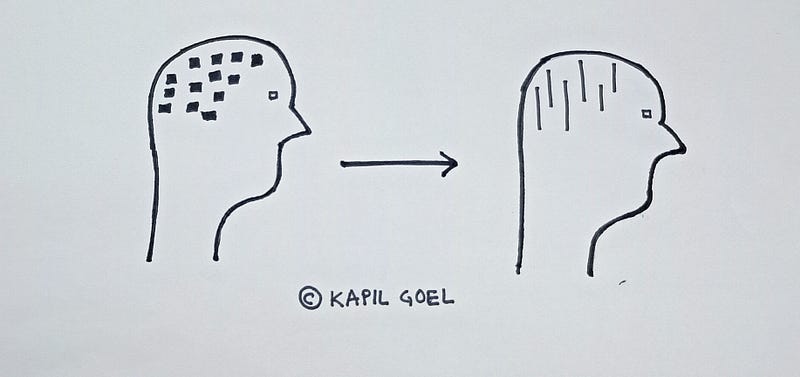
Have you ever tried to change anyone’s behavior and faced resistance and rejection? Be it from your co-workers, parents, children, spouse, or friends.
If your answer is yes, then I am sure you will find the following hacks and ideas very useful. The theory and principles revealed here are based on 30 years of research. First, let’s look at a few scenarios.
Can you relate to any of the following?
- You want your child to study, and then play. Response: I will study later.
- You want your older parent to do just enough exercise. Response: I will do it, but they hardly ever put an effort.
- You want your co-workers to follow a new process. Response: Current is good; why go for a new one?
- You want your spouse to quit smoking. Response: Starting tomorrow honey and it never comes.
There are many such responses you may have noticed in your routine. Here are my observations on three types of responses.
- People who don’t want to change at all and are not interested to listen. It can be because of deep-rooted older beliefs and you can see the straight rejection.
- Those who don’t want to change but ready to listen. It can be because the what and why of the change is not crystal-clear and you can feel the resistance.
- People who wanted to change, but they couldn’t do it on their own and needed help. It can be because of their habits and you can feel the ignorance.
So how to handle such responses and what you can do to facilitate a change in people’s behavior?
A person’s basic need is autonomy and everyone wants to make their own decision. Even if the decision is bad, people are okay. You may say “I am not okay; The current behavior is not right for my child or organization, so I wanted to change it, and they better change it”.
I’d recommend supporting the change — how?
I’ll explain exactly how!
Before you jump ahead to Lifehacks along with the real-life examples, let’s take a slight view of the theory proposed by two gentlemen — Edward Deci and Richard Ryan. They came up with the theory of motivation based on self-determination. In 30 years of research, they found, there are two types of human motivation (controlled and autonomous), which contribute to desired changes and its effectiveness.
#1 Controlled Motivation
In this type, people are motivated because of coerciveness, seduction, guilt, or pressure.
Based on 129 studies conducted by the British research group “Behavior changes due to fear or regret were least effective”.
Some personalities strongly believe in command and control type change. They feel it’s the right way to do and often use easy tricks like putting up pressure, fear of loss, carrot-stick, etc. These may give them a quick result however, it’s not long-lasting and effective.
Here are the few related scenarios
- People are motivated to take quick steps and shortcuts to accomplish work because of pressure.
- People are motivated to following traffic rules, because of imposed fines and punishment.
- Providing direct reward is the easiest way to motivate your child — “you will get this if you do this…”.
#2 Autonomous Motivation
People are willing to perform the work because they are interested in doing it. It’s their choice to endorse and they deeply value it.
Have you ever seen any parent ask you — How do I motivate my toddler to play? They are motivated because they are interested in playing and they enjoy it.
There are 100’s of research, which clearly shows those people who are autonomously motivated are more creative and good problem solvers. Their performances are high, they are mentally and physically healthy.
Autonomous motivation has two sub-categories — intrinsic and extrinsic. For intrinsic, people are motivated to take action for their desire. For extrinsic, they are influenced because of external factors and feel motivated to take action.
Control leads to compliance, Autonomy leads to engagement — Daniel H. Pink
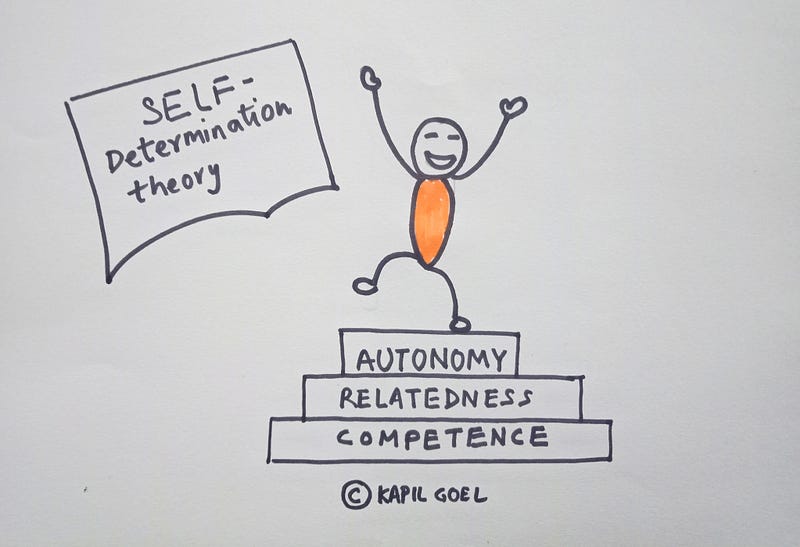
3 Principles of Self-Determination Theory
- Provide an autonomous environment and support.
- Develop a sense of belonging, make people feel connected with others, and relate to what they are doing.
- Create an opportunity to develop competence, provide tools and techniques to make people confident.
So what can you do?
You can help people to behave autonomously and create an environment to explore and express their opinion. Provide a direction, tell why to do, and what (at a high level) to do. Avoid telling specifics and how to do, unless someone is keen to know. Engage in decision-making since the beginning. Provide a rationale behind a task. Let them think and initiate. Convert your statements to questions. Give a chance to come up with their wants and needs. Provide them an opportunity to lead and execute.
Supporting behavior change is a skill to learn and you need to modify your communication style based on the situation. If you can’t wait for enough and the situation is out of control, then change the style from autonomy to control. You need to learn and adapt based on the situation.
Real-Life Examples
#1 Here’s how I dealt with a common situation at home
Last week, I wanted my 4-year-old to stop watching cartoons in the night, turn off the TV, and go to bed. I had two options to motivate him — one was to coerce and make him sleep; another way to understand his state of mind, distract him, and make him sleep at ease.
I chose the latter and started playing with him using a creative game. After 10 minutes of playing we had created an artifact; he chose to take it with him, switched off the TV himself, and slept with joy.
In this example, I had created an environment to support my child’s autonomy, where he can be joyful and feel connected.
#2 An experiment was conducted to persuade people and behave in a certain way
One of the hotels has experimented with their guests — Reduce the usage of hotel towels and create an Eco-friendly environment. It was a hard behavior to change. Hotel management came up with a slogan to save the environment and requested guests to reduce their usage. It didn’t work. Hoteliers then tried delivering a pamphlet along with the towels — Stating the positive impact on the environment with facts and figures; you are the Nth guest to contribute for his noble cause, would you like to be a part of it? Guess what? People reduced their usage. They could connect with it and felt it was the right action to take.
The trick was to wake up the emotional elephant-like mind in the guests and provide a sense of belonging for a bigger cause.
Ideas to ‘facilitate’ change in behavior with ease
- Develop self-efficacy with people before asking them to change.
- Assess and harness the current motivation, whether it is high/low, controlled/autonomous.
- Assign simple work if the motivation is low and hard work if the motivation is high.
- Look for the cues to trigger the desired behavior (I ring a bell as a trigger, for my child to clean up the mess).
- Make things clear to people — What and Why of the change.
- Provide direction to avoid confusion and frustration (if the work is new).
- Focus on engaging the emotional mind.
Let people explore new ideas, new ways of dealing with problems, make their decisions, allow them to think, learn, and prosper.
I am leaving out a few links related to motivation and behavioral shifts; you may find them useful.