
Apple’s App Store in 2023 — it’s going to get tough
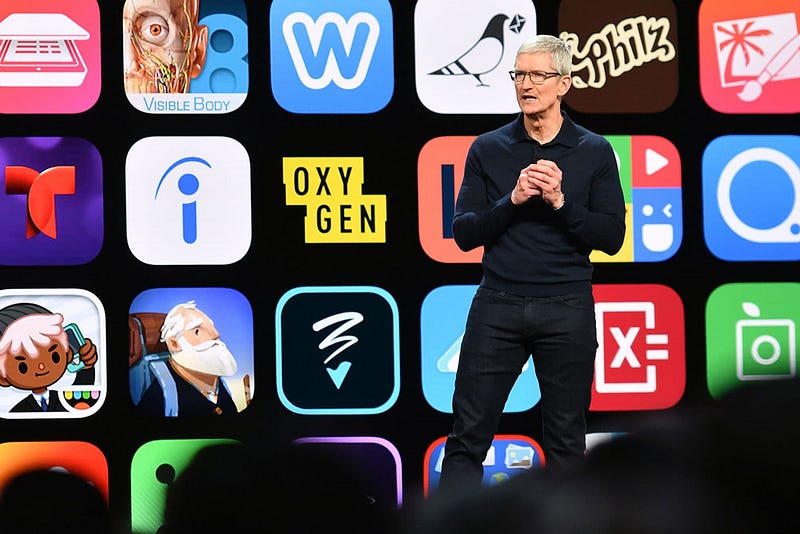
Apple has relied on their App Store over recent years for growth & revenue — but the future could be a different story…
A slam-dunk
Apple always seems to come up smelling of roses, but the road ahead now, could be a little rockier for them.
For years now, they have looked to their App Store to shore up business, when things have slowed down, but financial analysts are warning that things may be about to get tougher.
Keeping quiet
Apple has always been cagey about disclosing exactly how much money the App Store generates, so analysts have looked to other documents and filings to try to make a measured guess.
Barclays MD, Tim Long, has gauged that it’s probably worth up to a third of Apple’s services revenue. But, after eight straight years of growth of above 30%, the store only grew around 6% in the 2022 fiscal year.
There have been several reasons that may have all played their part in the slowdown of the App Store. iPhone sales were slower than anticipated, due in part to the production problems before Christmas in China, stemming from the numerous lockdowns over there. Post COVID normalisation has also been a factor in the natural slowing that’s being witnessed.
Also, partly to blame, may have been the revised regulatory rulings in China that directly affected the gaming market. The sales of gaming apps account for approximately 70% of the App Store’s total revenue — and of that, the China market had been worth around 25% of that total figure.
The worrying thing is, though, that some of these effects could well be long reaching.
The back door
The monopoly that Apple has enjoyed in ruling their App Store, could be closing in.
With changes coming to the European Union’s Digital Markets Act, Apple could very well, at last, have to let alternative app stores on to their phones, and, also, be forced to allow sideloading too.
And, the EU also has a close eye on the 30% that developers currently have to hand over to Apple for software sales and in-app purchases.
These changes may well happen sooner rather than later, too — possibly as soon as the next iOS and macOS updates later this year. If Apple is at least seen to be doing the right thing in Europe, it will help in taking some heat, and gaze away from them. It’s worth bearing in mind, this could be a good play — as the European market is only worth about 10% of App Store revenue anyway.
Changing times
Those regulation changes, I mentioned earlier in China, should not be dismissed lightly — they’re having massive implications.
Since 2019, minors in China, have been banned from playing video-games between 10 p.m. and 8 a.m. And, as if that were not bad enough, there were restrictions put in place as to the amount that they could play the games at all. Kids are only allowed to play for a maximum of ninety minutes a day on weekdays and are restricted to only three hours a day on weekends.
Obviously, that will have a natural knock-on ripple effect on how many new games will be bought (and the in-app purchases that go along hand in glove with those initial sales).
Bearing in mind that profitable marketplace had, until recently, been worth a quarter of the entire App Store’s revenue — the implications are clear to see.
Apple, although cagey about their App Store numbers, do disclose the top three contributors to their Services business. Out of the previous seven years, for six of them, the App Store had been the largest single contributor (2014–2020). Somewhat tellingly, in 2021, it had dropped to second place, and last year, dropped one more place, to third.
Suddenly, the tides of change were taking grip, with iCloud, and advertising now taking first, and second place in the revenue generating list respectively.
The revenue earned by developers, also cements the notion of a slowdown for the App Store too. From a high of 30% in 2021, they dipped to 23% only a year later.
Wrapping up
The App Store will continue to be hugely important for Apple for the foreseeable future, but, where they were once safe in the knowledge that it was a cash-cow, now that is no longer the case.
Where growth had once soared, the likelihood is that now, growth for the App Store will likely only be in the mid single-digit region instead. And that lack of growth will only be further compounded in the coming years.
The restraints will continue to tighten, which will bring downward pressure along with them. And, beyond that, regulation and competition will also have an increasingly detrimental effect on trading, and sales for them.
Last year, Apple generated $78 billion with their total Services revenue — a growth of 5.5%. And as the App Store continues to feel the pressure, with limited growth, that will have a knock on effect on the bottom line of the services sector of their business model.
With growth of only 4% this year, a modest forecast of $84 billion is the target for Apples Services revenue in the coming months to the financial year-end.
As with every business I guess, learning to move, fluidly with the times is critically important. You can never rely on one revenue stream forever.
But…the timing of the AR/VR headset could be heaven sent for them. As users buy the new headset, a whole new raft of Apps will be readied to launch alongside it.
If ever Apple needed a shot in the arm for their App Store, the late, but eventual release of the headset could be perfect timing.
Getting involved…
Fancy receiving my weekly video newsletter?
It’s free, and simple to join. Just leave me your details here, and every Sunday lunchtime, I will drop in to your inbox, catching up on the last week.
Guess what — if you look forward to my articles & blogs landing each day, you can help that happen! By clicking via this link, you can join Medium, and get my blogs every day, the moment I publish them. And, you can even get email notifications about them too. Go on — one little click of the Magic Mouse, will make a big difference to both you and me! 😋 And Finally…
I am now on Vero — follow me here https://www.vero.co/dtalkingtech
Originally published at https://talkingtechandaudio.com on March 6, 2023.


