
Apple’s AMAZING iPhone turns 16 years old today!
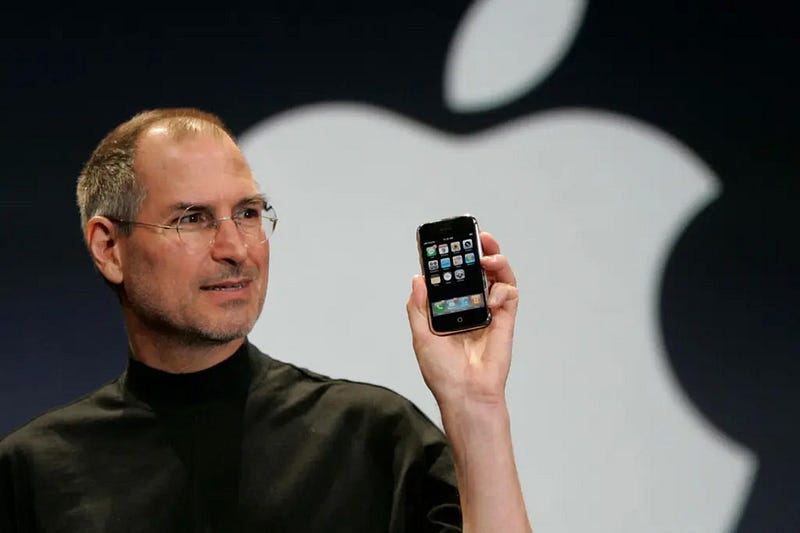
iPhone changed everything from the moment it was first unveiled and it still leads the way now
Happy birthday
iPhone was the device that changed the world. A once in a generation moment.
It was sixteen years ago today, that Steve Jobs, clad in his trademark black roll-neck, came on to the stage at the Macworld Expo in the Moscone Centre, in San Francisco. It was then he uttered those now infamous words, “Today, Apple is going to reinvent the phone.”.
Turns out, he wasn’t wrong. Today, on its 16th birthday, let’s look back at the evolution of iPhone.
History in the making
Many things were revolutionary about the iPhone when it was launched.
For starters, it was the first mobile phone with multitouch technology. It was a phone, an iPod, and connected users to the internet. It even had its own, dedicated mobile operating system as well — in the form of the now ubiquitous iOS. It even featured a camera…albeit only a 2megapixel one.
Development of iPhone began, secretly, under the codename ‘Project Purple’. Apple assembled a team of a thousand employees, and engineers to work on the project, led by Scott Forstall, and design officer Sir Jony Ive.
Project Purple did not come cheap. Jobs estimated that in over thirty months, it cost the company around $150 million. The phone was developed with Cingular Wireless, that later became AT&T Mobility. Jobs was responsible for steering the direction of design away from a tablet, towards the phone.
Although announced on this day in 2007, the first units did not ship until later that year, with customers finally laying their hands on them 29th June. Tied to a two-year contract with AT&T, the original iPhone cost $499.
And so it began
That was to be the start of the annual iPhone release. One year later, at WWDC, in July 2008, Apple announced iPhone 3G. The iPhone 3G introduced faster 3G connectivity, and a lower starting price of only $199. A year after that, in 2009, video functionality was brought to iPhone for the first time, with the iPhone 3GS.
2010, and 2011 was the era of iPhone 4, and 4S. iPhone 4, was the first time that Apple entered rocky waters with an iPhone — who remembers antennagate? iPhone 4, users experienced calls randomly dropping out, depending on how they were holding their iPhones.
The 2011 release of iPhone 4S saw some pretty major upgrades. The camera became an 8MP unit, video was bumped up to 1080p, and the voice-assistant Siri was also introduced. The phone ran on the A5 processor.
iPhone 5 was not as full of innovation, except, that the 30-pin dock connector, gave way to the lightning connector for the first time. The screen was increased to a 4-inch display too. The body was thinner, and lighter, now being made from aluminium alloy.
5 and beyond
In 2013, we saw two iPhones released — the 5S and 5C. The 5S featured the powerful 64-bit A7 processor, and touch ID. The 5C, was the first time we’d seen a more budget iPhone, using the previous years’ hardware, and came in some new, playful, vibrant, colours.
The following years iPhone 6 and 6 Plus had much larger displays, at 4.7-inch, and 5.5-inch respectively. Both phones saw Apple Pay as an app for the first time. Cameras were becoming the centre of attention, and the reason that users traded up annually. The camera of the 6 Plus used optimised image stabilisation for the first time. Apple Watch launched the same year, and integrated with iPhone 6.
6S and 6S Plus were the new models for 2015. The main highlights, were a 12-megapixel camera, and 4K video recording came to iPhone for the first time.
March 2016 saw the first generation iPhone SE. It was a low-cost device that incorporated newer hardware from the iPhone 6S, in the frame of the older iPhone 5S.
The big news for iPhone 7, and 7 Plus, was that the 3.5mm headphone port was removed, as Apple moved us towards the wireless AirPods. The 7 Plus had a second telephoto lens added, which enabled two-times optical zoom. Portrait photography mode, which simulates bokeh in photos, was also shown off in iPhone for the first time.
New phone — new venue
The 2017 release of iPhone 8, 8 Plus, and iPhone X, saw a venue change. From now on, the events were held at Apple’s Steve Jobs theatre. All models now had glass backs, and wireless charging. The phones now ran the A11 Bionic chip, with neural engines, and AI accelerator hardware.
The iPhone X, had a 5.8-inch OLED, super-retina display, with much slimmer bezels. The home button was dropped, but the notch made its first appearance, along with Face ID facial recognition. At $999, this model was the most expensive iPhone ever.
2018 was the turn of iPhone XR, XS, and XS Max. All models that year now used the Smart HDR photo system. The XS Max saw its screen increased to 6.5-inches, whilst the XR had a 6.1-inch LCD display. The XR, similar to the iPhone 5C, was a more budget handset, and came in some bright, new colours.
Hello to the Max
The iPhone 11, and 11 Pro, and Pro Max came next, in 2019. The ‘standard’ 11 was seen as the natural successor to the iPhone XR, while the Pro, and Pro Max replaced the lineage of XS and XS Max.
Battery life was improved across the 2019 model range, and all iPhones now had an ultra-wide lens. The second gen iPhone SE was released the following spring, just as COVID was biting hard. It used the hardware from iPhone 11, using the frame of the even older iPhone 8. The Touch Sensor and home button were retained.
Due to the lockdowns, the iPhone 12, 12 Mini, 12 Pro, and 12 Pro Max, were announced behind locked doors via a video stream. The event was held in October 2020, pushed back one month, due to the global situation.
All the models now featured OLED Super Retina displays, 5G, and MagSafe. The overall look and design was slimmer, with a stronger glass-ceramic front, offering improved drop protection. The big news was the introduction of the smaller, 5.4-inch iPhone Mini. The 12 Pro, and Pro Max now shipped with a LiDAR scanner, which would help with better accuracy in augmented reality situations.
13 — lucky for some
The iPhone 13 model year, was once again released behind closed doors. Bigger sensors, larger batteries with improved longevity, and a smaller notch were the headline grabbers. The Pro and Pro Max now had 120Hz, ProMotion panels. There was also a three-times optical zoom telephoto lens too.
Last year, in March 2022, the next iPhone SE was released. The third generation SE used the A15 Bionic chip from iPhone 13, but otherwise looked identical to the second generation SE handset.
iPhone 14, 14 Plus, Pro, and Pro Max came out in the fall of 2022. The Far Out event at which they were announced, was a give-away as to their new, big feature — satellite phone technology. The Pro and Pro Max now have a 48 megapixel camera, which was the first time since iPhone 6 that pixel count had been increased. They also featured Apple’s first Always-On Display and Dynamic Island.
Wrapping up
This day, 2007, turned out to be a pretty big day.
What vision Jobs had for the iPhone cannot be certain, but it has become central to so many of our lives, and of course, gave birth to the Apple ecosystem.
How many of the iPhone models have you owned over the years, and which were your favourites?
Getting involved…
Fancy receiving my weekly video newsletter?
It’s free, and simple to join. Just leave me your details here, and every Sunday lunchtime, I will drop in to your inbox, catching up on the last week.
Guess what — if you look forward to my articles & blogs landing each day, you can help that happen! By clicking via this link, you can join Medium, and get my blogs every day, the moment I publish them. And, you can even get email notifications about them too. Go on — one little click of the Magic Mouse, will make a big difference to both you and me! 😋 And Finally…
I am now on Vero — follow me here https://www.vero.co/dtalkingtech
Originally published at https://talkingtechandaudio.com on January 9, 2023.


