
Apple Might have Secretly Set a Self-Destruct Timer in Your iPhone
And it slowly kills it
When Apple unveiled its newest series of iPhones this month, I was, kind of, convinced to buy them. They seemed buyable, as they say, bang for every Buck.
Though it apparently seemed Apple did, or does nothing inherently wrong with its products, I recently came across a ghastly news about an old Apple lawsuit that has disappointed me with the company. The cause of the lawsuit –‘Planned Obsolescence’
Let me first define the complex tech jargon for you.
It is a secret strategy companies deliberately follow to make their products malfunction or end up unreliable after the period of its guarantee… My God.
This subtly and successfully forces consumers buy the newer product or get the old one repaired for half the phone’s price at one of the company’s authorised shops.
Now, Mr. iPhone 6s user, you might be yelling, “This is false. Why would you say that? I don’t have any issues with my iPhone. It could still run the latest software upgrade.”
“No man. You’re only lucky.”
This mishap-pened only in specific regions, and only for few users. Apple has admitted doing it and paid millions of dollars to settle the issues. Fortunately (for Apple), the news wasn’t much publicised.
In Dec 2017, about 150,000 Chilean iPhone users claimed their phones began slowing down after installing ‘then’ latest update iOS 10.2.1. Eventually, there were random shutdowns and the performance of the iPhones was badly throttled.
As many users concomitantly faced the same issue, they sensed it fishy, and together sued the company for it. The lawsuit accused Apple of programming obsolescence into specific devices in order to force users to upgrade them.
After much legal process, the Cupertino giant finally admitted the mistake and paid $3.4 million to settle the case. Finally it was $50 per device.
The company publicly apologised for it saying they didn’t deliberately do it, and reduced the price of battery replacement for the next whole year.
Well, people had got mixed opinions on the issue. Many didn’t believe Apple’s indeliberateness. And the incident repeating a couple of more times only made their beliefs stronger…
In Feb 2021, Deco Proteste, a Portuguese consumer organisation took Apple to the court after three years of waiting with no answer from the company for the complaints of 115,000 Portuguese iPhone users.
The same month, the consumer company published a funny video that mocks Apple on how it launches its products and what actually lies inside them.
Although Apple claimed the update was to extend the battery life of newer models, Deco denounced that it was chiefly to obsolete older models.
It demanded 10% of each device’s purchase price, averaging to €60 each device.
There exist a couple of more incidents. I’ll just give a gist.
- Apple faced a €60 million lawsuit from Altroconsumo (a consumer company in Italy). (Source)
- It paid $500 million to settle a lawsuit in the US. (Source)
- And a second settlement for $113 million for 34 US states. (Source)
- The French consumer watchdog DGCCRF demanded €25 million from Apple for failing to inform users that an update could slow down old devices. (Source)
Oh yeah, all for alleged planned obsolescence.
Now, Apple isn’t the only culprit.
For that matter, Android is a bigger culprit. It completely stops all updates without any prior notice, especially for mid-range devices. Most of them only get two years of support and only one major Android update.
This is why I see many devices not being on the latest update while they’re being sold. The reason: Stopped support. That’s forcing most Android users to purchase a new one.
But, where do the old phones go?
Let’s talk e-Waste
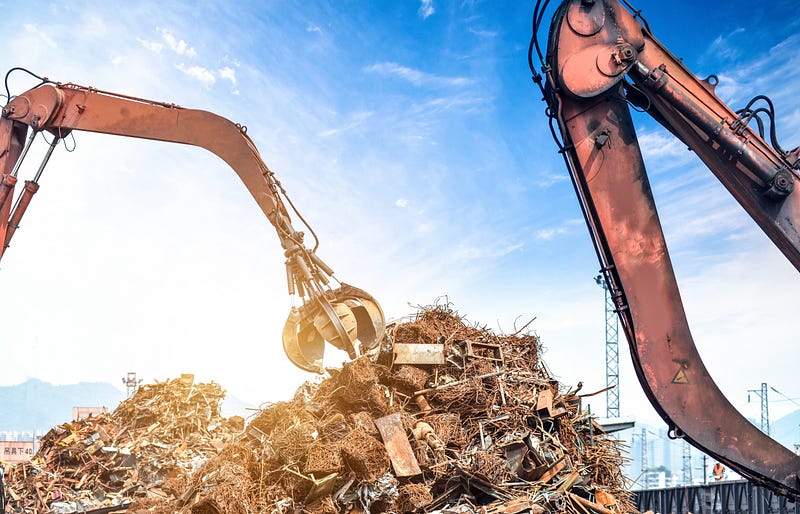
According to UN, in 2021, each person on the planet will have produced 7.6kg of e-waste, and that sums to 57.4 million tonnes worldwide. 🗑
It feels good to see Apple making plans to make every product “Carbon-neutral” by 2030. Hence why it may have ditched the charging brick from the iPhone boxes. I totally support Apple here. ♻️
However, the planned obsolescence, of any company, if still continues, would largely contribute to e-waste that could potentially destroy the planet. 🌏
Here crops up the real customer centeredness. Doesn’t it?
More related stories by me:
Not a Medium member yet? Me too. But if you consider signing up for it, Sign up now!
(It’s an affiliate link so I receive a portion of your payment, with zero extra cost for you.)


