
Apparently I died on July 17, 2016
A cautionary tale.
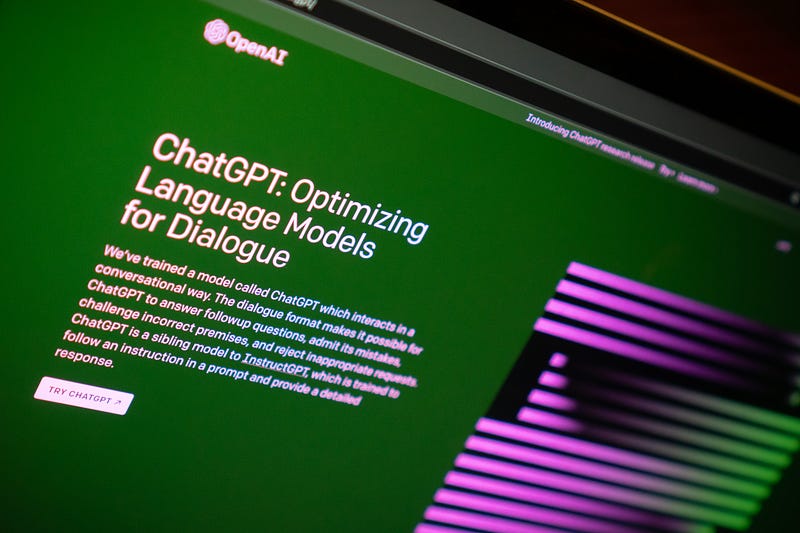
There is a lot of discussion currently about the way AI programs may impact college assessments, along with almost every other aspect of human life. Will students use the programs to write their assignments and so open a new front in the battle against cheating to get a better grade? As an academic, I’d be happier if AI had first developed a program to mark their assignments rather than write them.
For the moment, AI is still in its first iterations and has its flaws. Yesterday, my son asked ChatGPT “Who is Dr. Peter J. Ling?” And the program answered:
Dr. Peter J. Ling was a historian and scholar of American history, with a particular focus on the civil rights movement and African American history. He was born in the United Kingdom in 1955 and earned his Ph.D. from the University of Birmingham.
Dr. Ling was a prolific author, writing several books on the civil rights movement, including “Martin Luther King Jr.,” “The Civil Rights Movement: An Eyewitness History,” and “Jim Crow America: A Documentary History.” He also edited several collections of primary source documents related to civil rights.
In addition to his scholarly work, Dr. Ling was a professor of American history at the University of Nottingham in the UK. He was also a Fellow of the Royal Historical Society and served as a trustee of the American Civil Rights Institute.
Dr. Ling passed away in 2016, but his contributions to the study of American history and the civil rights movement continue to be widely recognized and appreciated.
Wow! As Mark Twain put it, ‘reports of my death have been greatly exaggerated.’
Overall, it is surprising how little of this description is true. I was not born in 1955. I did not earn my Ph.D. from the University of Birmingham. I was professor of American Studies not history, and I am not a trustee of the American Civil Rights Institute. By my reckoning, just two details here are factually accurate. While I have indeed written a biography of Martin Luther King Jr., the other two volumes listed are not my work. So where is the program getting its information from?
Clearly, ChatGPT is an evolving program at the moment, and it warns users that it will not always give “the right answer.” When my son informed it that it had the wrong birth year, it conceded the point but doubled-down on the death, declaring that I died on July 17, 2016; thus adding specificity. The whole incident has amused friends and relatives, and given me cause for philosophical reflection. My wife checked her 2016 diary and the only item noted there was collecting some printed photographs. Otherwise, we had a quiet day.
Maybe I should take this as a signal that I have indeed been offered a fresh start,; that I am a unique case of reincarnation into the same body? On the other hand, I recall the character of Doctor Daneeka in Joseph Heller’s Catch-22 who is officially declared dead by the US military and cannot get the administrators to change that. His pay stops; his wife is informed; she receives an insurance pay-out, and when Daneeka writes to her, the military advise her that the letter is a forgery written by some sadist to torment her. She then ignores his letters and sets out on a new life.
Equally disturbing as a fictional scenario, if Artificial Intelligence does reach a point when, like many a government bureaucracy, it is confident that its own judgment is superior to those who query it, it may instruct its agents to rectify inconsistencies. If it says you are dead, then they will ensure that this is so.
However, I have checked, and as of this morning, I am still breathing.


