avatarNadine

Free AI web copilot to create summaries, insights and extended knowledge, download it at here

2789

Abstract

not all formulas and memorization — math can be art. Statistics are certainly used as an artful form of deception in a lot of news outlets and even published academic articles.</p><p id="3078">The best defense against this is to learn about it, but math anxiety can hold people back from taking that first step. Many people had math anxiety as kids and try to avoid anything math-related as adults.</p><p id="a8f4">Let’s dive into the developmental processes behind math anxiety for a minute:</p><h2 id="c8ad">Math Anxiety in Children</h2><p id="fdc1">Math anxiety is related to <a href="https://www.jstor.org/stable/749455?seq=1#metadata_info_tab_contents">poorer math performance</a>, and it’s been documented in children as young as <a href="https://www.ncbi.nlm.nih.gov/pmc/articles/PMC3369194/">2nd grade</a>.</p><p id="860a">These facts tell us two key things:</p><p id="c79f">1. <b>Math anxiety emerges early in life </b>(meaning there may be ways for early interventions in elementary school to prevent it)</p><p id="aa95">2. <b>It harms people’s ability to do math </b>(which can entail negative effects throughout their schooling and career)</p><p id="c0e7">In fact, children who have higher math anxiety in 2nd grade exhibit <a href="https://www.ncbi.nlm.nih.gov/pmc/articles/PMC3369194/">worse math performance</a> in 3rd grade. Why does this happen?</p><p id="8d00">Some researchers think that <a href="https://www.tandfonline.com/doi/abs/10.1080/15248372.2012.664593">working memory</a> is at play.</p><figure id="4a1c"><img src="https://cdn-images-1.readmedium.com/v2/resize:fit:800/0*t3ont-pv--l5XN3b"><figcaption>Photo by <a href="https://unsplash.com/@thepaintedsquare?utm_source=medium&amp;utm_medium=referral">Jessica Lewis</a> on <a href="https://unsplash.com?utm_source=medium&amp;utm_medium=referral">Unsplash</a></figcaption></figure><h1 id="d96b">Working Memory and Emotions</h1><p id="37f3">Working memory<b> </b>is a part of your short-term memory that remembers and uses relevant information when you are doing a task.</p><p id="a73b">When solving a math problem, you need to have many pieces of information available in your working memory such as the question you’re solving, the formula, the numbers themselves, etc. If you have math anxiety, it shrinks your working memory — you can’t mentally juggle all of that information at once when anxiety is depleting your working memory capacity.</p><p id="dcc3">There’s also a second theory about math anxiety —perhaps it has <b>more to do with emotions</b> than working memory.</p><p id="4096">“Achievement emotions”, such as frustration, boredom, enjoyment, and anxiety, impact learning processes and test performance. This is known as the “<a href="https://link.springer.com/article/10.1007/s10648-006-9029-9">

Options

control-value theory of achievement emotions</a>”.</p><p id="7c51">It all boils down to what a person contributes their success or failure to — if they contribute success to their efforts and hard work, they will feel positive achievement emotions that encourage them to try again next time. If they contribute their success to luck, they won’t feel those motivating emotions.</p><h1 id="7a27">What can teachers and parents do to help a student with math anxiety?</h1><p id="3b75">Parents and teachers can help children attribute their success to their hard work and effort by <a href="https://www.researchgate.net/publication/6360300_Subtle_Linguistic_Cues_Affect_Children%27s_Motivation">praising their effort rather than their ability</a>. For instance, telling a child, “you’re so good at math” can actually lead them to believe that their abilities are “fixed”.</p><p id="89fb">Implicitly, they start to think — <i>If I’m already good at it, why bother trying? And maybe I’m good at math, but I’m bad at reading. So I must just be bad at that so I won’t try to get better at it.</i></p><p id="8f17">Instead, praise their effort. Say something like, “You did such a good job on that math problem”.</p><p id="1196">The way we speak to children can entail unexpected impacts. The devil is in the details.</p><p id="0867"><b>Teachers and parents can also help </b>ameliorate children’s math anxiety by modeling their own attitudes towards math. Children imitate what they see.</p><p id="24b0">Students of teachers with lower math anxiety are more likely to develop positive self-beliefs about math, and <b>female teachers’ math anxiety <a href="https://www.pnas.org/content/107/5/1860">affects girls’ math achievement</a>.</b></p><p id="2ef8">People’s beliefs about their abilities are powerful — girls who buy into negative gender stereotypes about math <a href="https://www.sciencedaily.com/releases/2015/03/150326162600.htm">do worse</a> on math tests.</p><p id="6f53">You can also provide your child or student with useful <b>problem-solving strategies</b> they can have as a resource when math anxiety swoops in. Having helpful strategies available can <a href="https://cpb-us-w2.wpmucdn.com/voices.uchicago.edu/dist/8/1250/files/2018/07/Ramirez-et-al-2016-MathAnxietyStrategies-1htur11.pdf">lessen math anxiety</a>.</p><p id="3315">If you’re a teacher with math anxiety (I’ll admit I definitely have it!), don’t be too hard on yourself — offer yourself the same compassion you would give a student. Acknowledge your limitations as a teacher, make use of your school’s resources, and talk to colleagues for advice. They might be dealing with the same thing!</p><p id="90db">Math anxiety is very common, and the first step is to talk about it and create awareness.</p></article></body>

Anxious About Math?

Here’s why that happens and what to do
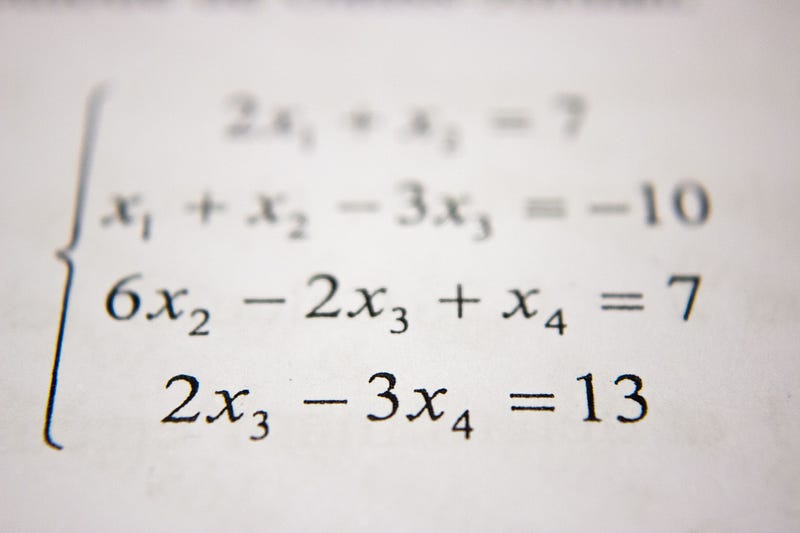
Photo by Antoine Dautry on Unsplash

If this picture sparked some instant anxiety in you, you might be part of the 93% of people who experience a phenomenon known as math anxiety.

Math anxiety is feelings of fear, stress, or apprehension that interfere with your ability to manipulate numbers. It can pop up in any situation that involves numbers, whether you’re in a classroom learning algebra or at a restaurant calculating a tip. People with math anxiety describe it as a mental “block” or a “fog” that clouds their ability to think.

Math anxiety is distinct from trait anxiety, which researchers control for in studies on math anxiety. This simply means that math anxiety has its own unique effect on math performance regardless of baseline anxiety.

A lot of people with math anxiety think they can’t get better at math, and shy away from learning it. But learning about math doesn’t have to be a chore, and it can be hugely beneficial. Here’s a personal example:

I avoided math until it became unavoidable when I had to take statistics in undergrad and study for the GRE to get into graduate school. A Professor recommended the book How To Lie With Statistics — it’s an easy to read and humorous explanation of how easy it is to manipulate statistics and get people to believe a certain angle. It became a gateway to my fascination with statistics.

Learning about statistics made me a more critical consumer of information. I’m better-equipped to check sources and question the methodology behind conclusions drawn in popular news articles.

If you’re an adult who tends to think, ‘I’m just bad at math — it’s just not a strong point for me’, know that it’s a skill like any other you can get better at with practice. And it doesn’t have to be boring. It’s not all formulas and memorization — math can be art. Statistics are certainly used as an artful form of deception in a lot of news outlets and even published academic articles.

The best defense against this is to learn about it, but math anxiety can hold people back from taking that first step. Many people had math anxiety as kids and try to avoid anything math-related as adults.

Let’s dive into the developmental processes behind math anxiety for a minute:

Math Anxiety in Children

Math anxiety is related to poorer math performance, and it’s been documented in children as young as 2nd grade.

These facts tell us two key things:

1. Math anxiety emerges early in life (meaning there may be ways for early interventions in elementary school to prevent it)

2. It harms people’s ability to do math (which can entail negative effects throughout their schooling and career)

In fact, children who have higher math anxiety in 2nd grade exhibit worse math performance in 3rd grade. Why does this happen?

Some researchers think that working memory is at play.
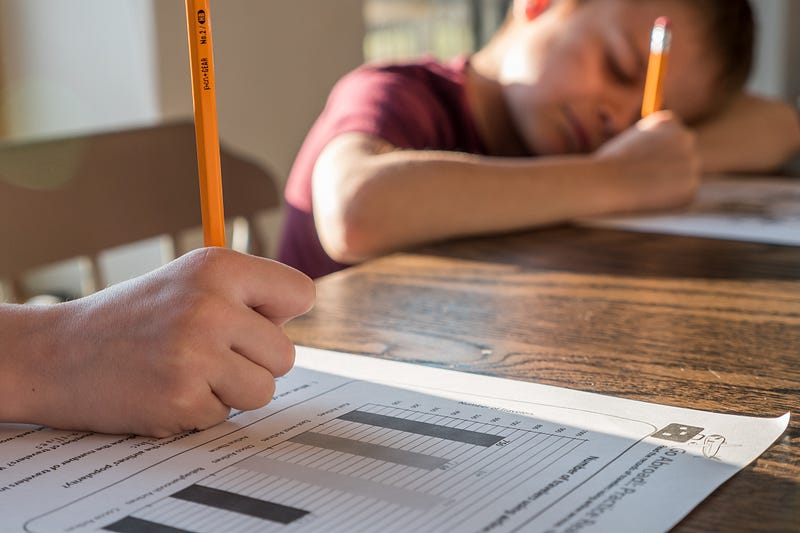
Photo by Jessica Lewis on Unsplash

Working Memory and Emotions

Working memory is a part of your short-term memory that remembers and uses relevant information when you are doing a task.

When solving a math problem, you need to have many pieces of information available in your working memory such as the question you’re solving, the formula, the numbers themselves, etc. If you have math anxiety, it shrinks your working memory — you can’t mentally juggle all of that information at once when anxiety is depleting your working memory capacity.

There’s also a second theory about math anxiety —perhaps it has more to do with emotions than working memory.

“Achievement emotions”, such as frustration, boredom, enjoyment, and anxiety, impact learning processes and test performance. This is known as the “control-value theory of achievement emotions”.

It all boils down to what a person contributes their success or failure to — if they contribute success to their efforts and hard work, they will feel positive achievement emotions that encourage them to try again next time. If they contribute their success to luck, they won’t feel those motivating emotions.

What can teachers and parents do to help a student with math anxiety?

Parents and teachers can help children attribute their success to their hard work and effort by praising their effort rather than their ability. For instance, telling a child, “you’re so good at math” can actually lead them to believe that their abilities are “fixed”.

Implicitly, they start to think — If I’m already good at it, why bother trying? And maybe I’m good at math, but I’m bad at reading. So I must just be bad at that so I won’t try to get better at it.

Instead, praise their effort. Say something like, “You did such a good job on that math problem”.

The way we speak to children can entail unexpected impacts. The devil is in the details.

Teachers and parents can also help ameliorate children’s math anxiety by modeling their own attitudes towards math. Children imitate what they see.

Students of teachers with lower math anxiety are more likely to develop positive self-beliefs about math, and female teachers’ math anxiety affects girls’ math achievement.

People’s beliefs about their abilities are powerful — girls who buy into negative gender stereotypes about math do worse on math tests.

You can also provide your child or student with useful problem-solving strategies they can have as a resource when math anxiety swoops in. Having helpful strategies available can lessen math anxiety.

If you’re a teacher with math anxiety (I’ll admit I definitely have it!), don’t be too hard on yourself — offer yourself the same compassion you would give a student. Acknowledge your limitations as a teacher, make use of your school’s resources, and talk to colleagues for advice. They might be dealing with the same thing!

Math anxiety is very common, and the first step is to talk about it and create awareness.

Math
Learning
Education
Psychology
Teaching
Recommended from ReadMedium