
Anxiety: How I Learned To Understand It Better
About awareness, acceptance and self-care
Anxiety and panic attacks are not new for me, but I just recently started to understand them for what they really are. That I’m not “just” overly sensitive, too much in my head, or unwilling to relax, like others sometimes wanted me to believe. It’s been a long way from recognition to acceptance and finally, seeking professional help.
I am writing this article to vent how I feel and what I have learned so far. Because in my personal life, I do not dare to open up to many people about depression and anxiety — to avoid getting unhelpful advice (“You just have to think positive”) or being received as a spoil sport. Perhaps you feel me? So here it comes, a little journey into my world of anxiety.
1. I learned that anxiety is an actual disorder
Everybody feels scared or fearful from time to time. But an anxiety disorder is a completely different story. I did not just have to “woman up” or “get over it” — which proved to be a battle I couldn’t win anyway. Today I know that anxiety shows in certain symptoms. The first doctor who noticed them and gave me a diagnosis (which I didn’t want to hear then) was my GP.
Anxiety symptoms
Anxious people like me constantly and excessively ponder, worry and fret about everyday situations and tiny tasks. We sleep badly, have trouble to concentrate, are very nervous and irritable. Our mind is never quiet and always in high alert mode. This might come across as negative, pessimistic, and, well, overly anxious to outsiders.
Anxious people want their mind desperately to just STFU — which of course doesn’t just happen on its own.
The cherry on the cake: All those anxious thoughts do not only cause stress for the brain, but also for the body. My physical symptoms are an oversensitive nervous system (sensitivity to light, sound, smell, touch), stomach aches and loss of appetite, tinnitus, shaking, constant headaches and so forth. Derealization is especially scary — you are zooming out of life and feel like you are not really existing.
Panic attacks — when anxiety is peaking
I can conform that anxious people are prone to having panic attacks. Those manifest as sudden and intense feelings of fear, terror and doom, often with a potpourri of strong physical reactions. In my case it’s like that:
- dizziness and tunnel-like vision
- difficulties to breathe and hyperventilation
- tinnitus getting louder, blocked ears
- racing heart and nausea
- chest pain with a feeling you might die.
What might sound exaggerated to healthy people, feels very threatening and real for me. Panic attacks can hit you out of the blue and may happen in every situation, during day and night.
Not surprisingly, anxiety disorders lead to behavioral changes in form of self-isolation and avoidance tendency. Patients are fearing the fear and the loss of control in public situations. On bad days, I thought that others would regard me as “pessimistic and complicated spoil-sport” and I stopped meeting people. Thus, anxiety disorders are creating distorted self-perceptions we tend to believe.
If you want to read more about anxiety disorder types and symptoms, you could start with Medical News Today, the Mayo Clinic or Joshua Fletcher’s books Anxiety: Panicking about Panic and Untangle your Anxiety. Of course, reading cannot substitute professional medical advice.
2. I learned that I am not alone
Suffering from psychological disorders like depression, anxiety or burnout is still stigmatized in our society. No matter how educated we already are. So I found it comforting to know that I am not alone in this, and that my condition affects others as well. To learn about anxiety numbers has helped me to normalize my condition and later, to seek help.
Anxiety in numbers
According to the World Health Organization, 3.6% of the global population suffer from anxiety disorders. In first world countries (with better access to qualified and experienced doctors) the ratios are expectedly higher.
For example, the prevalence of anxiety in Europe is ranging from 7,1% in Ireland to 8,7% in Portugal (Statista, 2019). Even higher numbers exist in the USA: According to a study, 19.1% of American adults have been diagnosed with general anxiety disorder (GAD) or specific anxiety disorders (e.g. agoraphobia, social phobia, post-traumatic stress disorder), whereas mild, medium and severe cases were counted together.
All studies, no matter from which geographical region, show that females are more susceptible to anxiety than males. In some countries, twice as many women are diagnosed with anxiety disorders as men.
Anxiety and depression
Gender seems to play an important role, but comorbidity is another huge factor. Depression and anxiety are two psychiatric illnesses that are closely connected: A world wide study revealed that every second person who suffers from major depression will also experience anxiety in his or her medical history (Kalin, 2020). This is also very true in my case.
However, these numbers do not take into consideration unreported cases or recent increases of anxiety disorders after the beginning of the COVID19 pandemic. So probably we are talking about a lot more people. What has definitely been true for me is that (Long) COVID contributed to developing depression and anxiety — besides trauma and major life changes.
3. I learned what my external triggers are
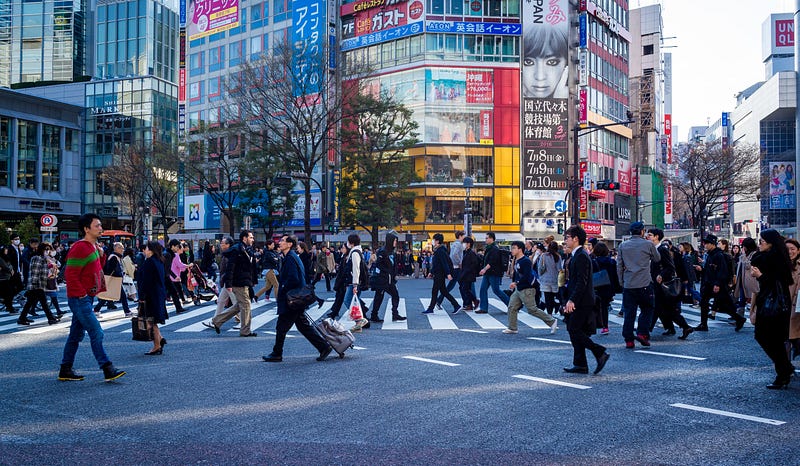
Everybody suffering from anxiety probably has different personal triggers. Mine are crowds of people, narrow or too wide spaces, and noise. In fact everything that goes along with bustling city life.
Unfortunately, I’m not living in the quaint countryside and have to face a busy life, which repeatedly confronts me with my triggers.
If I am already having a challenging day and find myself in the following situations, my chest starts to clench, breath is getting shallow and I start to hyperventilate. Everybody seems getting too close to me. So I panic and either try to hide in a calm corner, or to bolt and leave.
If the situation persists and I cannot follow the fight-or-flight reflex or calm myself down, tunnel vision is kicking in and I might feel like fainting. Worst case scenario is a complete freeze, which is explained very well in this article. The following scenarios are especially triggering for me:
Supermarkets
Long and often narrow alleys, where people with their shopping carts try to navigate and sometimes bump into each other. Super bright lights, surround sound that is obviously used to create a pleasant atmosphere (not working for me), too much color and too many choices in the shelves. Visiting the supermarket can be very stressful, and I try to avoid peak hours (like evenings) or big super stores.
Busy cafés and restaurants
Hustling and bustling, lots of noise from people chatting and using cutlery in the loudest way possible. Accompanied by music blaring out of the speakers. When lots of tables have been crammed into the room, this is maximizing business profit — but unfortunately, my anxiety as well. That’s why I try to visit restaurants only on weekdays and cafés before lunch hours. I am a foodie and like to try new exotic delicacies, but I am not super keen to eat in public. Never have been, since I have successfully overcome anorexia / bulimia in my early twenties.
Holidays with family and friends
Yes, that sounds like good times and there can be lots of nice moments. But again, family gatherings and hanging out with a group of friends can be very noisy, as everybody is super excited and tries to catch up. Quite often, I feel like running away because small talk drains my energy, but intense personal talk as well, especially about sensitive topics like having kids or job prospects. And when uncle X or friend Z are moving closer and closer, my personal space feels violated. I need a break to gather strength (and courage) again. To find an excuse to leave can be a tricky one for me.
4. I learned to recognize certain behavior as manifestation of anxiety
How I behave seems to be completely up to me, but some days my mind still runs wild and I makes myself feel overwhelmed. Hellooo, anxiety. Maybe I actually am a highly sensitive person, reacting strongly to stimuli that are normal for others, or it is low self-esteem. Don’t believe everything you think, a wise person once said. I try live accordingly, especially if I notice that I subconsciously do the following (again):
Overthinking
Deciding about a very small detail can cause an avalanche of thoughts — what are the consequences? What’s the bigger picture? How might people react about said detail and everything that’s coming after? Perfectionists and people with an organization fetish, you probably feel me. Too much planning and mulling things over, however, sends my nervous system in overdrive and causes restless nights. I am trying meditation to give me breaks from this overthinking frenzy.
Catastrophizing
This one is clearly related to overthinking. Do you recall your doctor ever recommending not to read your new medication’s leaflet about possible side effects? An advice to avoid getting scared and thinking too much about the worst that could happen. Well I don’t need new pills to catastrophize about absolutely everything: Planned surgeries, life plans, abandonment, personal loss… As soon as I notice this happening, I try to put the situation into perspective — for example, by talking it through with a friend.
Constantly feeling judged & Self-Criticism
Even if nobody is giving a sh*t about me, I assume that I am watched and assessed. If a go surfing at a lonely spot and others join, are they judging how good (or bad) I am doing? If I meet friends and have a bad day, i.e. cannot spread good vibes only, are they thinking that I am a weirdo? And what about that last phone call with my parents — weren’t they hinting to be disappointed? The list about mental people-pleasing goes on an on. And all I want is to be enough, and not seeking constant validation.
5. I learned that I needed professional help
About a year ago, after having waited way too long, I started treatment. The first step has been taking an antidepressant of the SSRI class. The second one was beginning psychotherapy. And yes, both works!
Antidepressants
Since my GP first recommended taking the medication, it took me a whole year to really get to this point. I was super-scared of possible side effects, and gathered lots of information to dissolve my doubts. This involved visiting a psychiatrist and getting advice from other doctors as well — all confirmed the assumed depression / anxiety diagnosis and the need to take an antidepressant. Before I started, I got a new wearable (the OURA ring) which is monitoring my body functions — as I was so scared that the pills would pathologially alter my heart rhythm and stuff like that.
Yes, my anxiety is really running deep and prevented me from taking an antidepressant for too long — it has been a vicious circle.
Today I am really grateful for having this medication, because I feel more stable and like myself again. Not everything so disturbing anymore and causes feelings of doom, sadness, frustration and anxiety. I don’t know for how long I am going to take the antidepressants, but future will tell.
Psychotherapy
I was super keen to start, but in my country (and maybe in yours too) patients sometimes have to wait a year or longer to find a therapist — the demand is just too high. Indeed it took me 9 months to find my female psychotherapist and she is amazing, and metaphorically speaking, I had to “kiss” some frogs before I found my therapy princess.
Before finding my personal jackpot, I had trial interviews with three different male therapists. One told me he had no space for new patients. The second one was 80+ years old, smoked heavily, and worked from a very dirty and messy home, which prevented me from feeling comfortable. And the third one, very young, was verbally abusive — in a way that my new therapist found so shocking, that she almost notified the authorities. We did not, however, because at this point, I just felt super-exhausted and overwhelmed by depression. And anxiety.
I am happy with my therapist now, to be in good hands. She helps me to understand what’s going on, what my personal triggers are, and even how my childhood and family history have contributed to everything.
Her specialty is behavioral therapy and so far I have gained a better understanding of mental health, the connection of psyche and soma (body) as well as approaches to keep my issues at bay. While depressive episodes still occur, they don’t happen as frequently any more and don’t feel as crushing, long and overpowering like before.
My anxiety disorder, however, shows up regularly. Maybe that’s because it is very prone to certain triggers that I cannot just plainly avoid. I am already scared to lose my psychotherapist at some point. Which just shows again — there’s still a long way to go. ;-)


