avatarPropTech@ecyY

Free AI web copilot to create summaries, insights and extended knowledge, download it at here

2725

Abstract

atility:</h2><p id="8fb1">Persisting geopolitical conflicts, including the Russia-Ukraine war, the resurgence of conflicts in the Middle East, and tensions in the South China Sea, contribute to oil price volatility. The rivalry between OPEC+ and non-OPEC+ countries for control over oil prices intensifies through production adjustments and market operations. The article emphasizes the significant impact of wars and conflicts on oil prices and their subsequent influence on inflation.</p><p id="bc89"><i>The United States ranked the World’s Leading Oil Exporter</i></p><p id="2b43">Since 2014, the United States has experienced a rapid surge in oil exports, becoming the world’s top oil-exporting nation. In the 2022 global ranking of oil exports, the United States holds the top position with a daily export volume of 17.77 million barrels, surpassing Saudi Arabia by 40% (whose volume is 12.14 million barrels). Furthermore, U.S. oil exports continued to rise in 2023 (Figure 4).</p><figure id="aa38"><img src="https://cdn-images-1.readmedium.com/v2/resize:fit:800/0*98obq-n6ksS68bpF.jpg"><figcaption>Figure 4. Oil Productions by Country 2022. Source: Visual Capitalist (2023)</figcaption></figure><p id="1670">However, before 2014, the United States was primarily an oil-importing nation. The past decade has witnessed a showdown between the two major camps of oil-exporting nations. Since the United States became a major oil exporter, the oil revenues of OPEC+ nations, including Russia, have been impacted. Both sides understand that surging oil prices inevitably lead to rapid inflation. Consequently, control over oil prices equates to dominance in the world economy. Therefore, the ongoing oil battles between the two camps involve not only production adjustments by OPEC+ nations and non-OPEC+ nations but also market operations such as investment in long and short positions. Since the most effective method to drive up oil prices is through warfare and conflict, recent series of wars and conflicts in different regions have had a staggering impact on oil prices.

<i>Top Ten Oil Exporting Nations in 2023:</i></p><p id="2d9c">In 2023, the United States maintained its position as the world’s leading oil exporter, with an average export volume reaching 13 million barrels per day in the first ten months. This volume is 30% higher than the second-ranked Russia (data available until August). Canada and China rank fourth and fifth, respectively (Figure 5).</p><figure id="d319"><img src="https://cdn-images-1.readmedium.com/v2/resize:fit:800/1*VTB5ricSOt-qX1yL-z8MZA.png"><figcaption>Figure 5. Top Ten Crude Oil Productions by Country in 2023 (updated in various months). Source: Trading Economics (2023)</figc

Options

aption></figure><p id="373e">The graph (Figure 6) below illustrates the oil export volumes of the top five exporting nations over the past decade. The U.S. (blue line) witnessed a sharp increase in oil exports since 2008, surpassing Saudi Arabia and Russia around 2014. Since then, the U.S. has consistently been the world’s top oil exporter, even during the initial drop in global oil demand at the onset of the pandemic. While global exports decreased initially, they rebounded post-pandemic. OPEC+ nations attempted production cuts to maintain high oil prices. However, when oil-exporting nations are no longer a cartel with monopoly power, reducing production to sustain prices becomes increasingly challenging.</p><figure id="15c1"><img src="https://cdn-images-1.readmedium.com/v2/resize:fit:800/1*uJDUIDLsHlpqKXUvSXFDag.png"><figcaption>Figure 6. Top 5 Oil Producers’ oil productions series from 2003 to 2022. Source: Our World in Data (2023)</figcaption></figure><p id="3e49"><i>Oil Prices Surge During Conflicts:</i></p><p id="0dcd">The graph (Figure 7) illustrates the impact of the COVID-19 outbreak in early 2020, causing a sharp drop in oil prices to below 20 per barrel. Prices later recovered, especially after Russia’s invasion of Ukraine in February 2022, pushing prices to around 120 per barrel. Subsequently, with Europe implementing price controls, oil prices in 2023 had already fallen to nearly 60 per barrel. However, the conflict in the Middle East drove prices back up to around 90 per barrel as of January 4, 2024.</p><figure id="6913"><img src="https://cdn-images-1.readmedium.com/v2/resize:fit:800/1*nkMFwaHWkbGtJh2a7hntGg.png"><figcaption>Figure 7. Crude Oil Market Prices. Source: Trading Economics (2023)</figcaption></figure><p id="a4b5">Despite multiple production cuts by OPEC+ nations, they have failed to prevent the decline in oil prices, reflecting a global slowdown in demand. Oil prices tend to surge only during large scale geopolitical conflicts, suggesting the possibility of more regional conflicts or even wars in different areas in 2024. The current conflicts may also persist and extend to new conflicts further.</p><h2 id="7d4d">Conclusion:</h2><p id="ab17">As oil prices recede, global inflation is gradually decreasing due to a combination of interest rate hikes curbing consumer demand and non-OPEC+ countries increasing oil production. However, the uncertainty persists due to ongoing geopolitical conflicts, and the forecast for 2024 suggests a fluctuating but overall downward trend in inflation. Understanding the complex dynamics of these three causes is crucial for policymakers and economists to navigate the challenges and uncertainties ahead.</p></article></body>

Anticipating an Oil Price Battle in 2024: The Dynamics of Oil Price Control and its Impact on Inflation
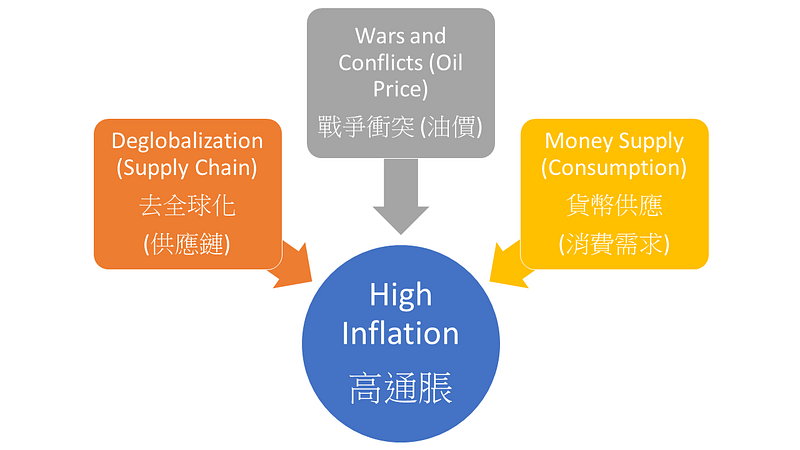
Figure 1. Three main causes of inflation. source: the author ecyY

This article examines the trends of inflation in 2024, focusing on the three primary causes: the reduction in the U.S. M2 money supply, the slow progress of reshaping global trade through de-globalization and friend-shoring, and the persistent impact of geopolitical conflicts on oil prices (Figure 1). The analysis sheds light on the complex interplay of these factors and their potential implications for the global economy.

The global economic slowdown over the past two years has been attributed to various countries raising interest rates to curb inflation. While interest rate hikes aim to control inflation, their effectiveness has been limited in suppressing demand. Due to the emergence of new factors on supply side contributing to high inflation levels. Let’s examine one by one.

Reduced U.S. M2 Money Supply:

Following the outbreak of the pandemic, the U.S. M2 money supply surged from $15.4 trillion in January 2020 to $21.7 trillion in July 2022, a 41% increase (Figure 2). However, rapid interest rate hikes subsequently led to a decrease in the M2 money supply, reaching $20.8 trillion in November 2023, indicating a 4% decline (Figure 3). This reduction, breaking a century-long record, suggests a decline in demand and potential implications for inflation.
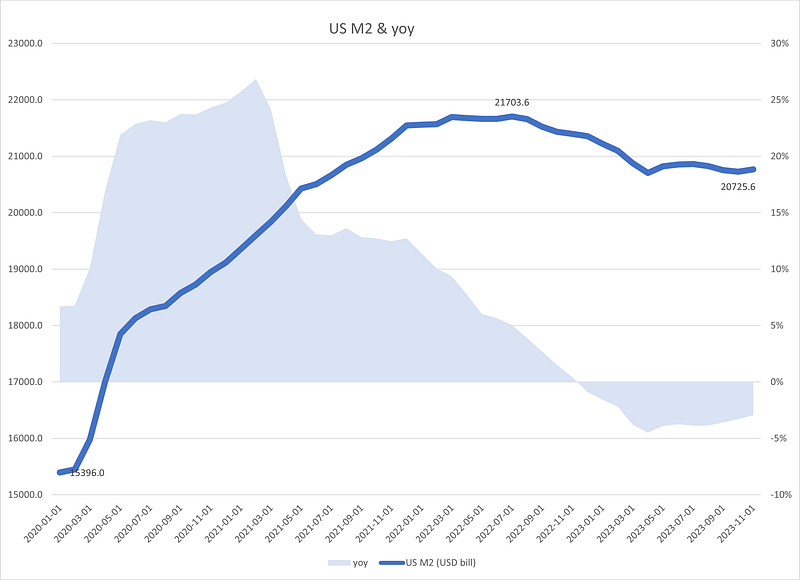
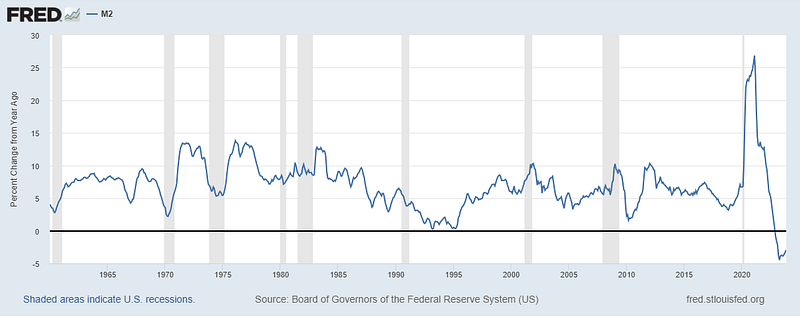
Figure 2. US M2 Money Supply. Source of data: FRED (2023)
Figure 3. US M2 year-on-year change. Source: FRED (2023)

Reshaping Global Trade:

The slow progress of de-globalization and friend-shoring, as highlighted in the Harvard Business Review’s (2023) article titled “The Radical Reshaping of Global Trade,” contributes to supply chain disruptions. The shift towards a fragmented and non-systematic supply chain poses challenges for businesses, subject to geopolitical tensions and disruptions by countries controlling supply chains. While this factor impacts production costs, its influence on inflation is relatively mild compared to the other two causes.

Geopolitical Conflicts and Oil Price Volatility:

Persisting geopolitical conflicts, including the Russia-Ukraine war, the resurgence of conflicts in the Middle East, and tensions in the South China Sea, contribute to oil price volatility. The rivalry between OPEC+ and non-OPEC+ countries for control over oil prices intensifies through production adjustments and market operations. The article emphasizes the significant impact of wars and conflicts on oil prices and their subsequent influence on inflation.

The United States ranked the World’s Leading Oil Exporter

Since 2014, the United States has experienced a rapid surge in oil exports, becoming the world’s top oil-exporting nation. In the 2022 global ranking of oil exports, the United States holds the top position with a daily export volume of 17.77 million barrels, surpassing Saudi Arabia by 40% (whose volume is 12.14 million barrels). Furthermore, U.S. oil exports continued to rise in 2023 (Figure 4).
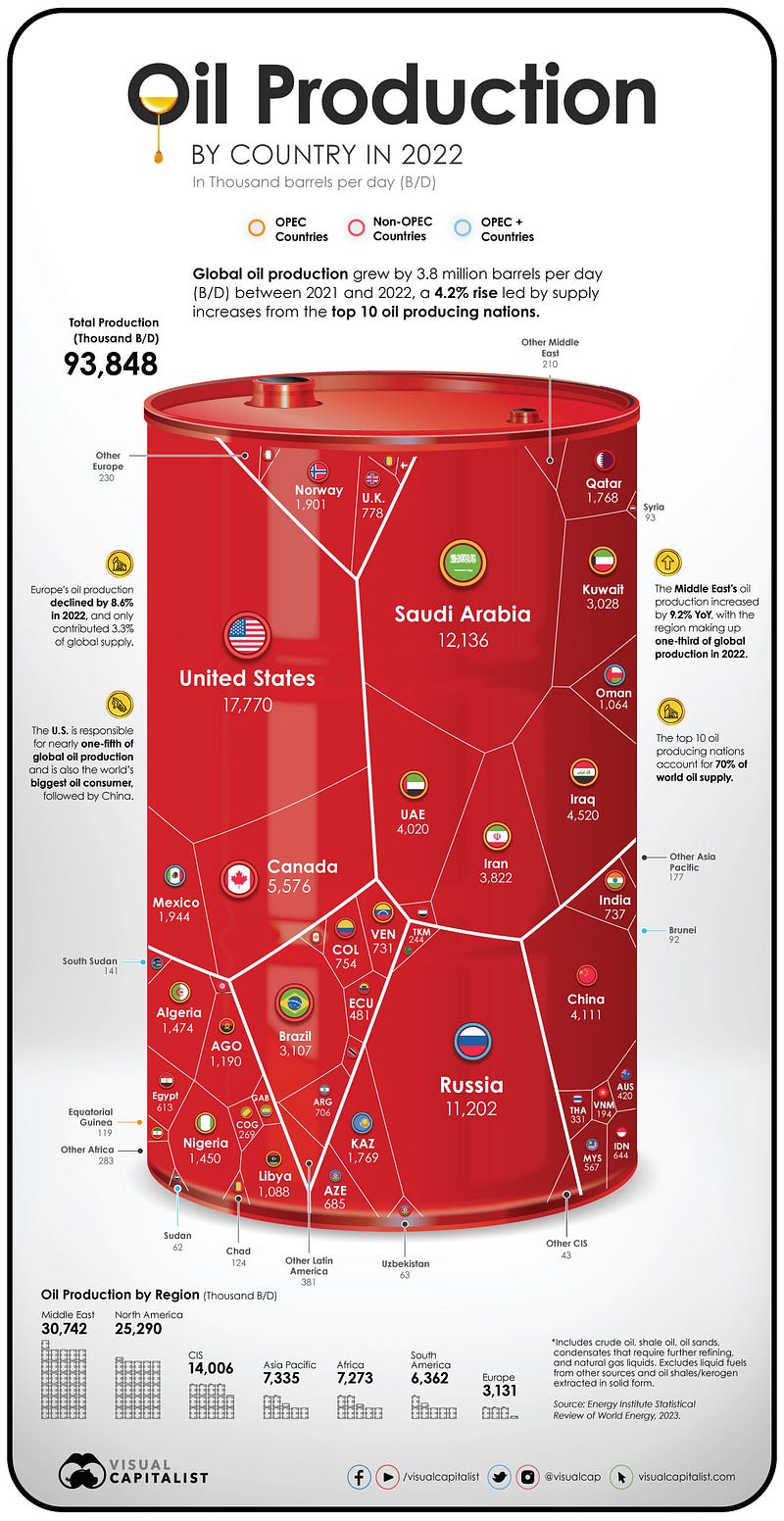
Figure 4. Oil Productions by Country 2022. Source: Visual Capitalist (2023)

However, before 2014, the United States was primarily an oil-importing nation. The past decade has witnessed a showdown between the two major camps of oil-exporting nations. Since the United States became a major oil exporter, the oil revenues of OPEC+ nations, including Russia, have been impacted. Both sides understand that surging oil prices inevitably lead to rapid inflation. Consequently, control over oil prices equates to dominance in the world economy. Therefore, the ongoing oil battles between the two camps involve not only production adjustments by OPEC+ nations and non-OPEC+ nations but also market operations such as investment in long and short positions. Since the most effective method to drive up oil prices is through warfare and conflict, recent series of wars and conflicts in different regions have had a staggering impact on oil prices. Top Ten Oil Exporting Nations in 2023:

In 2023, the United States maintained its position as the world’s leading oil exporter, with an average export volume reaching 13 million barrels per day in the first ten months. This volume is 30% higher than the second-ranked Russia (data available until August). Canada and China rank fourth and fifth, respectively (Figure 5).
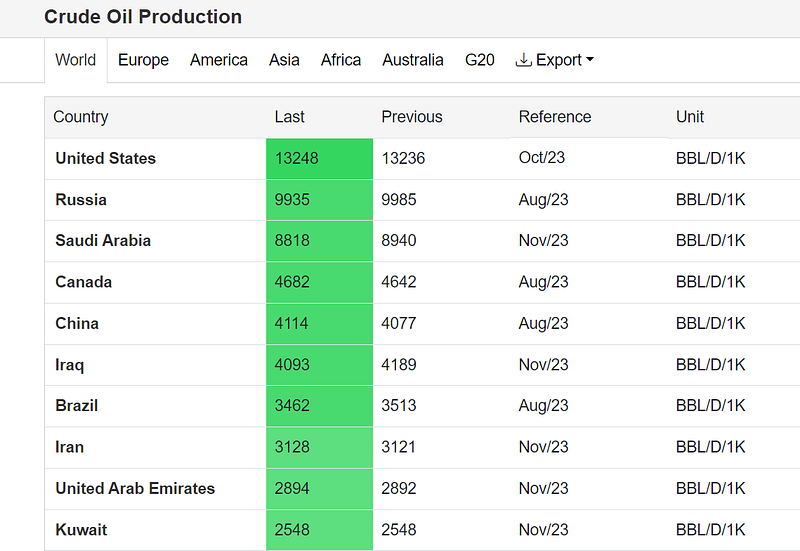
Figure 5. Top Ten Crude Oil Productions by Country in 2023 (updated in various months). Source: Trading Economics (2023)

The graph (Figure 6) below illustrates the oil export volumes of the top five exporting nations over the past decade. The U.S. (blue line) witnessed a sharp increase in oil exports since 2008, surpassing Saudi Arabia and Russia around 2014. Since then, the U.S. has consistently been the world’s top oil exporter, even during the initial drop in global oil demand at the onset of the pandemic. While global exports decreased initially, they rebounded post-pandemic. OPEC+ nations attempted production cuts to maintain high oil prices. However, when oil-exporting nations are no longer a cartel with monopoly power, reducing production to sustain prices becomes increasingly challenging.
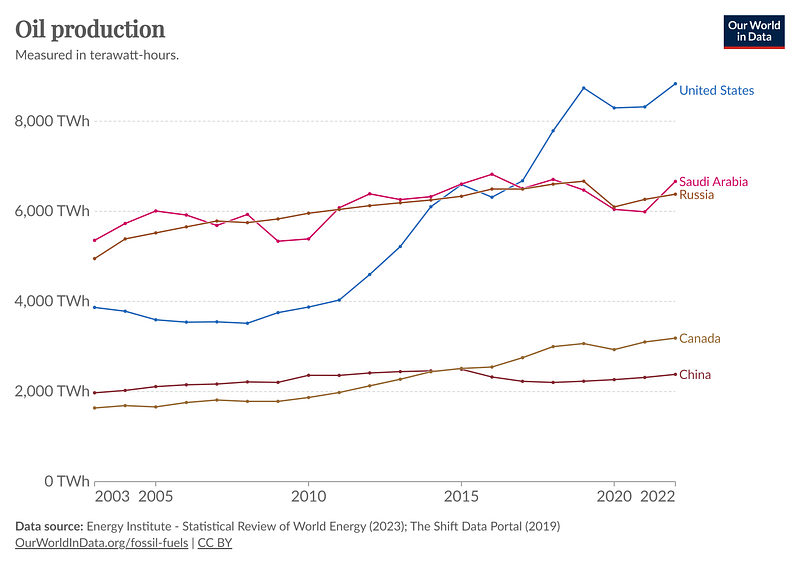
Figure 6. Top 5 Oil Producers’ oil productions series from 2003 to 2022. Source: Our World in Data (2023)

Oil Prices Surge During Conflicts:

The graph (Figure 7) illustrates the impact of the COVID-19 outbreak in early 2020, causing a sharp drop in oil prices to below $20 per barrel. Prices later recovered, especially after Russia’s invasion of Ukraine in February 2022, pushing prices to around $120 per barrel. Subsequently, with Europe implementing price controls, oil prices in 2023 had already fallen to nearly $60 per barrel. However, the conflict in the Middle East drove prices back up to around $90 per barrel as of January 4, 2024.
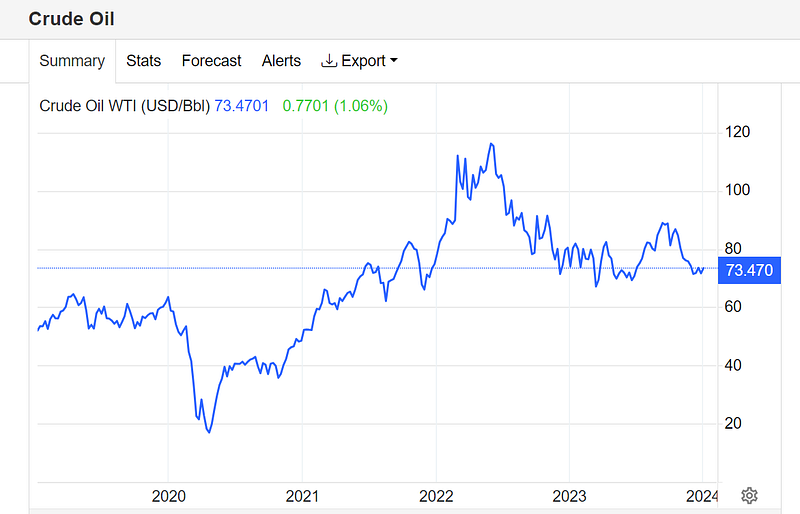
Figure 7. Crude Oil Market Prices. Source: Trading Economics (2023)

Despite multiple production cuts by OPEC+ nations, they have failed to prevent the decline in oil prices, reflecting a global slowdown in demand. Oil prices tend to surge only during large scale geopolitical conflicts, suggesting the possibility of more regional conflicts or even wars in different areas in 2024. The current conflicts may also persist and extend to new conflicts further.

Conclusion:

As oil prices recede, global inflation is gradually decreasing due to a combination of interest rate hikes curbing consumer demand and non-OPEC+ countries increasing oil production. However, the uncertainty persists due to ongoing geopolitical conflicts, and the forecast for 2024 suggests a fluctuating but overall downward trend in inflation. Understanding the complex dynamics of these three causes is crucial for policymakers and economists to navigate the challenges and uncertainties ahead.

Inflation
Money Supply
Friend Shoring
Geopolitical Tensions
Oil Price War
Recommended from ReadMedium