
Anti-Trendy Living
Why slowing down and reducing consumption should be viewed as sensible and meaningful rather than an alternative way of life
When discussing an anti-something there must of course be a something that constitutes the opposing viewpoint that one is “anti-ing”. And in the case of anti-trend that something is fleeting consumer-trends.
A trend is commonly known as an in-thing, something fashionable, a craze, a movement. Trends connote crisp newness, freshness, easy going-ness and innovation. Trends are fun and “happening”.
So, what is an anti-trend? The opposite? An out-thing, something out of fashion? Something unalterable, trivial and indifferent? A non-movement? Something dull, matt and outdated that smells a bit musty and of dusty rooms with stagnant air? And, is an anti-trendy lifestyle hence characterized by triviality and draining repetitiveness?
The short answer: no.
The more elaborate one: anti-trend is connected to durability and to nourishing repetitions. And, an anti-trendy lifestyle is anything but trivial; it is a genuinely satisfying way of being. It may have many different expressions, but it is characterized by authenticity and meaningfulness.
Anti-trend is not the antonym to freshness and innovation; rather, it is a viable alternative to outdated lifestyles characterized by overconsumption.

Engaging in an anti-trendy lifestyle ought to be common or mainstream, as it is the most natural and fulfilling way to live, and importantly (!) the most sustainable way.
Anti-trendy living involves being true to whatever feels natural and right rather than following societal “ought too’s” or lifestyle-trends. And still, anti-trendy living tends to be considered unconventional.
An example of an anti-trendy lifestyle is Slow Living. Slow Living indicates a paradigm shift that was initially emerging in the first decade of the 21st century, and kick-started by the financial crisis in 2007–09 as a reaction hereto. Slow Living involves slowing down everything from cooking and parenting to working and consuming. It encourages a sustainable way of life by raising questions like: how can you sustain and justify a way of life dependent on a constant flow of novelty and mindless consumption (from an economical and an ethical perspective)?
Slow Living is an anti-trendy lifestyle, still current; the present environmental crisis, as well as the looming economic recession initiated by the pandemic is water on the slow mover’s mill. Consuming less and living responsibly and consciously, suddenly doesn’t seem so much like an alternative lifestyle, but rather like a sensible one.

Momentary pleasure is per definition short-lived. Cheap, poorly made products lead to a need for more or constant replacement. As French existentialist philosopher Simone de Beauvoir rightfully points out in her Ethics of Ambiguity: consumption contains destruction. The act of consuming constitutes a counterpoint to what de Beauvoir calls stationary plenitude in-itself, which makes me think of terms like resilience, durability, and independence — all of which are related to leading an anti-trendy life.
Consumption is in other words in opposition to anti-trend. Hence, anti-trendy living involves consuming nothing but food and beverages.
Is anti-trendy living thus the equivalent of leaving society and living off-grid in the woods?
No, of course not. Living an anti-trendy life doesn’t mean that you can never buy anything, must turn your back on society, nor that you cannot enjoy yourself. It involves an altered perspective.

Consumption is linear in the sense that it has a starting and an end-point, whereas usage can be circular and encompass mending, repairing and sharing. Our current capitalist system and societal norms generally don’t encourage long-term usage of things.
There are a manifold of reliable ways to get rid of our stuff that seem to legitimize continuous consumption in the most literal sense of the word: to buy things, extract all the “nutrients” out of them and then offload them at charity shops or at recycling centers, exchange them for consumer-vouchers, or sell them through secondhand-apps. It seems harmless because it doesn’t involve throwing anything away.
Furthermore, through the increasing amount of “minimalist living” and “tidy up” books and TV-programs, we are taught that it is important for our well-being to thin out our belongings. Thus, when we narrow get rid of stuff it is almost like therapy, right?
So, what is the problem? Why label the current “normal” an outdated lifestyle?
Well, at the speed people are currently consuming, there are no recycle-systems in the world that will ever be able to keep up. And even though it might make us feel better to donate things to charity or resell them, it doesn’t change the fact that we are consuming too many short-lived products.
Reducing consumption radically is the only civil way of truly changing the unfortunate societal consumption patterns from which our planet is currently suffering. Not recycling or reusing.
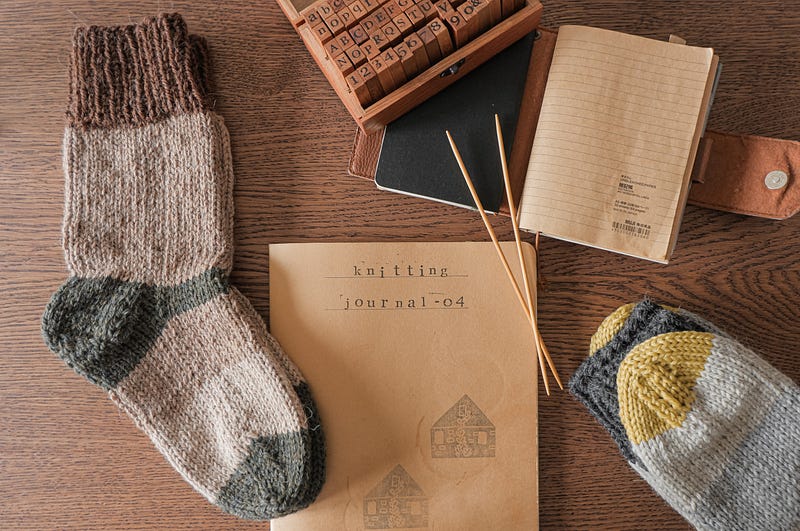
Long-term usage of the things we invest in is a vital part of living an anti-trendy life. It involves mending and caring — and repetitions. Nourishing repetitions form the core in an anti-trendy life. But it can be hard to submit to repetitions, as nourishing as they might be. We are used to the instant payoff of our entertainment-focused, fast-paced culture, so allowing for continuity and permanency to enter our lives can be almost painful.
However, anti-trendy living is not an ode to dishwashing. It is a celebration of ongoing usage of aesthetically nourishing things, of steadily, gradually refining a skill, of slow creation, of momentous rituals with communities and friends, and of finding a stimulating work-life balance that allows for both efficiency and stillness.
And, there seems to be light at the end of the tunnel. The increased detachment from materiality due to way too much smooth screen and smartphone time has given birth to a “hands-on” tendency that praises slowness and tactility, and materializes in a growing desire to engage in anything from knitting to gardening and cooking.
Furthermore, repair cafes are popping up in most larger cities, accommodating the growing need to live more sustainably by stepping out of the “hamster-wheel” of over-consumption. This tendency will most likely grow and become more refined and encourage the cultivation of crafts and upcycling techniques. In the wake hereof, new status symbols will arise.
I imagine the new well-dressed being mended garments and uniquely combined outfits; flashing one’s creativity and sense of aesthetics rather than purchasing power and trend-awareness. This anti-trendy movement confirms the number one rule of thumb when working with cultural tendencies, namely that if there is an overload of something (fleetingness, smoothness, fastness), we start romanticizing its opposite (permanence, texture, slowness).
Let’s connect! https://www.instagram.com/the_immaterialist/


