avatarJewel Allen

Free AI web copilot to create summaries, insights and extended knowledge, download it at here

2396

Abstract

rookeries, bare rock that is strewn with penguin poop colored a pale red due to their diet of shrimp-like krill. During the breeding season, they need rocky ground on which to build their nests.</p><figure id="6c81"><img src="https://cdn-images-1.readmedium.com/v2/resize:fit:800/1*YsbvaI_gJb8djj2PY-TY6w.jpeg"><figcaption>An Adélie penguin on shore, with the MS G Expedition across the bay from it. Photo by the Author.</figcaption></figure><p id="e62a"><b>Gentoo</b></p><p id="f500">On Day 10, we hiked on Danco Island, named after one of the crew members on the 1897 Belgica expedition, and who suffered heart failure from an underlying heart disease. The Belgica attempted to reach the magnetic South Pole. My husband, who happened to be reading “Madhouse at the End of the Earth,” about the Belgica, says they didn’t make it, so instead they sailed to Chile.</p><p id="5c4f">Even with my monopod I was still slipping and sliding. The trail up to a ridge and then the summit had turned icy. The crew advised us to walk next to the trail where there was slushier snow.</p><p id="327d">Danco was in a protected bay, where Gentoo penguins, with their distinguishing red beak, were molting, nesting, and laying eggs. Some of those fledgling chicks sat by a parent. Hundreds of these birds stood in their rookery.</p><figure id="4fb2"><img src="https://cdn-images-1.readmedium.com/v2/resize:fit:800/1*nuV2jh8szUzGsoXU1S_6-A.jpeg"><figcaption>A Gentoo mom shelters her chick under her belly. Photo by the Author.</figcaption></figure><p id="5b3e">The area smelled heavily of fish, or krill in this case, leaving a pink trail on their “highways,” or paths from the rookery to another part of the mountain. Whenever we encountered them, we stood to the side and gave them wide berth. They didn’t pay us much mind as they continued on their travels although a few blinked at us, and then pivoted a different direction.</p><p id="e581">There is constant squawking, especially when a snowy sheathbill, about half the penguins’ size, hopped into a circle. Some of the adult penguins raised their red bills and trumpeted in outrage.</p><p id="0e33">Gentoo penguins, like their other breed counterparts, are regularly preyed upon by leopard seals. South polar skuas, in particular, and giant petrels kill many chicks and eat eggs as well. Giant petrels and orcas will occasionally kill adult penguins. Kel

Options

p gulls and snowy sheathbills also prey on chicks and eggs.</p><p id="9d91"><b>Chinstrap</b></p><figure id="e048"><img src="https://cdn-images-1.readmedium.com/v2/resize:fit:800/1*aNkpvjupwRAfybLBiAJlHQ.jpeg"><figcaption>The Chinstrap penguin gets its name from the thin marking under their beak. Photo by the Author.</figcaption></figure><p id="c90b">Also on the afternoon of Day 10, we went to Orne Harbour for a landing. The crew advised us that it is a steep hike but that on the top, (160 meters) we would find a Chinstrap penguin colony.</p><p id="1d0e">Talk about a motivator.</p><p id="6096">Even with my trusty monopod stick, I was sliding around. It helped that someone cut steps in the snow at the switchback junctures. I didn’t look back; the thought of me traversing a steep hill with the possibility of sliding off would only have given me cold feet.</p><p id="1d52">Eventually, I made it up to the top, which was flat, with telltale pink trails. A few Chinstraps stood on rocks, pretty against the snowy background. I alternated between my mirrorless and my cell phone, getting some fun pictures.</p><figure id="cc90"><img src="https://cdn-images-1.readmedium.com/v2/resize:fit:800/1*i-8PVYjissw4vr4RJvV7Ew.jpeg"><figcaption>A molting Chinstrap penguin. Photo by the Author.</figcaption></figure><p id="f637">Off a little rock ledge, we humans took turns climbing up and taking photos of the main Chinstrap colony. The penguins were noisy, squawking the whole time. Drowned out sometimes by conversation from our group — play-by-play of what the birds were doing or talking loudly about their lives back home.</p><p id="095d">But then the humans got quiet and Antarctica’s adorable ambassadors took center stage.</p><p id="ee11"><i>Thank you for reading!</i></p><p id="a8b8"><i>Check out my book, <a href="https://a.co/d/06wgznf">Antarctica: A Travel Journal</a>, which features my favorite Antarctic photos along with my daily journal entries. Watch my videos on my <a href="https://www.youtube.com/@authorjewelallen/featured">Youtube channel</a>.</i></p><p id="1061"><i>To get access to UNLIMITED stories from all the amazing Medium writers, you can also consider signing up to become a Medium member. If you sign up using <a href="https://medium.com/@jewelallen/membership">my referral link</a>, I’ll receive a small commission (at no extra cost to you).</i></p></article></body>

Antarctica’s Adorable Ambassadors

Penguin photos for your pleasure
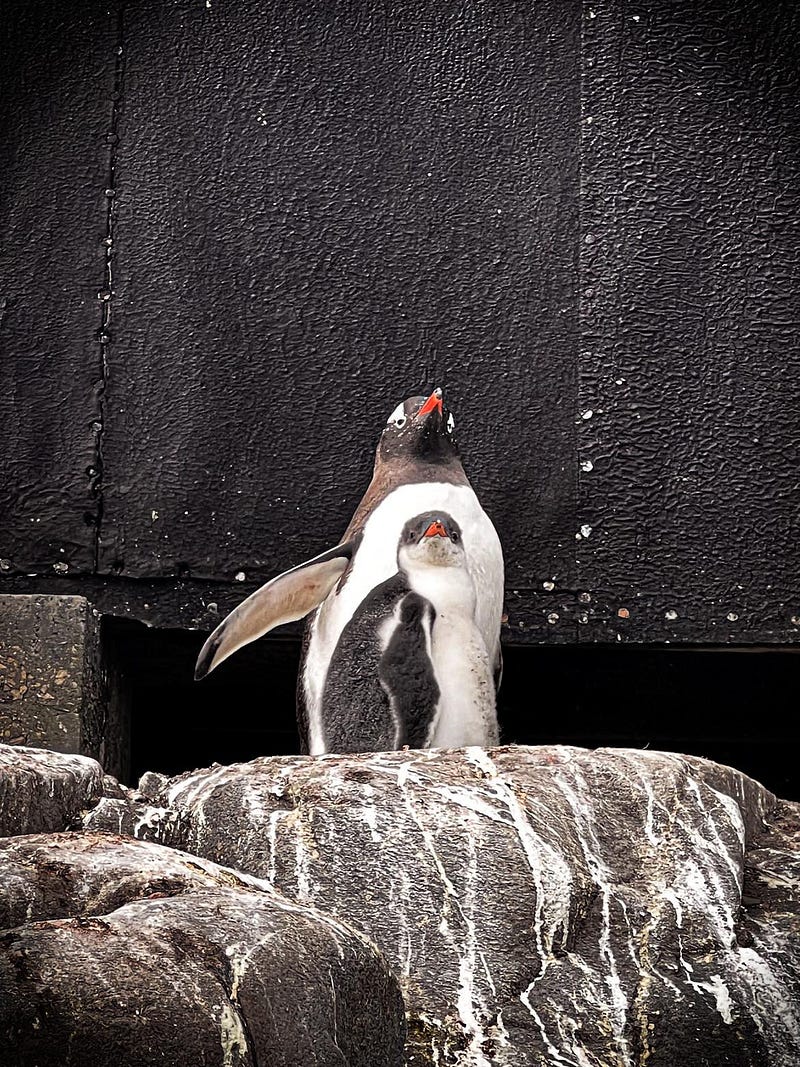
A Gentoo mom and her chick in front of the Penguin Post Office at Port Lockroy. Photo by Author.

Until I went to Antarctica in February 2023, I hadn’t experienced the full effect of a penguin’s cuteness.

I’ve seen them in captivity. I’ve seen them waddle like no one’s business. And when they glide gracefully underwater, I almost forget that they’re a flightless bird.

But seeing them up close below the Antarctic circle? They’re something else.

Supposedly, some parts of Antarctica play host to the biggest breed of penguins, the Emperors (think “Happy Feet”), but we didn’t see them on this route. They live and breed in sections too remote for us to travel to.

But not to worry! We certainly saw our fair share of penguins, starting, first, with the…

Adélie
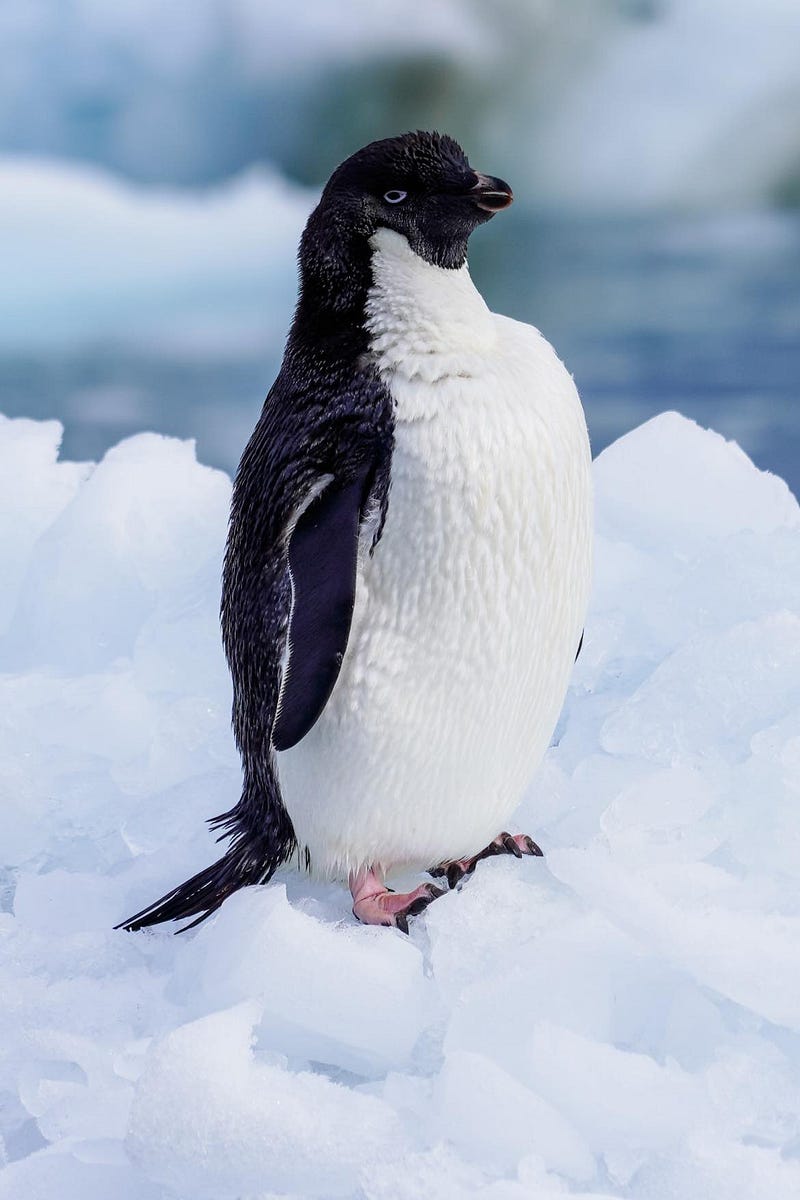
An Adélie is characterized by a completely dark head with a white-ringed eye. Photo by Author.
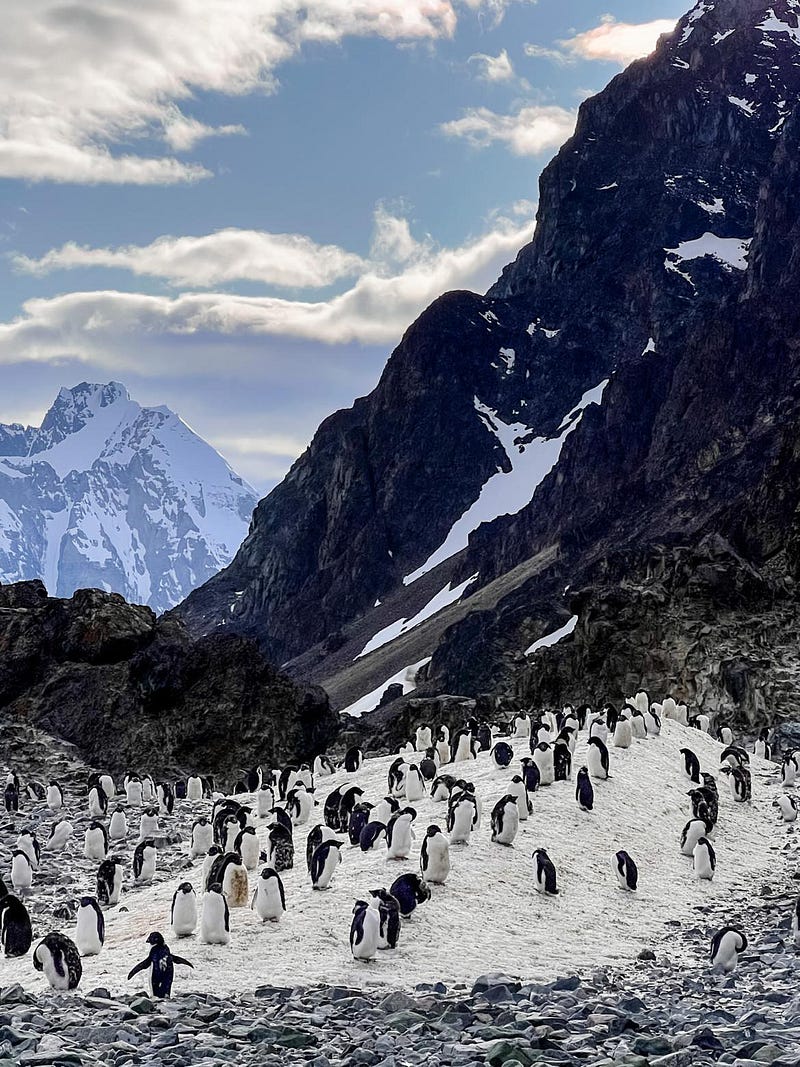
An Adélie rookery nestled in a protected valley. Photo by the Author.

At our first Zodiac boat landing, we went to Bongrain Point at Porquois Pas Island. It has a mostly rocky shore with a wide swath of pebbles designated as our trail, and how close we can get to the Adelie penguins.

I brought my monopod walking stick and it came in handy. I used it for shots with my new Sony ZV-E10 mirrorless camera and 200 mm telephoto lens. I also took a lot of shots with my iPhone.

All the penguin breeds we saw, including the Adélies, are molting — shedding old growth to make way for new, which our crew described as a highly uncomfortable process. We were asked to stay quiet so as not to disturb the birds…and the humans, who are just enjoying the quiet of such a remote and unique part of the world.

These penguins live in rookeries, bare rock that is strewn with penguin poop colored a pale red due to their diet of shrimp-like krill. During the breeding season, they need rocky ground on which to build their nests.
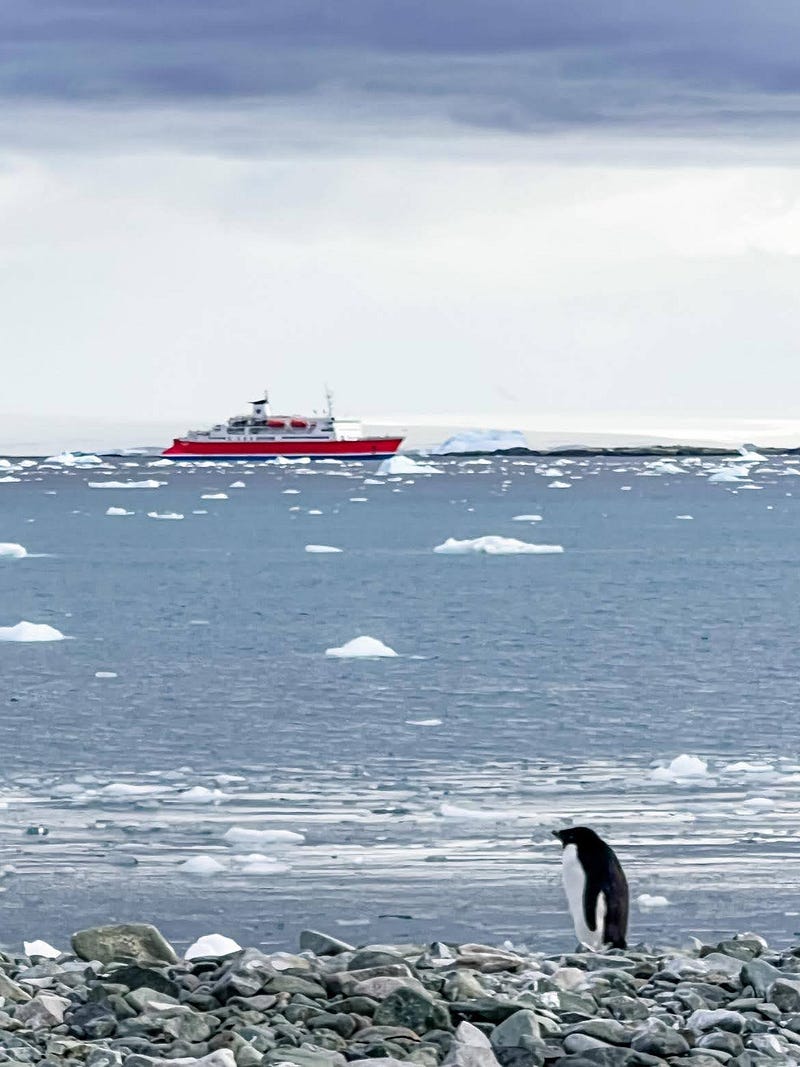
An Adélie penguin on shore, with the MS G Expedition across the bay from it. Photo by the Author.

Gentoo

On Day 10, we hiked on Danco Island, named after one of the crew members on the 1897 Belgica expedition, and who suffered heart failure from an underlying heart disease. The Belgica attempted to reach the magnetic South Pole. My husband, who happened to be reading “Madhouse at the End of the Earth,” about the Belgica, says they didn’t make it, so instead they sailed to Chile.

Even with my monopod I was still slipping and sliding. The trail up to a ridge and then the summit had turned icy. The crew advised us to walk next to the trail where there was slushier snow.

Danco was in a protected bay, where Gentoo penguins, with their distinguishing red beak, were molting, nesting, and laying eggs. Some of those fledgling chicks sat by a parent. Hundreds of these birds stood in their rookery.
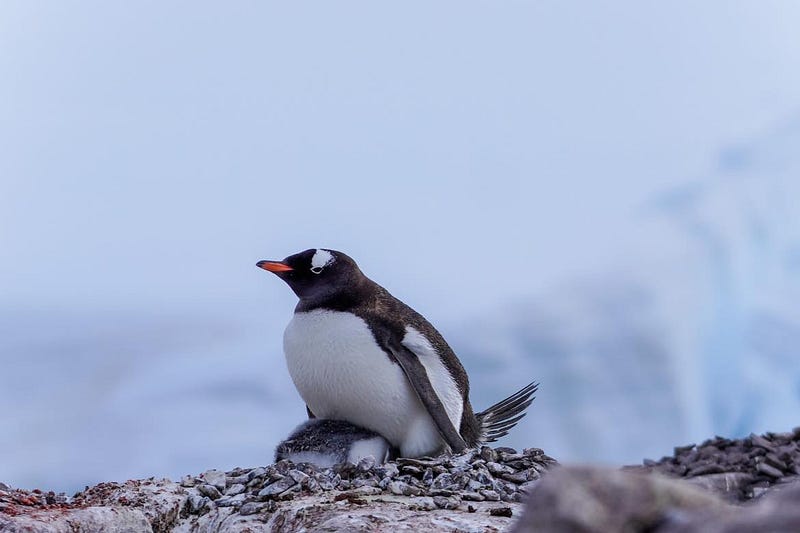
A Gentoo mom shelters her chick under her belly. Photo by the Author.

The area smelled heavily of fish, or krill in this case, leaving a pink trail on their “highways,” or paths from the rookery to another part of the mountain. Whenever we encountered them, we stood to the side and gave them wide berth. They didn’t pay us much mind as they continued on their travels although a few blinked at us, and then pivoted a different direction.

There is constant squawking, especially when a snowy sheathbill, about half the penguins’ size, hopped into a circle. Some of the adult penguins raised their red bills and trumpeted in outrage.

Gentoo penguins, like their other breed counterparts, are regularly preyed upon by leopard seals. South polar skuas, in particular, and giant petrels kill many chicks and eat eggs as well. Giant petrels and orcas will occasionally kill adult penguins. Kelp gulls and snowy sheathbills also prey on chicks and eggs.

Chinstrap
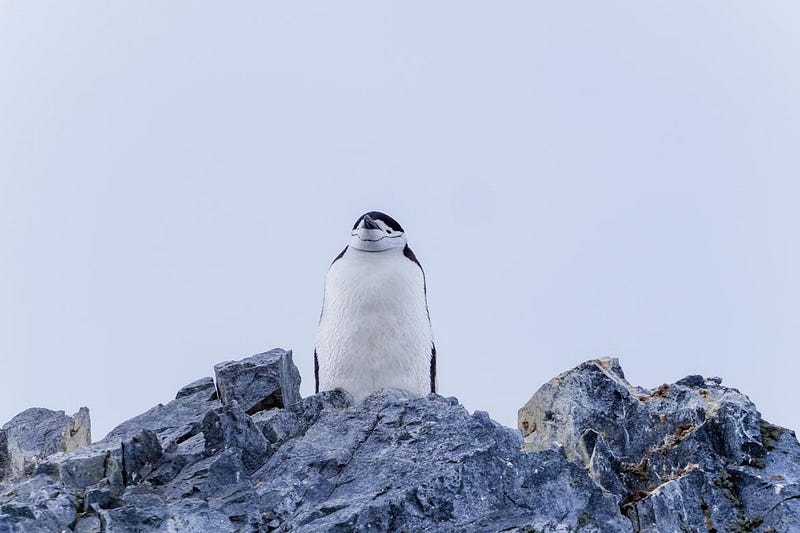
The Chinstrap penguin gets its name from the thin marking under their beak. Photo by the Author.

Also on the afternoon of Day 10, we went to Orne Harbour for a landing. The crew advised us that it is a steep hike but that on the top, (160 meters) we would find a Chinstrap penguin colony.

Talk about a motivator.

Even with my trusty monopod stick, I was sliding around. It helped that someone cut steps in the snow at the switchback junctures. I didn’t look back; the thought of me traversing a steep hill with the possibility of sliding off would only have given me cold feet.

Eventually, I made it up to the top, which was flat, with telltale pink trails. A few Chinstraps stood on rocks, pretty against the snowy background. I alternated between my mirrorless and my cell phone, getting some fun pictures.
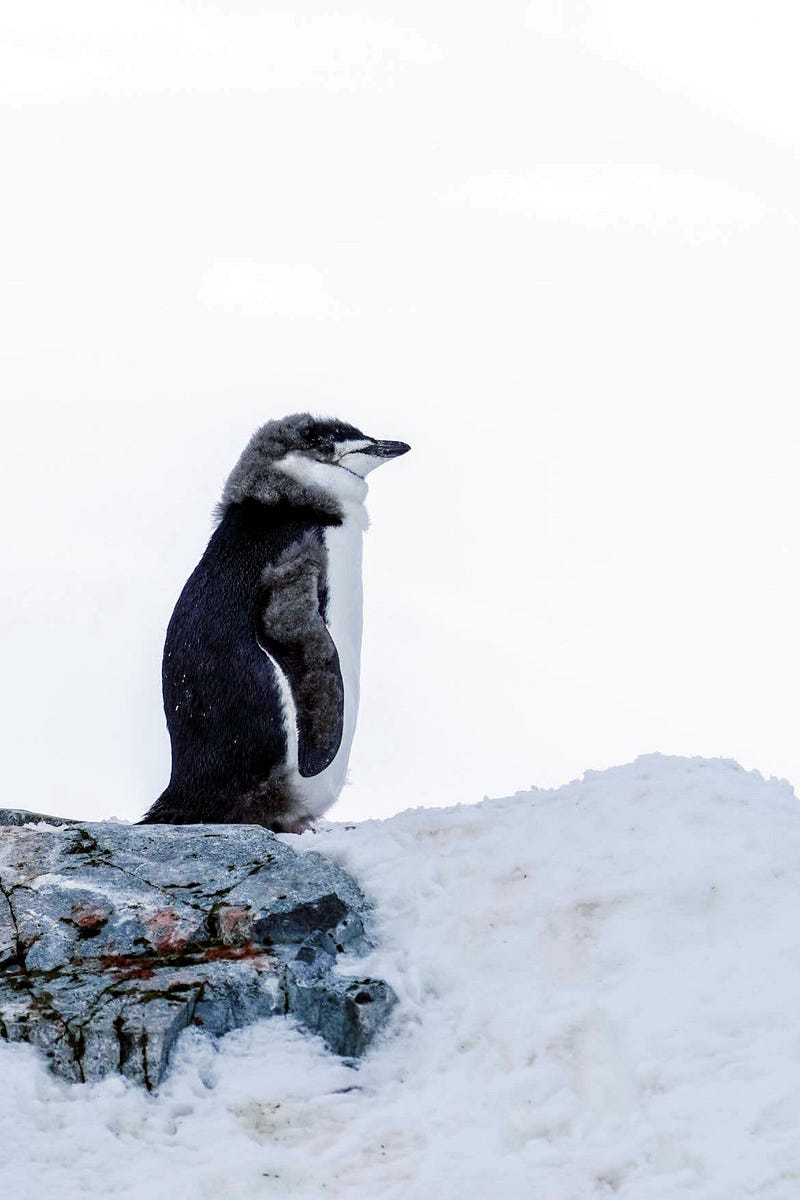
A molting Chinstrap penguin. Photo by the Author.

Off a little rock ledge, we humans took turns climbing up and taking photos of the main Chinstrap colony. The penguins were noisy, squawking the whole time. Drowned out sometimes by conversation from our group — play-by-play of what the birds were doing or talking loudly about their lives back home.

But then the humans got quiet and Antarctica’s adorable ambassadors took center stage.

Thank you for reading!

Check out my book, Antarctica: A Travel Journal, which features my favorite Antarctic photos along with my daily journal entries. Watch my videos on my Youtube channel.

To get access to UNLIMITED stories from all the amazing Medium writers, you can also consider signing up to become a Medium member. If you sign up using my referral link, I’ll receive a small commission (at no extra cost to you).

Traveling
Travel
Antarctica
Wildlife
Photography
Recommended from ReadMedium